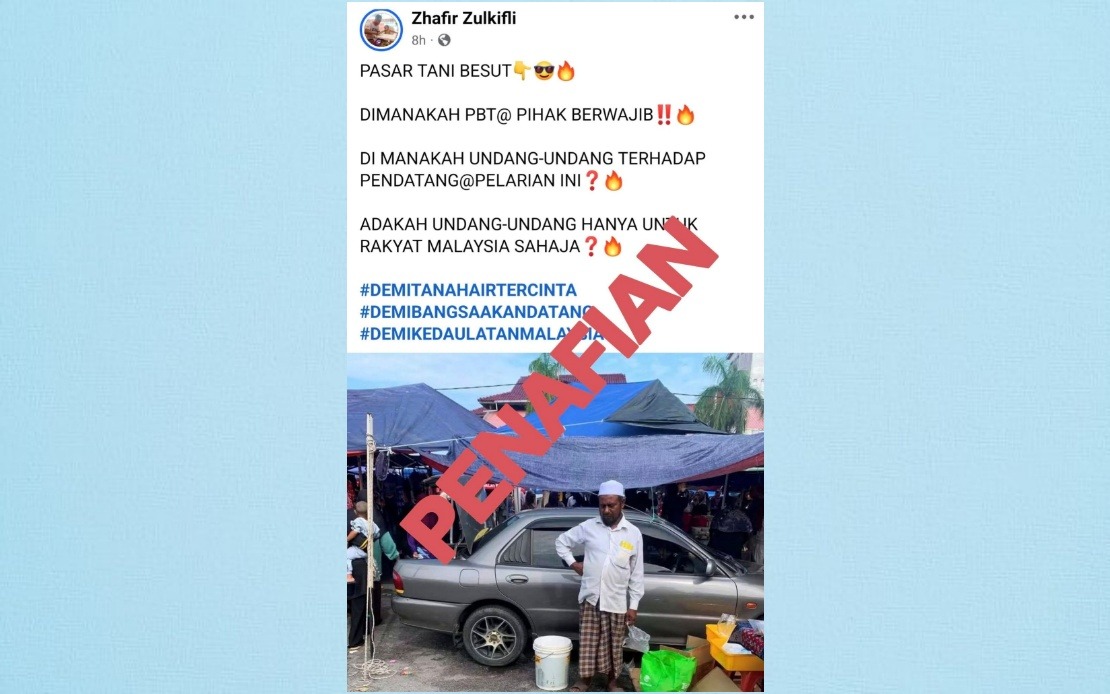
Terengganu's Federal Agricultural Marketing Authority (FAMA) moved swiftly on Friday to counter widespread claims circulating on Facebook alleging that foreign nationals were operating as traders at farmers' markets under its management. The clarification came after a social media post featuring a man believed to be a non-citizen selling vegetables at a morning market in Besut drew significant online attention and sparked concerns about regulatory oversight in the state's agricultural trading sector.
In an official statement released from Jertih, FAMA stressed that the incident referenced in the viral post did not occur at any facility it supervises or manages. The authority distinguished between farmers' markets it operates directly and other morning markets that function independently in the district, a crucial distinction that appears to have been lost in the rapid spread of the Facebook allegations.
Terengganu FAMA clarified that it maintains direct oversight of precisely two farmers' markets within Besut District. The Jerteh Farmers' Market operates weekly on Thursdays, welcoming vendors and shoppers from 7 am until 1 pm, while the Alor Lintang Farmers' Market conducts business every Saturday during the same morning timeframe. Both venues function under the agency's established protocols and vendor verification procedures.
The incident that triggered the social media outcry occurred instead at Kuala Besut Morning Market, which operates independently outside FAMA's direct supervisory framework. This distinction matters considerably, as it suggests the question of foreign trader participation falls under a different administrative jurisdiction and regulatory regime. The confusion highlights ongoing challenges in public understanding about which agricultural markets fall under federal oversight versus local municipal management.
The rapid viral spread of the Facebook post underscores broader anxieties within Malaysia regarding labour market protections and the integrity of local trading platforms. Citizens have grown increasingly vigilant about ensuring that informal sector opportunities—particularly in agriculture and daily vendors—remain accessible to Malaysian citizens and properly licensed businesses. The farmers' market concept itself carries cultural significance in Malaysia, representing not merely commerce but also a touchstone of community economic participation.
FAMA's quick response reflects the agency's awareness of how social media allegations can damage public confidence in agricultural marketing infrastructure, even when factually inaccurate. The authority recognised that allowing such claims to circulate unchallenged risked undermining confidence in its regulatory standards and vendors' compliance mechanisms. By issuing a clarification statement, FAMA attempted to restore institutional credibility and distinguish between its operations and those of independently managed facilities.
The Terengganu incident occurs within a broader Malaysian context of increasing scrutiny on informal sector employment and trading practices. State governments and federal agencies have faced mounting pressure to demonstrate that agricultural markets, street vending areas, and other informal trading spaces prioritise local participation and comply with relevant regulations regarding worker status and business licensing. The public expects transparency about who operates these spaces and whether proper verification occurs at point of entry.
For vendors legitimately operating at FAMA-supervised markets, the clarification may bring some reassurance that the agency maintains standards distinguishing its facilities from other morning markets that may face different regulatory expectations. However, it simultaneously raised questions about oversight of markets like Kuala Besut Morning Market that operate outside FAMA's purview, suggesting potential regulatory gaps or overlapping jurisdictional responsibilities that may warrant clearer administrative boundaries.
Terengganu FAMA's statement serves as a reminder that agricultural marketing authorities operate within complex administrative environments where multiple stakeholders—municipal governments, hawker management bodies, and local councils—share responsibility for market regulation. When confusion arises about which agency supervises particular locations, public trust in the overall system suffers. Clearer public-facing information about market jurisdiction and vendor verification procedures could prevent similar misunderstandings from escalating into viral misinformation.
The broader implications for Terengganu and other states managing agricultural infrastructure suggest the need for enhanced public communication about regulatory frameworks. As Malaysian citizens increasingly use social media to express concerns about local economic participation and worker protections, government agencies must respond with clarity while also addressing legitimate underlying concerns about how informal sector standards are maintained across different categories of markets and trading venues.

