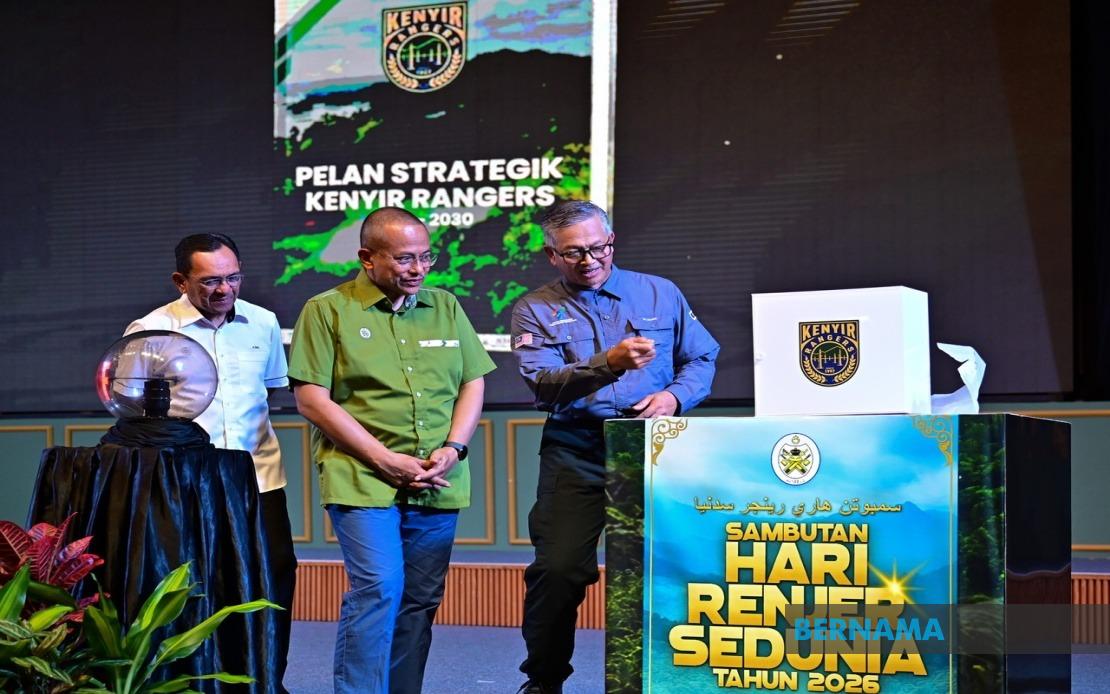
Terengganu Menteri Besar Datuk Seri Dr Ahmad Samsuri Mokhtar has stressed the urgent need for comprehensive collaboration among government agencies to address the growing menace of human-wildlife encounters, with particular emphasis on elephants crossing highways and expressways in the state. Speaking at the state-level World Ranger Day 2026 celebration held at Wisma Darul Iman in Kuala Terengganu, Ahmad Samsuri underscored that tackling this persistent challenge requires coordinated action transcending departmental boundaries.
The Menteri Besar specifically highlighted the necessity for enhanced coordination between the Wildlife and National Parks Department and the Malaysian Highway Authority, framing the issue as one requiring systematic intervention rather than isolated administrative responses. His remarks came in the context of increasing concerns about wildlife-vehicle collisions on Terengganu's critical transport corridors, which have exposed vulnerabilities in current prevention and management strategies. The highways that crisscross the state present particular hazards for both animals seeking passage through their natural ranges and road users navigating these essential infrastructure networks.
Among the practical measures Ahmad Samsuri identified was the strategic deployment of increased patrols at locations where animal crossings have been documented. These hotspots, already identified through incident reports and ecological surveys, represent areas where wildlife and vehicular traffic converge with predictable frequency. By concentrating ranger and enforcement resources in these zones, particularly during seasons when wildlife behaviour changes, authorities could potentially intercept dangerous situations before they escalate into tragedy.
The installation of electric fencing presents another intervention strategy that Ahmad Samsuri advocated, though he acknowledged the economic constraints associated with such infrastructure. The Menteri Besar noted that while comprehensive fencing along the entire length of highways would prove prohibitively expensive, targeted installations in sections adjacent to known wildlife habitats and established animal migration routes could yield meaningful results. This calibrated approach recognises that not all highway stretches face identical wildlife pressure, allowing for prioritisation of resources where impact would be greatest.
Technology-based solutions feature prominently in the government's emerging strategy to prevent future incidents. Ahmad Samsuri referenced the potential of early-warning systems capable of detecting wildlife movements and alerting drivers in real-time. Such innovation could transform highway safety by providing advance notice of animal presence, allowing drivers to reduce speed or exercise heightened caution. This forward-looking perspective acknowledges that conventional barriers alone may prove insufficient in addressing a challenge that fundamentally involves predicting animal behaviour across extensive territories.
The comments by the Menteri Besar gain particular urgency following a recent collision on the East Coast Expressway 2 (LPT2) that underscored the gravity of the problem. On August 5, a devastating incident saw a Toyota Estima struck by a herd of elephants at kilometre 274.6 of LPT2, near the Cheneh Toll Plaza approximately 30 kilometres south of Kuala Terengganu. The collision resulted in injuries to both the male and female occupants of the vehicle, serving as a stark reminder that these encounters carry real consequences for human safety and welfare. Ahmad Samsuri characterised the incident as a tragedy affecting both the injured road users and the wildlife involved.
The seasonal dimension of wildlife movement patterns emerged as a critical analytical point in the Menteri Besar's assessment. He specifically noted that rainy seasons correlate with increased animal departures from their habitats, as elephants and other wildlife seek shelter from heavy precipitation. This meteorological connection suggests that emergency management protocols should demonstrate heightened vigilance during monsoon periods. Enhanced patrols and increased warning signage during these seasons could form part of a cyclical strategy that adapts enforcement intensity to known patterns of wildlife behaviour.
Ahmad Samsuri's framing of the issue as one where both animal and human lives hold equal value represents a significant normative stance within the wildlife management debate. Rather than treating elephants and other wildlife primarily as obstacles to be eliminated or highways solely as human infrastructure requiring absolute protection from animal interference, the Menteri Besar articulated a conservation-conscious perspective that acknowledges legitimate interests on both sides. This balanced approach aligns with contemporary understanding of wildlife management as requiring coexistence strategies rather than exclusive prioritisation of either human convenience or animal preservation.
The reference to the World Ranger Day 2026 celebration as the platform for these remarks carries symbolic significance. Rangers represent the frontline of wildlife management and habitat protection, and their mobilisation on this occasion signals official recognition of their critical role in reducing human-wildlife conflict. The event provided an appropriate venue for committing resources and policy attention to improving coordination among the rangers, highway enforcement personnel, and other stakeholders whose daily work affects wildlife safety.
For Malaysian readers and policymakers, the Terengganu situation exemplifies challenges that extend across the region where development pressures continue to reduce wildlife habitats. Several other Malaysian states, particularly Johor, Pahang, and Perak, face comparable difficulties with elephant movements across major transport corridors. The approaches being contemplated in Terengganu—enhanced coordination, strategic fencing, technological innovation, and seasonal adaptation—could establish precedents applicable across the peninsula. The willingness to invest in comprehensive solutions rather than treating incidents as isolated events reflects a maturing approach to balancing economic development with environmental stewardship.
Moving forward, the effectiveness of these measures will depend substantially on follow-through and resource allocation. Ahmad Samsuri's call for greater cooperation will require concrete commitments from the Wildlife and National Parks Department, the Malaysian Highway Authority, and other relevant bodies. Implementation challenges will inevitably arise, including budget constraints, technological limitations, and the inherent unpredictability of animal behaviour. Yet the articulation of a multi-faceted strategy incorporating enforcement, infrastructure, technology, and seasonal adjustments suggests that Terengganu's leadership recognises that addressing human-wildlife conflict demands neither simplistic solutions nor compartmentalised thinking, but rather systematic coordination across governmental functions and practical domains.

