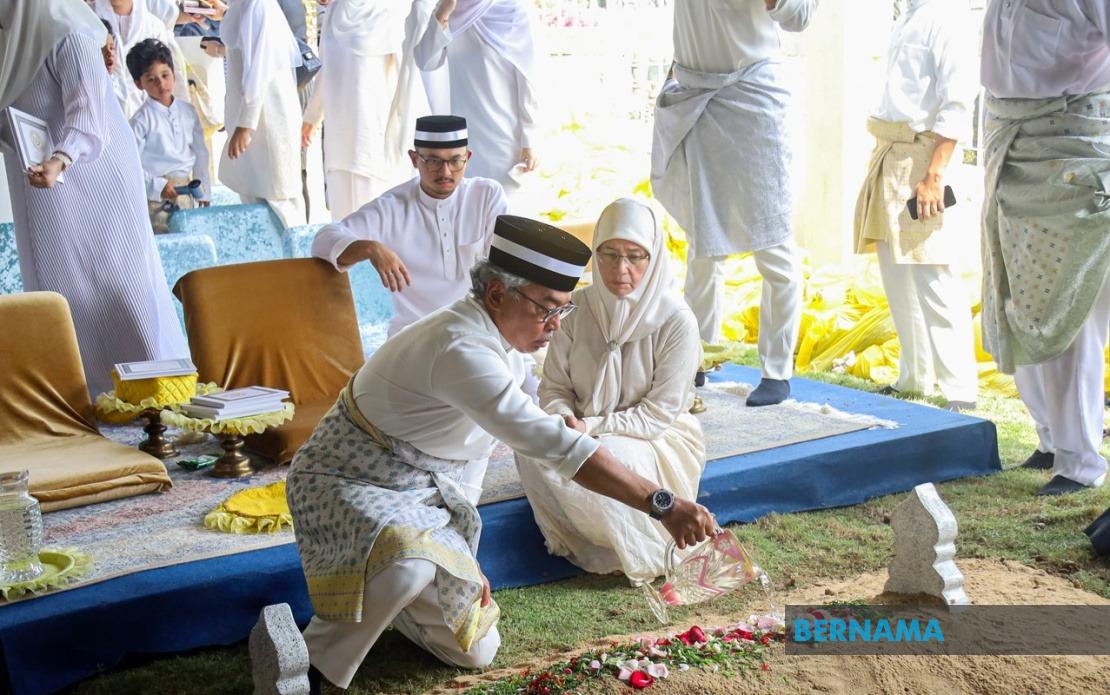
Tengku Puteri Seri Kemala Tengku Datuk Seri Aishah, the elder sister of Pahang Sultan Al-Sultan Abdullah Ri'ayatuddin Al-Mustafa Billah Shah, was committed to the Royal Mausoleum in Pekan on August 27 following her death at a Kuala Lumpur hospital the previous evening at 9.25 pm. She was 69 years old. The funeral proceedings reflected her status within the royal household, drawing attendance from senior state officials and immediate family members who gathered to pay their final respects.
The ceremony began with funeral prayers held at the Khalid bin Al-Walid Mosque located on Jalan Padang Tembak in Kuala Lumpur, where mourners offered condolences and religious observances. Following the initial rites, her remains were transported from Subang Air Base to Pahang, underscoring the significance accorded to her position within the sultanate's ruling family. This transfer marked the beginning of the final journey to her resting place, a journey undertaken with the formality appropriate to a member of the royal household.
Upon arrival in Pekan at 1.25 pm, the cortege proceeded directly to the Sultan Ahmad 1 Mosque for additional prayers following the zuhur prayers. This second round of Islamic observances allowed the broader Pahang community and officials to participate in honouring the deceased member of the royal family. The arrangement reflected established protocols within Malaysia's constitutional monarchy, where religious and ceremonial obligations intertwine seamlessly in marking the passing of senior royalty.
Al-Sultan Abdullah personally attended the burial ceremony alongside his consort, Tengku Ampuan of Pahang Tunku Azizah Aminah Maimunah Iskandariah, and their son Tengku Mahkota of Pahang Tengku Hassanal Ibrahim Alam Shah. Their presence demonstrated the close family bonds within Pahang's royal circle, with the Sultan making time to oversee the final rites for his elder sibling. The attendance of these figures underscored both the personal significance of the moment and the formal importance of the occasion within state protocols.
Notable government figures also attended the ceremony, including Melaka Yang Dipertua Negeri Tun Mohd Ali Rustam and Pahang Menteri Besar Datuk Seri Wan Rosdy Wan Ismail. Their participation reflected the broader respect commanded by the royal family throughout Malaysia's political establishment, with senior figures from multiple states acknowledging the significance of the event. Such cross-state representation demonstrates how Malaysia's constitutional monarchies maintain influence and recognition across regional boundaries.
The burial itself took place at the Royal Mausoleum situated adjacent to the Sultan Ahmad 1 Mosque, where the ceremony unfolded with full ceremonial honours befitting a member of the sultanate's senior generation. Pahang Mufti Datuk Dr Asmadi Mohamed Naim led the recitation of Yasin, an important Quranic chapter traditionally recited during Islamic funeral rites, before proceeding with tahlil and concluding prayers. These religious elements provided spiritual grounding for the assembled mourners during their final farewell.
Following the completion of religious observances, Al-Sultan Abdullah and Tunku Azizah performed the symbolic gestures of sprinkling rose water and scattering flowers upon the grave. These acts, steeped in Islamic tradition, represented the family's personal participation in the conclusion of Tengku Puteri Seri Kemala's earthly journey. The Sultan's direct involvement in these intimate moments reflected both his affection for his sister and his commitment to honouring her memory through personal rather than merely delegated participation.
Tengku Puteri Seri Kemala's death marks the loss of a figure who embodied the continuity of Pahang's royal lineage stretching back through Sultan Ahmad Shah and earlier generations. As the elder sister of the current Sultan, she occupied a unique position within the state's hierarchy, representing an older generation of the royal family whose lives spanned significant periods of Malaysian history and development. Her passing underscores the inevitable transition occurring within royal households as generations age and change.
The ceremony held in Pekan reflects how Malaysia's constitutional monarchies maintain rigorous adherence to Islamic principles and ceremonial traditions simultaneously, integrating religious observance with state protocol. The careful orchestration of events—from the initial funeral prayers in Kuala Lumpur through to the burial in Pekan—demonstrates the established frameworks within which the Pahang sultanate marks such occasions. These protocols ensure that both religious obligations and familial bonds receive appropriate recognition and respect.
For Malaysians observing such ceremonies, they offer reminders of the institutional continuity that characterises the nation's monarchy, where personal family bonds intersect with constitutional responsibilities and religious conviction. Tengku Puteri Seri Kemala's funeral brought together representatives of multiple spheres—royal, religious, and governmental—in a display of unity around shared cultural and Islamic values. Such moments reinforce the social fabric that connects Malaysia's various communities through mutual respect for established traditions and institutions.

