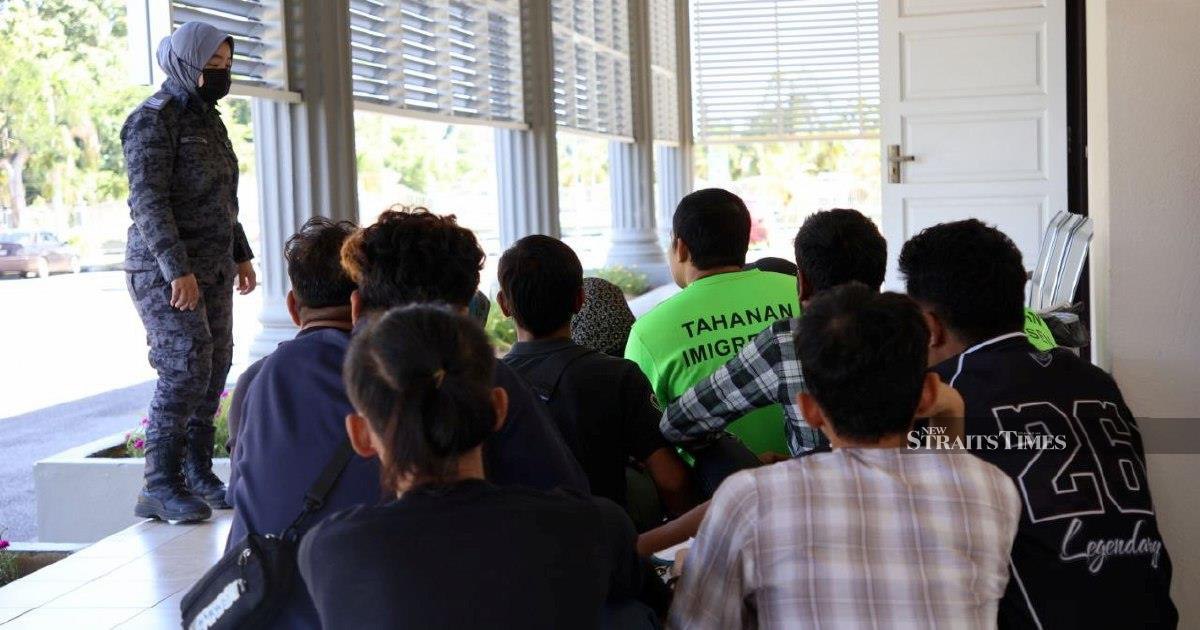
Immigration enforcement in Kelantan took a significant step forward this week as a Sessions Court in Pasir Mas processed charges against ten undocumented migrants caught up in the country's ongoing struggle with illegal residency. The group, which included three foreign women, appeared before the court facing multiple charges related to violations of Malaysian immigration law, marking another chapter in the authorities' sustained effort to combat unauthorized presence in the country.
The specific allegations against the migrants encompassed three distinct categories of immigration breaches that have become increasingly common across Malaysia's borders. The first category involved charges of overstaying beyond the permitted duration on their travel documents, a violation that occurs when individuals fail to depart Malaysia before their authorized stay concludes. Additionally, the group faced accusations of misusing social visit passes, a serious offense that indicates the migrants may have worked illegally or engaged in prohibited activities while supposedly undertaking social visits. The most serious allegations concerned illegal entry into Malaysian territory, suggesting that some among the group had never obtained proper authorization before crossing into the country.
The concentration of three women among the ten charged individuals reflects a growing demographic pattern in irregular migration across Southeast Asia. Women migrants, whether trafficked or moving voluntarily under false pretenses, face particular vulnerabilities in illegal migration networks and often become entangled in exploitative situations before apprehension. The involvement of women in these cases has prompted deeper examination of trafficking routes and networks that operate across the region's porous borders.
Pasir Mas, situated in Kelantan's northeastern region along the Thai border, represents a critical focal point for immigration enforcement in Malaysia. The district's geographical position and proximity to land crossings make it a natural concentration point for authorities monitoring irregular migration. Enforcement operations in this area directly impact broader regional migration patterns, as the Kelantan-Thailand border corridor remains one of Southeast Asia's busier informal transit zones for migrants seeking entry into Malaysia and beyond.
The Sessions Court proceedings in Pasir Mas underscore Malaysia's multi-layered approach to immigration management. Rather than simply deporting undocumented migrants, the authorities have initiated formal legal processes that document violations, establish clear records, and create deterrent effects through the judicial system. This prosecutorial approach, while resource-intensive, sends clearer signals about consequences than administrative deportation alone.
The charges registered against these individuals carry potential consequences that extend beyond simple repatriation. Conviction on overstaying charges typically results in fines, imprisonment, or both, with additional implications for future entry attempts into Malaysia. Misuse of social visit passes represents a more serious infraction, as it suggests deliberate deception regarding the purpose of residence. Those convicted may face extended bans on reentry and potential designation as prohibited immigrants, effectively closing off Malaysia as a destination for years.
The illegal entry charges represent the gravest allegations, often carrying heavier penalties and signaling organized smuggling involvement. These charges frequently trigger investigations into human trafficking networks and organized migrant smuggling operations that may extend across multiple jurisdictions. The investigation and prosecution of illegal entry cases often provide intelligence for regional law enforcement cooperation efforts coordinated through mechanisms like ASEAN and bilateral agreements.
For Malaysia, these proceedings form part of a larger immigration management challenge. The country hosts millions of documented migrant workers across domestic, construction, plantation, and manufacturing sectors, while simultaneously managing unauthorized migration pressures. The balance between accommodating legitimate labor migration and combating irregular entry remains a persistent policy tension. Sessions Court proceedings like those in Pasir Mas provide institutional frameworks for maintaining legal distinction between authorized and unauthorized migration.
The Kelantan enforcement operation reflects coordination between multiple Malaysian agencies including the Immigration Department, police, and border security personnel. Sustained pressure against overstaying and illegal entry depends on inter-agency cooperation and intelligence-sharing mechanisms. Kelantan's significance in regional migration corridors makes local enforcement efforts consequential for broader Southeast Asian security and stability concerns.
For migrants and potential migrants across Southeast Asia, court proceedings against groups like these carry signaling effects across informal networks. While comprehensive deterrence against migration is neither feasible nor necessarily desirable given legitimate labor migration needs, enforcement actions in public courts document consequences in ways that administrative processes cannot match. The visible processing of cases through formal judicial systems creates documented warnings about immigration law enforcement.
The charges against these ten individuals also intersect with broader discussions within Malaysia about migrant worker protections and labor standards. While unauthorized migrants face legitimate legal consequences, their prevalence in certain economic sectors reflects underlying labor market demands and structural factors that attract irregular migration despite enforcement efforts. The Pasir Mas cases thus represent enforcement responses to migration pressures that fundamentally reflect economic realities across the region.
Moving forward, the outcomes of these Sessions Court proceedings will contribute to case law and enforcement precedent within Kelantan's immigration system. Sentences imposed and legal interpretations rendered will establish reference points for subsequent cases, gradually building procedural frameworks and penalty guidelines. These judicial developments, while seemingly local in scope, accumulate into regional patterns that shape enforcement practices across Malaysia's immigration system and potentially influence neighboring countries' approaches to similar violations.

