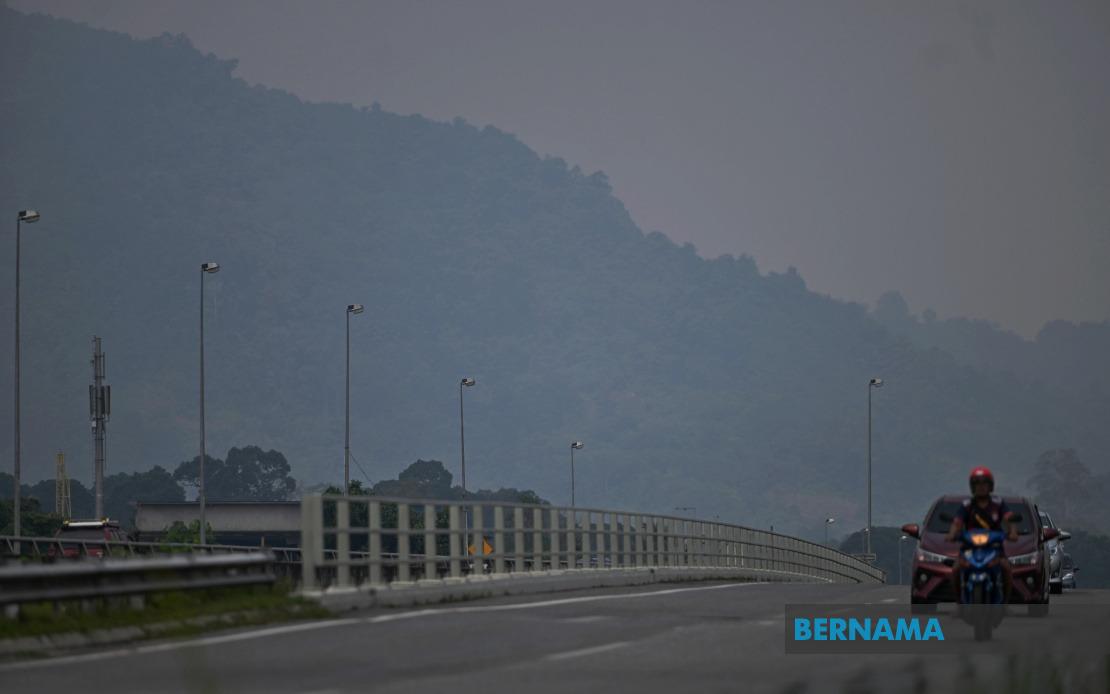
Sarawak faces a significant air quality crisis as ten localities across the state registered unhealthy or very unhealthy Air Pollution Index readings on August 21, with Serian emerging as the most severely affected area. The Serian monitoring station recorded an API level of 227 at 2 pm, placing it firmly in the very unhealthy category and triggering serious health concerns for residents. The widespread deterioration in air quality underscores the growing vulnerability of Malaysian territories to transboundary pollution events originating from neighboring Indonesian regions, particularly during periods of dry weather when fire activity intensifies across the archipelago.
According to Azuri Azizah Saedon, the Department of Environment's deputy director-general for development, Sri Aman registered the second-most concerning reading at 187, demonstrating that the pollution crisis extended well beyond Serian. The pollution gradient across Sarawak revealed a pattern of exposure, with Kuching recording 176, Samarahan at 175, Sarikei at 174, and Sibu at 157. The northern coastal areas of Bintulu and Samalaju both registered 154, while Kapit and Mukah, situated more inland, recorded 130. This distribution suggests that westerly air currents were transporting pollutants from maritime sources toward populated western districts, creating a public health emergency that threatened millions of residents across multiple administrative zones.
The deterioration in air quality on this particular day reflected a dramatic shift in atmospheric conditions across the entire nation, with Sarawak bearing the brunt of increased haze incursion. The Department of Environment official attributed the sudden spike to haze arriving from multiple directions simultaneously, creating a compounding effect that overwhelmed the state's air cleansing capacity. This multi-directional approach of pollution plumes distinguished the August 21 event from typical transboundary haze episodes, which generally follow more predictable seasonal patterns and wind regimes. The convergence of pollution sources from different vectors suggested unusually active fire activity across a broader geographic area than normally observed during the typical haze season.
The immediate cause of Sarawak's air quality deterioration traced back to extensive hotspot activity in Indonesian territories, particularly across Kalimantan. A report issued by the ASEAN Specialised Meteorological Centre on August 20 identified 288 hotspots in Kalimantan, 53 in Sumatra, and just two in Malaysia—one each in Sarawak and Terengganu. The overwhelming concentration of fire sources in Kalimantan, which shares a long land border with Sarawak, created the perfect conditions for smoke transport into Malaysian airspace. Despite previous years of bilateral agreements and joint monitoring initiatives, the region continued to struggle with inadequate fire prevention and suppression mechanisms in Indonesian territories, leaving Southeast Asian countries perpetually vulnerable to pollution surges tied to agricultural burning and uncontrolled fires.
The ASEAN Specialised Meteorological Centre's Regional Haze Map painted a picture of a region characterized by dry conditions facilitating fire propagation and smoke dispersal. Most southern ASEAN regions experienced the kind of atmospheric dryness that allows smoke plumes to persist and travel vast distances, with the notable exception of northeastern Borneo and northern Sumatra, where rainfall provided some natural mitigation. The continued persistence of dry weather across the broader region suggested that the August 21 episode might represent merely the beginning of a prolonged atmospheric instability period, with additional pollution events potentially unfolding over the following weeks as fire activity continued unchecked across Indonesian territories.
The specific movement patterns of smoke observed by meteorological authorities demonstrated the mechanical process driving Sarawak's crisis. Moderate to dense transboundary smoke plumes originating in West Kalimantan moved steadily northward into western Sarawak, creating a direct transport corridor that connected Indonesian fire zones with Malaysian population centers. This northward flow pattern meant that the most densely populated districts of Sarawak—particularly Kuching and surrounding areas—faced sustained exposure to concentrated smoke concentrations. The identification of these plume pathways by the ASEAN Specialised Meteorological Centre represented crucial scientific input that informed response coordination among Malaysian agencies tasked with protecting public health during transboundary pollution episodes.
Government response mechanisms swung into action as the severity of the air quality crisis became apparent. The Department of Environment escalated enforcement activities and initiated daily patrol operations targeting areas with elevated open burning risks, attempting to prevent domestic pollution sources from compounding the transboundary challenge. Simultaneously, authorities activated both the National Open Burning Action Plan and the National Haze Action Plan, mobilizing inter-agency coordination mechanisms designed to mount comprehensive responses to haze emergencies. These activation steps reflected established protocols developed through previous haze episodes, though critics have frequently argued that Malaysia's prevention frameworks remain insufficiently robust given the region's persistent vulnerability to Indonesian fire activity.
The public communication component of the government response centered on discouraging open burning within Malaysia and encouraging reporting of fire incidents through established channels. Citizens received guidance to avoid any open burning activities and to promptly contact the Fire and Rescue Department at 999 or the Department of Environment's dedicated hotline at 1-800-88-2727 upon witnessing uncontrolled fires. This dual-reporting mechanism sought to create multiple surveillance pathways for detecting incipient fire activity before it could expand into major pollution-generating incidents. However, the effectiveness of public reporting systems depends heavily on public awareness and willingness to engage with government infrastructure—factors that vary significantly across different communities and demographic groups within Sarawak.
The August 21 air quality crisis in Sarawak carries broader implications for Malaysia's regional environmental diplomacy and domestic public health preparedness. Transboundary haze episodes have emerged as a recurring feature of Southeast Asian climate patterns, yet the underlying drivers—primarily agricultural burning practices and inadequate fire management in Indonesia—remain stubbornly resistant to bilateral and multilateral intervention efforts. Malaysia faces a structural vulnerability rooted in geographic proximity to major fire-prone regions, a reality that transcends seasonal variations and requires sustained investment in monitoring, forecasting, and rapid-response capabilities. The persistence of very unhealthy API readings in population centers like Serian raises difficult questions about the adequacy of current air quality standards and whether Malaysian public health authorities possess sufficient capacity to protect vulnerable populations during repeated haze episodes.
The episode also highlights the limitations of enforcement-focused approaches to transboundary pollution management. While Malaysian authorities diligently patrol their own territories and discourage domestic open burning, they exercise minimal direct control over the Indonesian fire sources generating the pollutants drifting across shared borders. This asymmetry between Malaysia's enforcement capacity within its own jurisdiction and its inability to directly address root causes of the problem reflects a fundamental challenge in Southeast Asian environmental governance. Future improvements in haze management likely require deeper engagement with Indonesian counterparts on fire prevention, agricultural practices reform, and landscape management strategies—initiatives that extend far beyond Malaysia's unilateral policy instruments and demand coordinated regional action within ASEAN frameworks.

