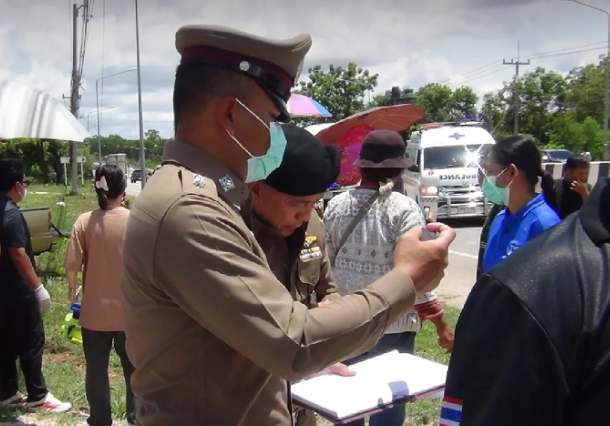
A devastating incident on a roadside in Mukdahan province has claimed the lives of 10 Buddhist monks, with the death toll confirmed by Thai authorities on Friday. The tragedy unfolded when a pickup truck ploughed through a group of monks and lay followers engaged in a pilgrimage ceremony, creating one of the most serious accidents involving the Buddhist clergy in recent Thai history. Ten additional individuals wounded in the crash remain under hospital care, including two in critical condition, according to the latest medical report from Mukdahan Hospital in Thailand's northeastern region.
The vehicle involved in the collision was driven by an 11-year-old child who had taken his parents' pickup truck without authorization. Police investigators, led by Mukdahan City Police chief Prayut Ruanthongkam, determined that the boy had no permission to operate the vehicle. Five of the monks perished immediately at the accident scene, while another five succumbed to their injuries during subsequent treatment at the hospital, underscoring the severity of the impact and the extent of trauma sustained by those struck.
The procession consisted of approximately 35 Buddhist monks alongside five lay followers who were participating in a religious pilgrimage when the pickup struck them without warning. These religious journeys are customary in Thai Buddhist practice and carry significant spiritual importance for both the clergy and the broader community. The geographical location—a roadside in Mukdahan—suggests the monks may have been exposed to vehicular traffic during their ceremonial activities, raising questions about safety protocols during such public religious observances.
Under Thai law, criminal liability does not apply to children under 12 years of age, a provision that significantly constrains conventional prosecution options. Consequently, the young driver was referred to child welfare authorities for comprehensive psychological and developmental assessment rather than facing criminal charges. His mother accompanied him during this referral process, reflecting the recognition that the child himself requires support and evaluation to understand the circumstances and consequences of his actions.
Police investigators have been unable to obtain a formal statement from the boy as part of their ongoing inquiry into the incident. The investigation has instead focused on gathering detailed accounts from surviving monks who witnessed the crash firsthand. These testimonies are proving crucial in reconstructing the sequence of events and determining whether any factors—such as mechanical failure, visibility obstruction, or other circumstances—contributed to the tragedy beyond the matter of the vehicle's unauthorized operation.
Buddhist monks occupy a position of profound cultural and spiritual significance within Thai society. They serve as custodians of Buddhist teachings and are responsible for transmitting the Buddha's doctrine to subsequent generations. Beyond their religious duties, monks are deeply embedded in Thai daily life, regularly participating in public ceremonies and receiving offerings of food and alms from devoted citizens who view such acts as expressions of goodwill and religious devotion. This integration into community life means that incidents affecting the monastic order resonate broadly across Thai society.
The temple Wat Roi Phra Phutthabat Phu Manorom, a hilltop sanctuary located in Mukdahan, has become a sanctuary for those affected by the tragedy. The temple has provided shelter and care for both surviving monks and injured lay followers involved in the procession, offering both physical recovery facilities and spiritual support during an exceptionally difficult period. This response exemplifies the way Buddhist institutions mobilize to support their members during crises.
For observers across Southeast Asia, the incident underscores broader tensions between modernization and traditional religious practices. As vehicles become increasingly prevalent in rural areas and communities maintain long-standing ceremonial traditions, questions arise about how to ensure the safety of religious practitioners engaging in public processions. The involvement of a child driver introduces an additional dimension of concern regarding vehicle access and supervision in Thai households.
The tragedy also highlights the vulnerability of children who gain access to motor vehicles without adequate oversight. While Thai law appropriately recognizes developmental differences in criminal responsibility, the incident demonstrates that without proper safeguards—such as vehicle security measures or parental supervision protocols—serious accidents can occur. The referral of the boy to child welfare authorities represents an opportunity for intervention and support, though it provides no remedy for the families of the deceased monks.
The incident has prompted reflection on safety measures for public religious observances throughout the region. Communities across Southeast Asia with similar traditions of monastic processions and street-based religious ceremonies may now review their own protocols and consider whether additional traffic management or ceremonial route planning is necessary to protect both spiritual practitioners and the general public. The scale of this tragedy—claiming ten lives in a single incident—elevates the urgency of such considerations.

