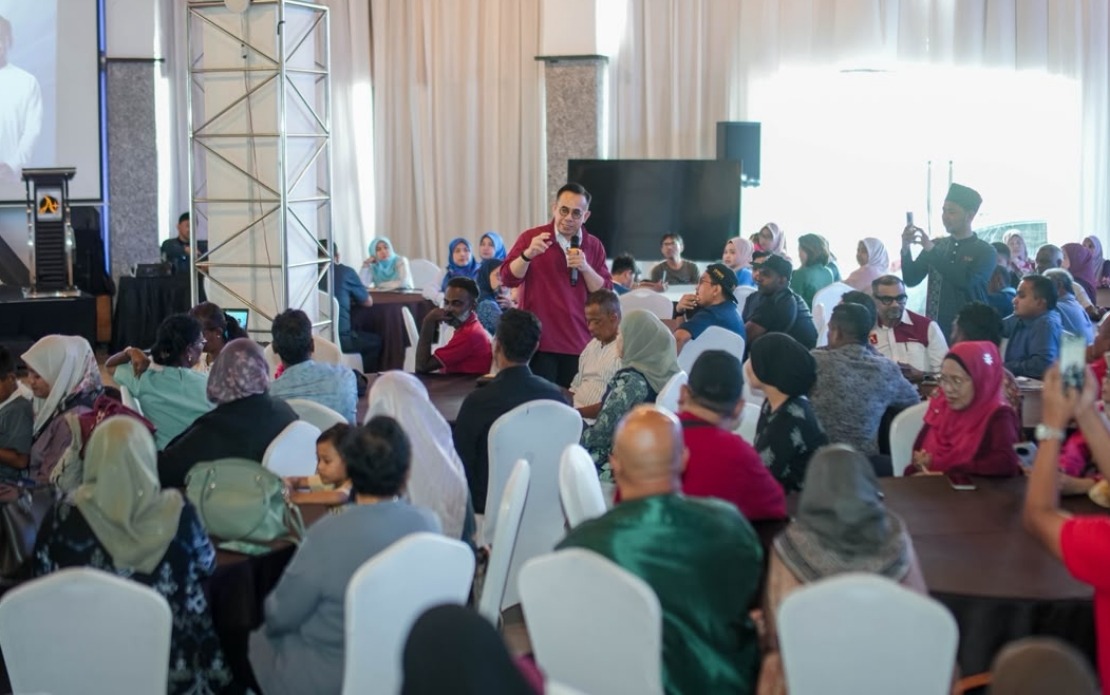
TEKUN Nasional has deployed RM36 million in financing to roughly 1,500 entrepreneurs across Negeri Sembilan in the first half of 2024, marking steady progress in the government's efforts to nurture business development at the state level. The fund allocation represents part of a broader national disbursement effort, with Minister of Entrepreneur Development and Cooperatives Steven Sim Chee Keong disclosing that RM540 million has reached 25,600 entrepreneurs nationwide during the same six-month window. These figures underscore the scale of TEKUN's role in the country's entrepreneurship ecosystem, three decades after its establishment as a cornerstone institution for small and medium-sized enterprises across Malaysia.
The agency's track record of channelling capital to grassroots business operators has become increasingly significant as the government seeks to widen economic participation and bolster local competitiveness. TEKUN's evolution over thirty years reflects changing priorities in how policymakers approach entrepreneurial development, particularly in bridging access gaps between aspiring business owners and the finance they need to launch or expand operations. However, Sim acknowledged that the organisation must continuously refine its processes to align with the practical needs and experiences of its clients, signalling a commitment to moving beyond bureaucratic inertia toward a more responsive institutional model.
A central thrust of Sim's remarks focused on accelerating the decision-making apparatus within TEKUN's application pipeline. The minister has mandated that financing requests of RM100,000 or less receive approval or rejection notices within seven calendar days, a deadline designed to eliminate prolonged uncertainty for applicants. For micro-financing transactions of RM20,000 and below, the Ministry of Entrepreneur Development and Cooperatives has committed to issuing decisions within 24 hours, an even tighter timeline that addresses the needs of informal traders and small-scale operators who cannot afford extended waiting periods. This operational restructuring attempts to transform TEKUN from a slow-moving bureaucracy into an agile financial intermediary, narrowing the lag between application submission and funding receipt.
Beyond speed, Sim pressed the importance of synchronising rapid approval decisions with equally expeditious fund transfers. The logic is straightforward: entrepreneurs who receive approval letters but face delays in accessing actual cash remain effectively locked out of the capital they require. By coupling faster decision-making with smoother disbursement workflows, TEKUN aims to close the gap between administrative approval and real-world utility, allowing business owners to redirect funds toward inventory, equipment, or operational expansion without losing momentum. This integrated approach reflects lessons learned from past friction points in the lending process, where administrative inefficiency has undermined the ostensible benefits of approval.
A particularly notable emphasis in Sim's messaging was the depoliticisation of TEKUN's lending criteria. The minister explicitly stated that financing applications require no endorsements or sponsorship from political figures, a pronouncement aimed at dismantling a long-standing practice where entrepreneurs felt compelled to cultivate relationships with elected officials to strengthen their application prospects. Such a dependency creates structural inequities, as politically well-connected applicants gain leverage regardless of the actual strength of their business plans or repayment capacity. Sim's insistence that decisions must be made professionally and transparently, based solely on applicant eligibility without regard to race, religion, or political affiliation, represents an attempt to shift TEKUN toward meritocratic lending principles.
The minister's colourful reference to entrepreneurs wearing blue, green, or red—a thinly veiled allusion to Malaysia's competing political coalitions—underscores the real tension between partisan interests and equitable public resource allocation. By declaring that political colour should be irrelevant to TEKUN's determinations, Sim signalled intent to insulate the agency from patronage dynamics that have historically distorted entrepreneurship funding in Malaysia. The goal of ending what he termed the "culture" of seeking political letters of support reflects broader governance concerns about merit-based resource distribution and the legitimacy of state institutions. However, embedding such principles into practice requires not only ministerial declarations but also structural safeguards, training, and accountability mechanisms that embed meritocracy into daily operations.
Simultaneously, the government has moved to expand financing pathways for underrepresented communities, increasing the Indian Community Entrepreneur Development Scheme allocation from RM30 million to RM50 million whilst scaling the Indian Community Entrepreneur Financing Package to RM220 million for the fiscal year. These allocations signal recognition that entrepreneurial opportunity remains unevenly distributed across Malaysia's ethnic demographics, and that targeted interventions can help redress such imbalances. The expansion of community-specific financing instruments suggests a strategy of parallel development tracks rather than a single monolithic TEKUN mechanism, allowing tailored approaches for different constituencies whilst theoretically maintaining overall meritocratic standards.
Sim's framing of entrepreneurship development as fundamentally non-racial, emphasising that local businesses ultimately compete as Malaysian enterprises on the world stage, articulates a vision of economic nationalism that transcends communal divisions. His assertion that success or failure must be collective reflects aspirational rhetoric about national economic cohesion, yet also masks the reality that different communities face distinct structural barriers to capital access, skills development, and market entry. The implicit argument—that entrepreneurs succeed or fail together—carries weight when discussing export competitiveness or regional economic resilience, but may oversimplify the need for sustained, differentiated support for communities historically marginalised from mainstream financial systems.
The Seremban engagement programme at which Sim announced these developments functioned as a feedback-gathering exercise, allowing direct contact between ministry officials and active TEKUN beneficiaries. Such forums generate qualitative insights into bottlenecks and frustrations that aggregate data cannot capture, revealing friction points in processes that may appear smooth on paper but prove cumbersome in practice. Entrepreneurs present firsthand accounts of application timelines, communication gaps, fund disbursement delays, and repayment challenges, furnishing intelligence that can guide incremental refinements to operations. This consultative approach suggests a shift toward evidence-based policymaking rooted in user experience rather than top-down assumptions about how financing mechanisms ought to function.
The broader context for TEKUN's efforts involves Malaysia's need to sustain entrepreneurial dynamism amid evolving regional and global economic pressures. Small and medium enterprises form the backbone of the Malaysian economy, collectively accounting for significant employment, GDP contribution, and export revenue. However, challenges ranging from limited access to long-term capital, skill gaps, supply chain vulnerabilities, and competitive pressure from larger firms continue to constrain SME growth trajectories. TEKUN's expanded funding commitments and procedural reforms represent incremental responses to these systemic constraints, though whether the measures prove sufficient remains contingent on implementation rigour and accompanying support services such as business mentoring, market linkages, and technology adoption guidance.
Looking forward, the success of TEKUN's acceleration initiatives will hinge on whether the seven-day and 24-hour approval targets become sustainable operational norms rather than aspirational rhetoric. Ministers frequently announce efficiency targets that encounter resistance from entrenched bureaucratic practices, insufficient staffing, or inadequate digital infrastructure. Monitoring compliance with these timelines, investigating instances of non-compliance, and adjusting workflows iteratively will be essential to embedding the promised improvements. Equally, the commitment to depoliticised, merit-based lending requires institutional cultures resistant to patronage pressures, strong oversight mechanisms, and protection for loan officers from political interference—features not always guaranteed within Malaysian public sector agencies despite ministerial pronouncements.
The emphasis on expanding access across all communities whilst depoliticising decisions reflects a tension inherent in contemporary Malaysian development strategy. Acknowledging that certain groups face barriers whilst simultaneously insisting on universal, colour-blind criteria requires nuanced institutional design that few agencies master consistently. TEKUN's efforts to balance targeted support through community-specific schemes with overarching meritocratic principles merit close observation, as do measurable outcomes in loan performance, entrepreneurial survival rates, and employment generation across different beneficiary cohorts. The RM36 million deployed in Negeri Sembilan and the broader national disbursement signify genuine commitment to grassroots financing, yet the transformative impact on sustainable business creation and economic inclusion will ultimately depend on execution beyond the announcement stage.

