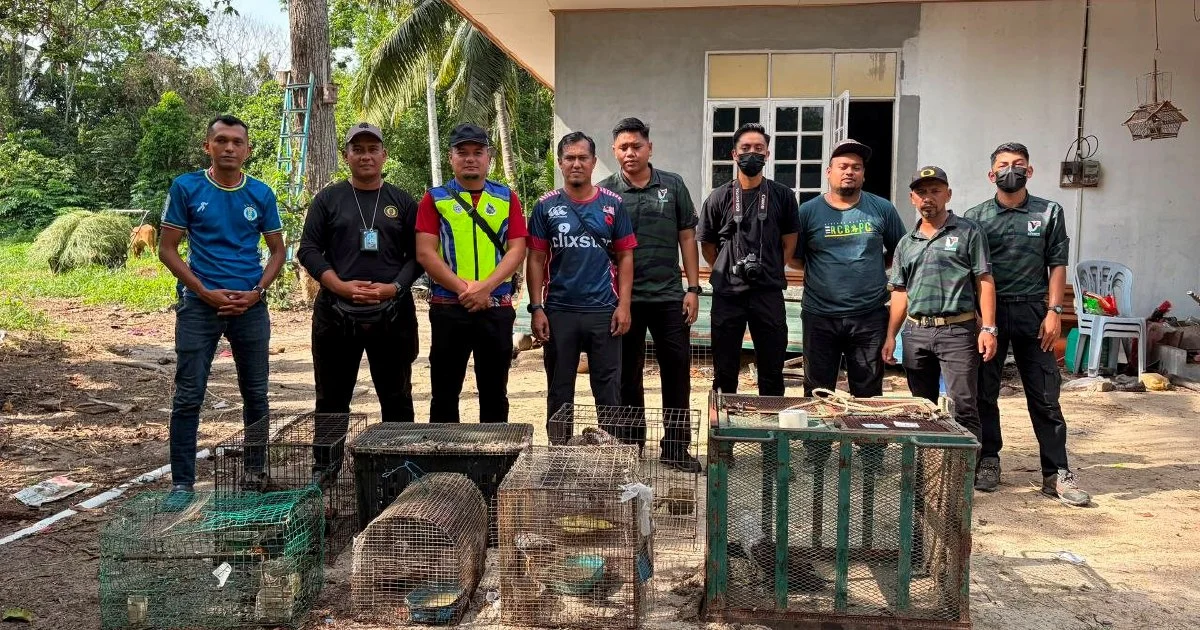
Authorities in Kelantan have apprehended an 18-year-old suspect following the discovery of protected wildlife animals valued at approximately RM48,500 during an enforcement operation conducted in Tumpat. The raid, which represents ongoing efforts to combat illegal wildlife trading in the state, resulted in the seizure of four distinct species of fauna that are afforded protection under Malaysian law.
The arrest underscores a persistent problem across Southeast Asia where young individuals become entangled in the illegal wildlife trade, often as low-level operatives in larger trafficking networks. The relatively substantial monetary value of the seized animals—nearly RM50,000—demonstrates the economic incentives driving such criminal activity, even at the street level. These figures frequently underscore why enforcement agencies prioritise wildlife trafficking as a serious criminal concern, particularly when minors are involved in the movement or sale of protected species.
Kelantan has emerged as a geographic flashpoint for wildlife trafficking activities, positioning itself along routes used to distribute animals sourced from various parts of Malaysia and the broader ASEAN region. The state's location and proximity to porous borders have made it a corridor through which contraband fauna moves toward lucrative markets in neighbouring countries and beyond. Tumpat's position as a border town adds another layer of significance to this particular seizure, suggesting possible connections to cross-border trafficking networks.
The involvement of a teenager in this case reflects a troubling trend observed by wildlife enforcement bodies throughout the region. Young offenders are frequently exploited by criminal syndicates who view them as expendable operatives less likely to attract sustained law enforcement attention compared to established adult smugglers. Education and intervention programmes targeting youth have become increasingly important components of conservation strategies, as breaking the supply chain at this vulnerable population level can have multiplier effects on reducing demand and disrupting criminal networks.
Protected wildlife trafficking constitutes one of the most lucrative illicit trades globally, ranking alongside drugs and arms smuggling in terms of financial scale and criminal sophistication. The four species apprehended in this case represent what experts typically categorise as highly desirable animals for illegal collectors, the exotic pet trade, and traditional medicine markets. Each species carries specific legal protections reflecting conservation status assessments, and their capture, transport, and sale violate multiple provisions of Malaysian environmental legislation.
The monetary valuation assigned to these animals—RM48,500—reflects their market value within trafficking networks rather than their ecological or scientific worth. Understanding these price points provides insight into the economic engines propelling trafficking operations and guides enforcement resource allocation. Higher-value species typically attract larger criminal organisations with sophisticated logistics and distribution capabilities, whereas lower-value seizures may indicate street-level opportunistic trading.
Malaysia's enforcement framework for wildlife protection has expanded considerably over recent years, with increased inter-agency coordination between the Department of Wildlife and National Parks (Perhilitan), police, customs authorities, and local government units. Operations such as the one that resulted in this teenager's arrest typically emerge from intelligence sharing and coordinated patrol activities. Success in these interventions depends heavily on community tips and informant networks, which authorities actively cultivate through awareness campaigns.
The case also highlights emerging digital dimensions of wildlife trafficking, where online platforms facilitate sales and coordination between suppliers and buyers across geographical boundaries. Law enforcement agencies are progressively developing cyber-investigation capabilities to track these transactions, though the anonymity afforded by online marketplaces continues to present substantial investigative challenges. Young perpetrators are often tech-savvy and leverage these platforms effectively, making digital forensics an increasingly critical component of wildlife crime investigation.
For Malaysian readers and Southeast Asian observers, cases like this demonstrate that wildlife enforcement represents an ongoing battle requiring sustained commitment and resources. The ecosystem impacts of species depletion extend beyond immediate biodiversity concerns, affecting long-term ecological stability and touristic potential—both economically significant for Malaysia. Each successful prosecution and seizure operation sends deterrent signals throughout criminal networks, though enforcement alone cannot resolve the underlying demand-side factors driving these markets.
The detention of this teenager will likely proceed through Malaysia's criminal justice system under relevant wildlife protection statutes. Penalties typically involve substantial fines and imprisonment terms, with sentencing severity often reflecting species protection status and animal value. The case provides an opportunity for prosecutors to demonstrate enforcement resolve while potentially yielding intelligence that could lead to larger network dismantling efforts.
Broader conservation implications extend beyond immediate legal proceedings, as each seized animal represents a specimen that may be rehabilitated for release or transferred to accredited facilities. This requires substantial investment in rescue and rehabilitation infrastructure, creating ongoing costs that stretch conservation agency budgets. The real expense of wildlife trafficking thus extends across enforcement, prosecution, rehabilitation, and prevention dimensions.

