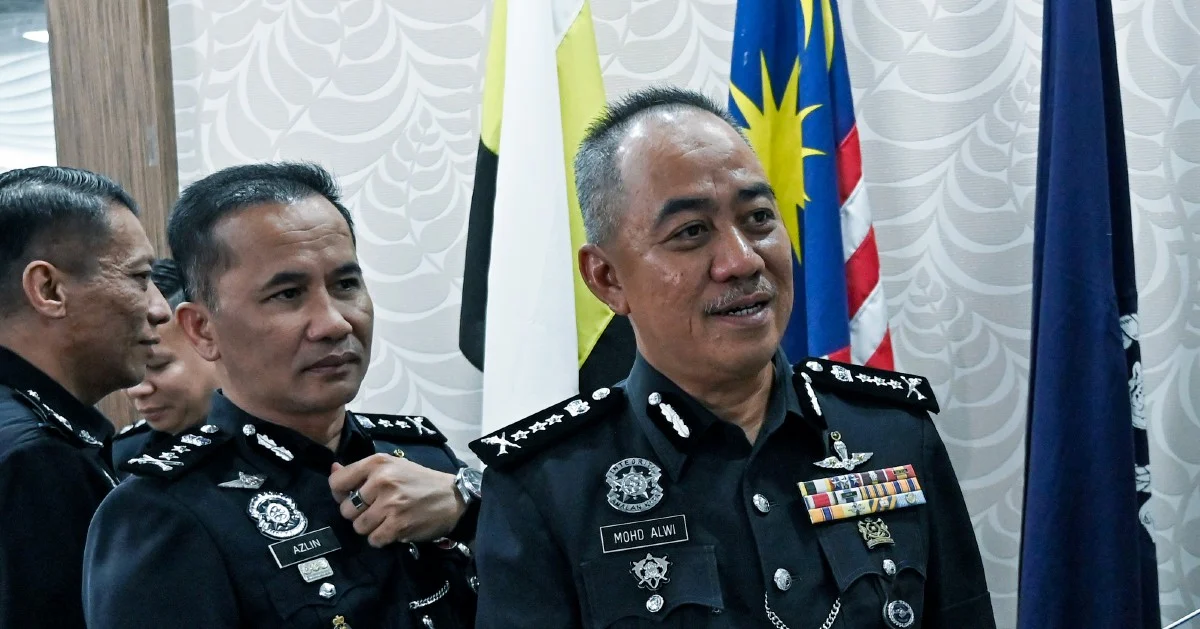
The Ipoh police force has successfully broken up a drug distribution network, leading to the arrest of three individuals including a 17-year-old teenager, following a Monday operation in Pengkalan Tiara. The enforcement action resulted in the seizure of narcotics valued at RM120,050, marking a significant blow against organised drug trafficking in the state capital.
The operation brought to light the extent to which young people have become drawn into the illicit drug trade across northern Malaysia. The involvement of a minor in what authorities describe as a structured trafficking operation underscores a troubling trend whereby adolescents are recruited into criminal enterprises, often because they face lighter legal consequences under juvenile justice frameworks than their adult counterparts. The use of teenagers by organised crime syndicates has become increasingly prevalent in Peninsular Malaysia's urban centres, where organised groups exploit their vulnerability and potential legal advantages.
The drugs recovered from the suspects comprise two distinct substances that represent major public health concerns in Malaysia. Ketamine, a dissociative anaesthetic commonly diverted from legitimate medical sources, has become a fixture of the club and party drug scene, particularly among younger users. Erimin 5, a brand-name formulation of the prescription sedative nimetazepam, is regularly misused for recreational purposes despite its legal status as a controlled medication. The pairing of these two substances in a single trafficking operation suggests the syndicate was targeting a diverse customer base spanning multiple user demographics and consumption contexts.
The street value attributed to this haul reflects the significant profit margins available in Malaysia's illicit drug markets. Even modest quantities of pharmaceutical substances and synthetic drugs command considerable prices when distributed through black market channels, creating powerful financial incentives for trafficking operations. The RM120,050 figure, while representing a substantial seizure by local enforcement standards, likely constitutes only a fraction of the syndicate's ongoing turnover, suggesting the operation was moderately sized within the broader landscape of Ipoh's drug economy.
Pengkalan Tiara, the location of Monday's enforcement action, sits within Ipoh's broader geography where drug-related activities have historically concentrated. The neighbourhood's specific vulnerabilities—whether geographic positioning, economic conditions, or community demographics—likely contributed to its selection as a base of operations for this particular trafficking ring. Understanding the spatial distribution of drug crime across Ipoh remains essential for law enforcement agencies seeking to allocate resources effectively and target preventive initiatives toward communities at greatest risk.
The dismantling of this syndicate represents a tactical victory for police narcotics units, yet regional observers recognise that such individual operations, while publicly visible and operationally important, address symptoms rather than systemic drivers of the drug trade. The rapid replenishment of traffickers and the continued robustness of supply chains suggest that enforcement alone, without complementary demand reduction and harm minimisation strategies, faces inherent limitations in disrupting entrenched criminal markets.
The recruitment of minors into trafficking operations poses particular challenges for Malaysia's criminal justice and child protection systems. While legislation exists to handle juvenile offenders, the underlying circumstances that make young people vulnerable to recruitment—poverty, family instability, limited educational opportunities, and social marginalisation—remain largely unaddressed through enforcement-focused approaches. The apparent ease with which organised groups can incorporate teenagers into their operations raises uncomfortable questions about prevention capacity at community, school, and family levels across the state.
Police investigations into this case will likely reveal the network's supply sources, downstream distribution channels, and financial arrangements. Such intelligence gathering can help authorities identify higher-level trafficking operations and transnational smuggling routes that feed Malaysia's domestic drug markets. The case also provides an opportunity to examine how foreign drug manufacturing and precursor chemicals are diverted into Malaysia's illicit supply chains—a critical knowledge gap that limits the effectiveness of border security and international cooperation efforts.
For Ipoh residents and across Perak more broadly, the operation serves as a reminder of the drug market's entrenchment within urban communities. Despite ongoing enforcement campaigns and public awareness initiatives, illicit drug availability remains robust, pricing remains accessible, and recruitment pipelines continue flowing. The presence of a minor among the arrested individuals crystallises the concern that the normalisation of drug use across Malaysian society has eroded protective barriers that once kept younger generations at greater distance from trafficking operations.
The three-person unit dismantled in Monday's operation likely represented one segment of a larger commercial structure, with supply relationships extending upstream and distribution relationships extending downstream. Breaking individual cells, while operationally necessary, does not address the strategic interests and economic incentives that perpetuate trafficking at scale. Sustained reduction in drug availability within Ipoh and the broader Klang Valley would require sustained pressure across multiple enforcement vectors combined with long-term community interventions targeting vulnerability factors that draw individuals toward drug involvement.