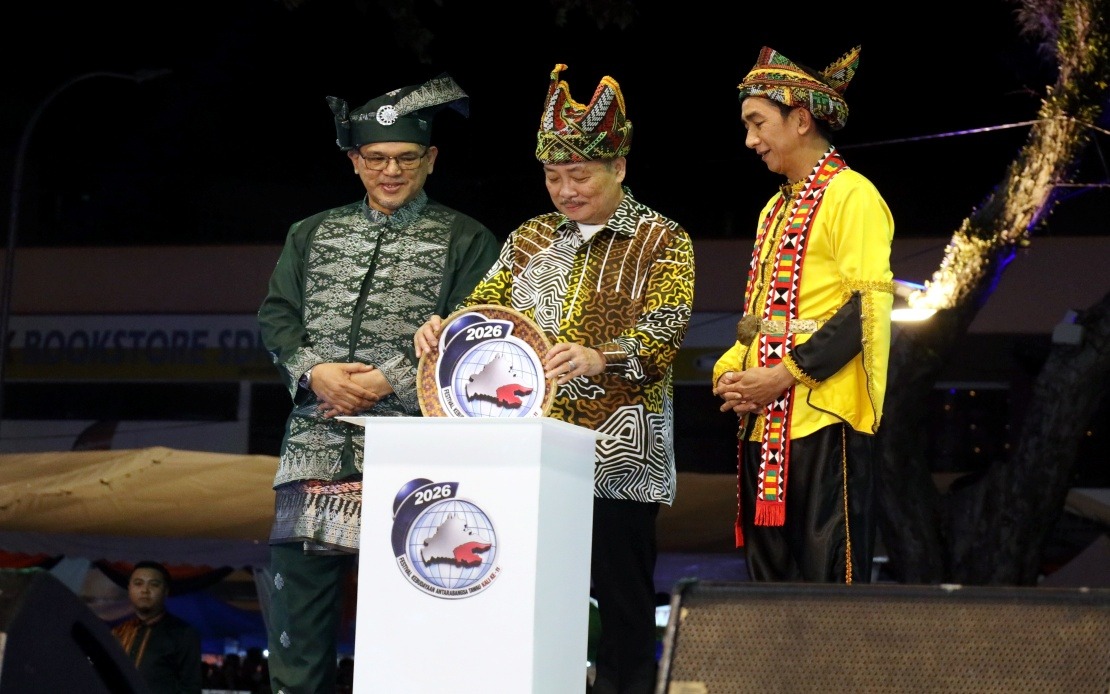
The opening of the 11th International Tawau Cultural Festival (FKAT) 2026 underscores the Sabah government's strategic commitment to positioning the state as a vital cultural tourism hub within the broader Southeast Asian landscape. Sabah Chief Minister Datuk Seri Hajiji Noor's remarks at the ceremony reflect a deliberate policy approach that moves beyond conventional tourism marketing, instead leveraging the festival as a vehicle for cultural preservation, inter-community dialogue, and economic development across multiple stakeholder groups.
At its core, FKAT represents a paradigm shift in how regional governments conceptualise cultural heritage. Rather than treating traditions as merely historical artifacts to be preserved in museums or academic archives, the festival framework positions culture as a living, dynamic asset that generates tangible economic returns while simultaneously strengthening social cohesion. This distinction carries particular significance for Sabah, a state whose demographic composition encompasses numerous indigenous groups, immigrant communities, and established settler populations. The festival's ability to bring these populations together around shared cultural expression serves a unifying function that transcends ceremonial gestures.
The international dimension of FKAT warrants closer examination, particularly given Tawau's geographic position as a border town. The participation of delegates from Kazakhstan, Uzbekistan, Cambodia, and Indonesia demonstrates that the festival has achieved recognition beyond Malaysia's immediate regional orbit. This geographic diversity reflects either deliberate diplomatic outreach or, more likely, organic interest generated through cultural networks and tourism circuits. For Sabah, such international participation creates what might be termed cultural soft power—a means of enhancing the state's regional profile without relying solely on conventional government-to-government relations. The presence of Central Asian nations, in particular, suggests that organisers have successfully marketed Tawau as an accessible intersection point for East-meets-West cultural exchange.
From an economic perspective, the festival's multiplier effects extend well beyond the immediate tourism receipts generated during the event itself. Hajiji's acknowledgment that FKAT creates spillover benefits for homestay operators, small traders, artists, and entrepreneurs indicates understanding of the value chain dynamics that tourism initiatives can activate. In a state where many communities exist at the margins of formal economic structures, such festivals provide crucial seasonal income opportunities and platforms for market access that might otherwise remain unavailable. The homestay sector, in particular, represents a democratisation of tourism benefits—allowing ordinary citizens to participate directly in the hospitality economy rather than concentrating economic gains in large corporate hands.
Tawau's historical role as a trading centre and transport hub makes it an logical choice for hosting a major cultural festival. As both a port town and border gateway, Tawau has long facilitated the movement of goods, people, and ideas across regional boundaries. FKAT capitalises on these existing networks and infrastructure, transforming the town's geographic position from a purely commercial advantage into a cultural asset. The festival thus represents a diversification of the local economy beyond its traditional reliance on fishing, port activities, and agricultural trade.
The timing of FKAT's elevation occurs within a broader Malaysian tourism push aligned with Visit Malaysia Year 2026 and Visit Sabah Year 2027. These government-designated tourism years function as national branding exercises, coordinating disparate regional initiatives into a coherent message directed at international travellers. By positioning FKAT within this framework, Sabah ensures that the festival receives visibility not only through local and state promotional channels but also through federal-level tourism marketing apparatus. This alignment amplifies the festival's reach and suggests that state and federal governments view cultural tourism as integral to Malaysia's post-pandemic economic recovery strategy.
The preservation imperative articulated by Hajiji—that culture must be protected for future generations—reflects growing regional awareness of cultural erosion risks accompanying rapid modernisation and economic development. In Southeast Asia, where globalising pressures increasingly homogenise urban spaces and consumer cultures, festivals like FKAT function as deliberate counterweights. By investing government resources and political attention in cultural preservation, Sabah sends a signal to its constituent communities that their traditions merit public recognition and protection. This symbolic validation carries political importance, particularly for indigenous populations whose cultural survival has historically depended on community transmission rather than institutional support.
The state government's commitment to supporting ethnic organisations in managing their respective cultural heritages suggests an institutional architecture that respects cultural autonomy while providing material support. This approach avoids the pitfall of top-down cultural management where government-appointed officials determine which cultural practices merit preservation. Instead, by positioning ethnic organisations as stewards of their own traditions, Sabah's framework respects community agency while ensuring that cultural preservation efforts align with community values and priorities.
For Malaysian and Southeast Asian observers, FKAT's success carries implications beyond Tawau's immediate context. The festival demonstrates that border towns—often peripheral to national economic and cultural narratives—can become cultural tourism destinations through strategic programming and international engagement. This model potentially applies to other Malaysian border towns and regional centres that possess cultural diversity but have historically lacked tourism infrastructure or international visibility. The festival also illustrates how state governments can leverage cultural initiatives to advance multiple policy objectives simultaneously: tourism development, economic diversification, cultural preservation, and inter-community harmony.
The economic benefits accruing to small traders and artists underscore tourism's potential to distribute income across broader segments of local populations. Unlike industrial projects that concentrate employment in formal sectors, cultural tourism activates informal economy participants—craft makers, performers, food vendors, and hospitality providers. This income distribution pattern has implications for regional equity, as it enables smaller communities and individuals to participate in tourism value chains without requiring substantial capital investment or formal credentials.
Moving forward, FKAT's trajectory will likely depend on consistency—whether the festival maintains international participation, continues to generate meaningful economic returns for local communities, and successfully preserves cultural integrity amid commercialisation pressures. The festival's institutional embedding within broader Visit Malaysia Year initiatives suggests sufficient government commitment to sustain the event beyond initial enthusiasm. However, long-term success will require ongoing investment in infrastructure, continuous engagement with international networks, and vigilant management of cultural commodification risks, where authentic traditions become diluted through excessive commercialisation.

