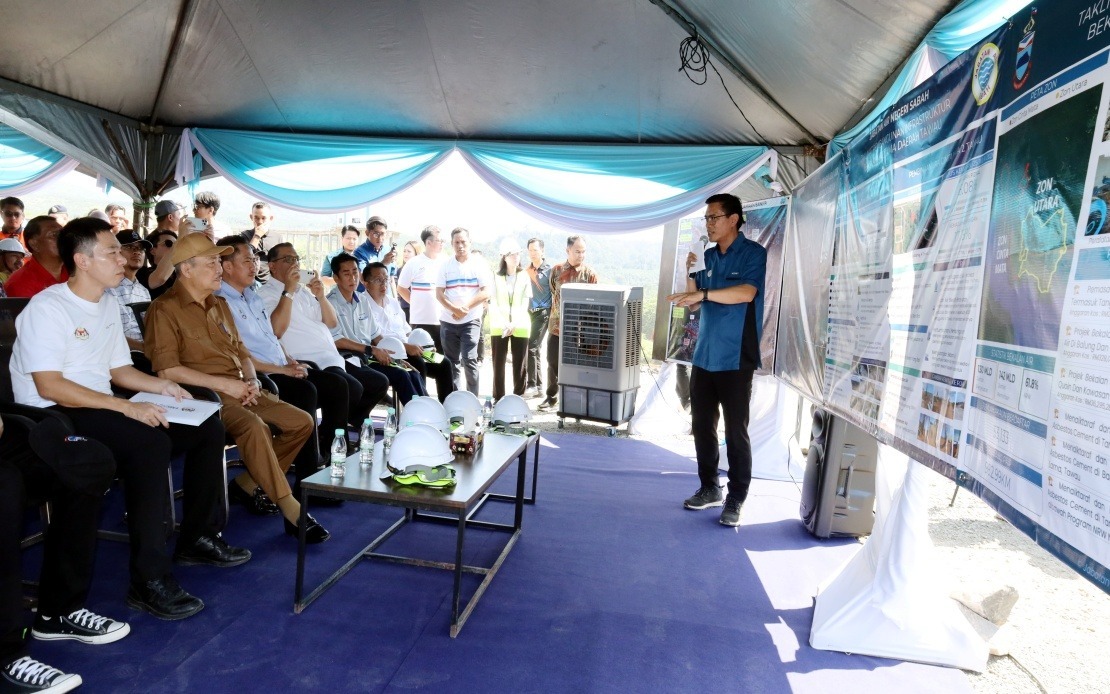
Tawau's residents may finally see relief from decades of water shortages by the end of 2027, as the Sabah state government pushes forward with a RM450.5 million infrastructure initiative designed to fundamentally transform the district's water security. During a recent site visit to ongoing construction projects, Chief Minister Datuk Seri Hajiji Noor assured the public that despite contractor requests for timeline extensions, the Tawau Water Supply Scheme Phase III remains on schedule for completion before the year ends, delivering what many in the district view as overdue resolution to a problem that has plagued residents and businesses for generations.
The scale of the undertaking underscores both the severity of Tawau's water predicament and the state government's commitment to addressing infrastructure deficits inherited from previous administrations. The comprehensive Phase III project encompasses multiple interconnected components: a new dam to serve as the primary raw water source, coupled with extended pipeline networks delivering water to existing and newly constructed treatment facilities. The initiative represents not merely a repair of existing systems but a complete reimagining of how the district's water resources are captured, processed, and distributed to end users across Tawau and neighbouring areas.
At the heart of the scheme lies the Tawau Dam, which has achieved 74.04 per cent physical completion as of late July. This facility will store approximately 30 million cubic metres of raw water—a capacity that administrators expect will stabilise supply throughout seasonal variations and provide substantial buffers against drought conditions that have historically constrained availability. Beyond supply augmentation, the dam will simultaneously function as a flood mitigation structure, reducing inundation risks for downstream communities, thereby delivering dual benefits to the region's water and disaster management infrastructure.
The distribution network being constructed as part of Phase III extends 11.6 kilometres of 700-millimetre diameter raw water pipelines connecting the dam to three treatment plants: the existing Cinta Mata 1 facility, the newly built Cinta Mata 2 WTP, and the Utara WTP. This redundancy in treatment capacity—the three plants combined will produce 161 million litres of treated water daily—provides operational flexibility and ensures that maintenance or emergency shutdowns at any single facility need not compromise district-wide supply. Such resilience has become increasingly critical in an era of climate volatility and aging infrastructure challenges across Southeast Asia.
The Cinta Mata 2 Water Treatment Plant represents the single largest component of the overall investment, with a dedicated budget of RM299.9 million and an independent completion target of July 2028. This facility alone will add 30 million litres daily of treatment capacity, more than doubling the district's ability to process raw water into potable supply. As of late July, the plant had achieved approximately 16 per cent physical progress, suggesting steady advancement despite the complexity inherent in constructing modern water treatment infrastructure. Once operational, Cinta Mata 2 is projected to directly serve approximately 42,000 consumers in Tawau's core residential and commercial zones, alongside additional beneficiaries in surrounding satellite communities.
The urgency of these investments becomes apparent when examining Tawau's current water balance. The district maintains 53,133 registered water accounts and currently generates only 130 million litres of treated water per day—a figure that falls 12 million litres short of measured demand, creating a persistent supply-demand gap that manifests as rationing, intermittent service interruptions, and water quality degradation during peak consumption periods. This structural deficit has constrained economic development, frustrated residential expansion, and undermined quality of life for decades. The Phase III completion will theoretically add sufficient capacity to meet not only current demand but provide margin for demographic growth and commercial expansion anticipated over the coming decade.
Chief Minister Hajiji characterised the water crisis as a legacy problem not created during the tenure of the current state administration, yet one that his government has embraced as a priority requiring substantial fiscal commitment. This framing, while politically defensible, also reflects broader recognition across Sabah's governance structures that infrastructure deficiencies accumulated over years cannot be resolved rapidly or inexpensively. The state government has signalled willingness to allocate additional funding beyond the baseline RM450.5 million should technical assessments by the Sabah State Water Department (JANS) and the Department of Irrigation and Drainage (DID) identify unforeseen requirements during implementation.
The contractor's request for time extensions, whilst acknowledged, has not derailed the completion timeline that matters most to residents—the end of 2027 target remains firm. Such extensions are procedurally common in large infrastructure projects, particularly those involving earthworks, structural engineering, and complex pipeline installation across challenging terrain. The critical metric is not whether every subsidiary deadline survives intact, but whether the constellation of projects achieves operational status within a timeframe that addresses the immediate water security imperatives facing Tawau's population.
For Malaysian and Southeast Asian observers, the Tawau case exemplifies challenges confronting many rapidly developing regions: infrastructure systems designed and constructed decades ago for much smaller populations now struggle under the weight of urbanisation, demographic growth, and climate-driven variability in water availability. Tawau's experience resonates particularly in other Malaysian states and across the ASEAN region, where comparable water supply crises have prompted similar large-scale capital investments. The success or failure of initiatives like Phase III will provide instructive lessons regarding project management, cost control, and long-term sustainability of expanded water infrastructure in tropical Southeast Asian contexts.
Looking forward, completion of the Phase III scheme should eliminate the acute supply constraints that have defined Tawau's water narrative for the past two decades. However, sustained benefits will require ongoing investment in distribution network maintenance, treatment plant operations, demand management, and adaptation strategies as climate patterns continue to evolve. The RM450.5 million commitment, substantial as it is, represents only the most recent chapter in what will necessarily be a continuous process of water infrastructure renewal and enhancement spanning decades.

