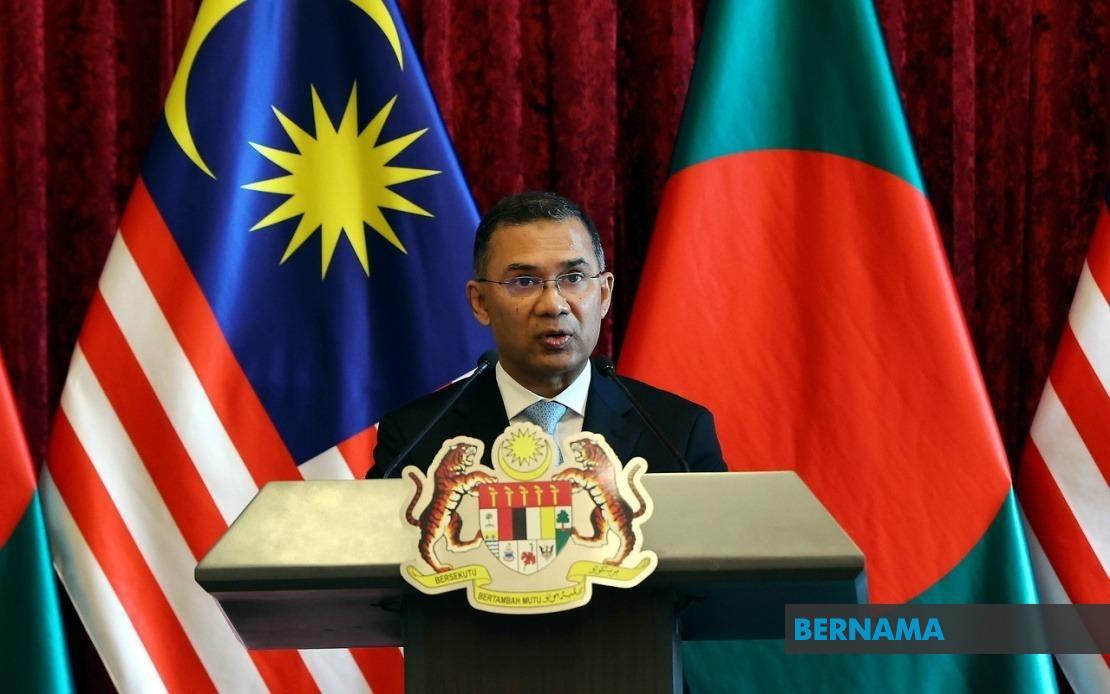
Bangladesh's Health and Family Welfare Minister Sardar Mohammad Sakhawat Hossain has credited Prime Minister Tarique Rahman's visit to Malaysia in June with reinforcing the diplomatic and economic foundations of the relationship between the two nations. Speaking at an event in Dhaka on Saturday evening organized by the Bangladesh-Malaysia Chamber of Commerce and Industry, Sakhawat underscored the significance of the bilateral engagement as evidence of deepening cooperation across multiple sectors.
The minister emphasized that the relationship between Dhaka and Kuala Lumpur rests fundamentally on a bedrock of mutual trust and shared interests. This characterization reflects the strategic importance both countries place on their partnership within the broader context of South and Southeast Asian regional dynamics. The relationship extends beyond government-to-government interactions, encompassing cultural, educational, and humanitarian dimensions that have accumulated over decades of diplomatic engagement.
Central to Sakhawat's remarks was the pivotal role of business communities in cementing ties between Bangladesh and Malaysia. He highlighted that sustained interaction between entrepreneurs, traders, and industrial leaders from both nations represents a crucial mechanism through which the relationship translates into tangible benefits for ordinary citizens. The private sector engagement creates employment, facilitates technology transfer, and builds networks that transcend governmental changes, providing continuity and resilience to bilateral relations.
In his address at the forum titled "Towards a Stronger Bangladesh-Malaysia Partnership," the health minister made an explicit appeal for Malaysian companies to substantially increase their sourcing from Bangladeshi suppliers. This plea reflects Bangladesh's economic priorities, particularly its need to diversify export markets and accelerate export-driven growth. Malaysia, with its developed financial markets and strong purchasing power, represents a strategically important destination for Bangladeshi goods ranging from textiles and garments to agricultural products and light manufacturing.
Sakhawat's emphasis on broadening economic cooperation signals recognition that political goodwill, while necessary, must translate into concrete commercial arrangements to sustain bilateral momentum. The minister appeared to be addressing a perceived imbalance in trade relations, suggesting that Bangladesh views the relationship as having unfulfilled potential in terms of bilateral commerce. For Malaysian business leaders present at the event, the statement effectively constituted an invitation to identify untapped opportunities within Bangladesh's diverse production base.
The presence of Malaysian High Commissioner to Bangladesh Mohd Shuhuda Othman at the Saturday gathering underscored official commitment from Kuala Lumpur to deepening engagement. High commissioners serve as crucial bridges between governments, tasked with facilitating business networking, cultural exchanges, and diplomatic problem-solving. Othman's attendance signaled that Malaysia regards the partnership as sufficiently important to warrant sustained high-level engagement through its diplomatic mission in Dhaka.
The Federation of Bangladesh Chambers of Commerce and Industry (FBCCI) administrator Mohammad Fazlul Haque also participated in the event, representing the organized voice of Bangladesh's private sector. His involvement highlighted the convergence between governmental policy and business sector aspirations regarding Malaysia relations. The FBCCI has consistently advocated for trade liberalization and expanded market access for Bangladeshi enterprises, and events like Saturday's forum provide platforms to articulate these priorities to both Malaysian officials and domestic stakeholders.
For Malaysian readers and policymakers, the developments underscore Bangladesh's emerging strategic importance within Southeast Asia. With a population exceeding 170 million and an economy experiencing steady growth, Bangladesh offers significant opportunities for Malaysian investors and exporters. The textile and apparel industries, which dominate Bangladesh's export profile, present competition for Malaysian manufacturers but also potential for supply chain integration and joint ventures that could benefit both nations.
The timing of Sakhawat's remarks, occurring several months after Tarique Rahman's June visit, suggests that the momentum from high-level diplomatic engagement is being sustained through follow-up activities and business-focused initiatives. This follow-through approach contrasts with cycles in some bilateral relationships where visits generate initial enthusiasm that subsequently dissipates without institutionalized mechanisms to translate political support into practical outcomes.
Looking forward, the stated commitment to stronger Bangladesh-Malaysia partnership carries implications for regional trade architectures such as the Association of Southeast Asian Nations (ASEAN), of which Malaysia is a founding member and Bangladesh seeks closer alignment with. Enhanced bilateral relations between these two nations could facilitate Bangladesh's integration into broader Southeast Asian economic frameworks, benefiting both through expanded market access and deeper supply chain integration.
The emphasis on mutual trust and economic cooperation also reflects pragmatic recognition that sustained relationships in modern South and Southeast Asia require continuous renewal and diversification of engagement channels. Governments alone cannot maintain bilateral momentum; active participation from business communities, civil society, educational institutions, and cultural organizations ensures that relationships remain relevant and mutually beneficial across diverse constituencies in both nations.
For Bangladesh specifically, strengthening ties with Malaysia—a technologically advanced, middle-income nation with significant influence in ASEAN—offers pathways to access technology, expertise, and markets that can accelerate economic development. For Malaysia, deepening engagement with Bangladesh opens access to labor-intensive manufacturing alternatives as wage costs in Malaysia continue to rise, potentially enabling Malaysian companies to maintain competitive positioning in global supply chains.

