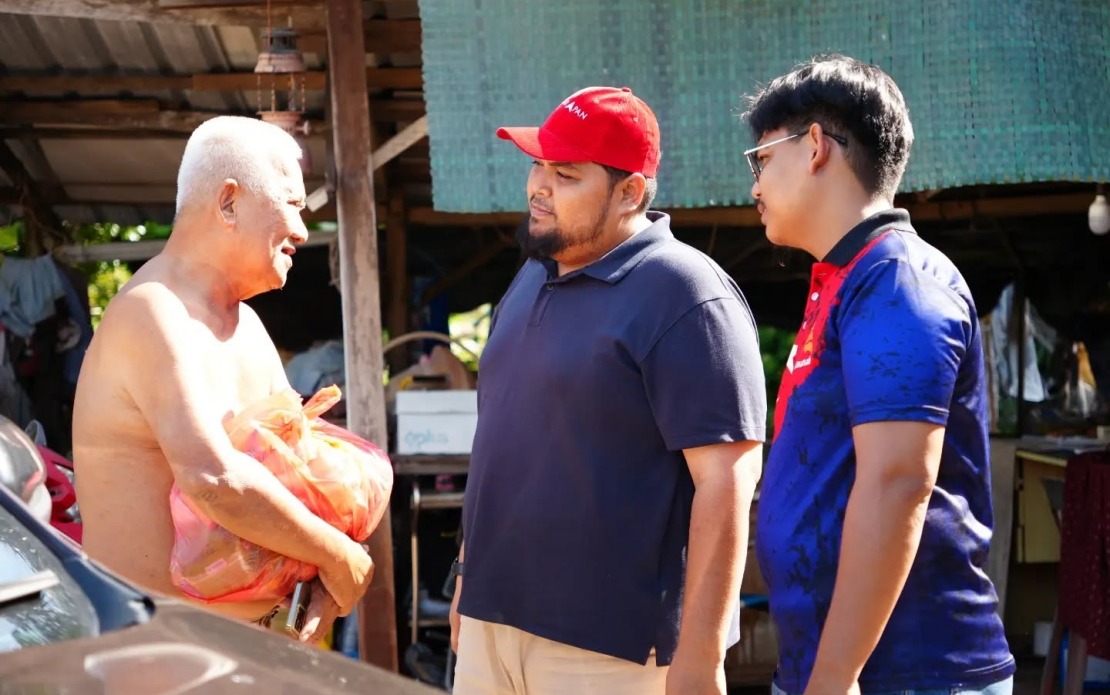
Muhammad Taqiuddin Cheman, the Pakatan Harapan candidate contesting the Maharani state seat in Johor's upcoming election, is sharpening his electoral pitch by making youth employment and economic opportunity the centrepiece of his campaign strategy. With voting set for Saturday, July 11, the former assemblyman—widely known as Taqi—has devoted his final four days before polls to connecting directly with young constituents through targeted engagement sessions across Muar, seeking to understand the specific challenges preventing young people from building futures within the district.
The employment crisis affecting young Johoreans represents perhaps the most pressing concern surfacing repeatedly in Taqi's conversations with voters. Muar has acquired an unflattering reputation as a "retirement town," a designation that reflects decades of youth migration outward as young people abandon the district in pursuit of careers in urban centres or within the state's semiconductor manufacturing sector. This demographic drain threatens the long-term vitality of Muar's economy and represents a failure of previous administrations to create the conditions necessary for sustainable youth employment and wealth creation locally.
During a recent meeting with young entrepreneurs operating from District 84, Taqi identified a concrete opportunity to address this exodus. The commercial hub currently hosts approximately 70 traders forced into an impractical rotation system due to insufficient space in properly developed retail locations. These young business owners have already conducted their own site identification and lack only institutional support and formal assistance with securing commercial premises within the district. This scenario illustrates how obstacles to youth entrepreneurship often stem not from lack of ambition but from bureaucratic friction and inadequate infrastructure investment.
Taqi's approach draws significantly on Pakatan Harapan's broader "Johor For All" manifesto, which has allocated RM500 million specifically toward supporting young entrepreneurs seeking to expand existing operations or launch new ventures. The injection of capital targets the funding gap that typically constrains young business owners in less developed districts like Muar, where access to venture capital and development financing remains comparatively limited relative to Klang Valley alternatives. This financial commitment signals a systematic attempt to reorient state resources toward youth economic empowerment.
The emerging Maharani Energy Gateway project promises additional economic diversification opportunities for the constituency. As this initiative approaches completion, it is expected to generate employment across multiple sectors and create backward-linkage opportunities for supporting industries and service providers. However, realising these benefits requires coordinated workforce development rather than simply hoping local youth possess requisite skills.
Recognising this gap, Taqi has advocated for establishing quality Technical and Vocational Education and Training institutions within the Maharani constituency itself. Rather than requiring young people to leave the district for professional training, embedding TVET capacity locally would enable residents to acquire industry-relevant qualifications while remaining connected to family and community networks. This infrastructure would particularly benefit second-generation fishing families seeking to modernise their livelihoods while remaining within traditional economic sectors that anchor Muar's identity.
Beyond employment and entrepreneurship, Taqi's engagement sessions have surfaced critical infrastructure deficiencies undermining both agricultural productivity and maritime activity. Poor drainage systems continue afflicting oil palm plantations, reducing yields and farmer incomes, while the shallow river mouth at Parit Raja Laut creates navigation obstacles for fishing vessels, restricting maritime economic activity and endangering food security within the region. These issues reflect systematic underinvestment in enabling infrastructure and demand state-level intervention with adequate budgetary allocation.
Taqi's campaign positioning directly challenges the notion that Muar must inevitably experience youth emigration. By articulating a coherent agenda addressing employment constraints, entrepreneurial support, skills development, and infrastructure modernisation, he presents voters with a tangible alternative to resignation and decline. His prior involvement in business lending credibility to his understanding of entrepreneurial realities, distinguishing him from politicians offering purely rhetorical promises.
The Maharani contest remains genuinely competitive, with three other candidates contesting: Mohamad Anuar Hayan representing Perikatan Nasional, Datuk Ashari Md Sarip from Barisan Nasional, and Muhammad Amir Fiqri of Parti Ikatan Demokratik Malaysia. Each candidate will attempt to mobilise distinct voter coalitions, yet Taqi's explicit focus on youth concerns and his concrete policy proposals targeting young people's core grievances position him strategically for capturing ballots among Muar's under-40 demographic.
The outcome in Maharani holds significance beyond the seat itself. Johor remains Malaysia's most closely watched state politically, with electoral trends in individual constituencies often foreshadowing broader regional or national shifts. A strong performance by PH among young voters would suggest that economic anxiety and desire for institutional reform resonate most powerfully among younger generations, even in traditionally more conservative districts. Conversely, if opposition parties successfully counter Taqi's youth-focused messaging, it would indicate that alternative political narratives maintain purchase with younger voters despite economic headwinds.
Muar's trajectory as either a thriving district attracting and retaining young talent or as a progressively hollowing retirement community depends on decisions made during this election cycle. Taqi's campaign implicitly recognises that young people require not merely aspirational rhetoric but concrete policy frameworks addressing real constraints to economic participation and business development. Whether voters judge his specific proposals as sufficiently ambitious and deliverable will substantially shape Maharani's future demographic and economic composition.

