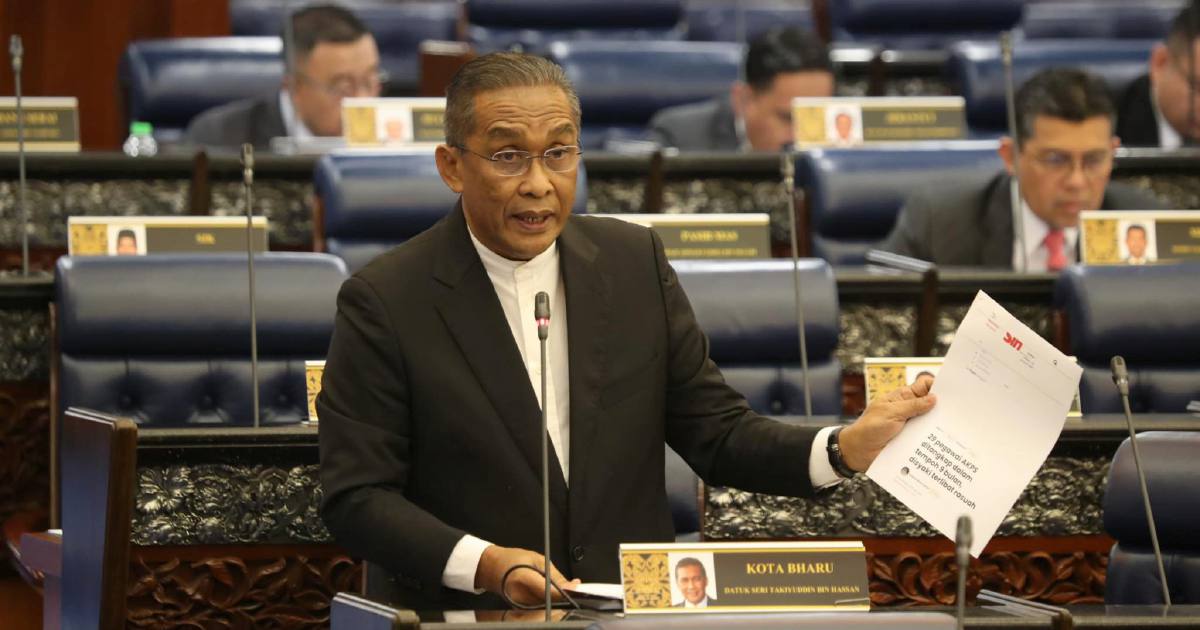
The Opposition's chief whip Datuk Seri Takiyuddin Hassan has formally requested that the special sitting of the Dewan Rakyat convened to debate the Royal Commission of Inquiry report on Tabung Haji be deferred until Prime Minister Datuk Seri Anwar Ibrahim is able to attend Parliament. This move suggests growing political sensitivities surrounding the parliamentary examination of the pilgrimage fund's governance, which has faced sustained scrutiny over financial mismanagement concerns in recent years.
Takiyuddin's intervention underscores the high-stakes nature of the RCI findings, indicating that the Opposition views the Prime Minister's physical presence during proceedings as essential for meaningful parliamentary discourse. The timing of this request reflects broader parliamentary conventions around major policy debates, particularly those involving investigative commissions established to examine institutional failings. By insisting on the PM's attendance, the Opposition appears to be signalling that this is not a routine administrative matter but rather a significant inquiry whose implications warrant leadership-level engagement.
Tabung Haji, officially known as the Tabung Haji Investment Corporation, holds profound significance for the Muslim-majority Malaysian population as the primary vehicle through which citizens save and prepare for the Hajj pilgrimage. The fund manages billions of ringgit in assets and serves millions of subscribers, making its governance and financial integrity matters of considerable public concern. Any RCI investigating the institution touches upon both fiscal stewardship and religious obligation, dimensions that elevate parliamentary scrutiny beyond ordinary legislative business.
The establishment of the RCI itself reflected mounting public disquiet over Tabung Haji's performance and the adequacy of existing oversight mechanisms. Multiple controversies surrounding investment strategies, dividend payments, and administrative transparency had prompted stakeholders and political figures across the spectrum to demand independent investigation. The commission's completion and presentation of findings thus represent a critical juncture in addressing accumulated grievances and determining what systemic reforms may be necessary.
For Malaysian readers, the substance of the RCI report carries immediate ramifications. Tabung Haji subscribers—a constituency numbering in the millions—depend on the fund's viability for their pilgrimage savings. Any findings relating to misallocation of resources, inadequate governance structures, or governance lapses directly affect the security and growth of these personal retirement and religious savings. The parliamentary debate therefore represents an opportunity for public accountability and potential corrective measures that could influence how the fund operates going forward.
Postponement until the Prime Minister's availability may also reflect procedural norms around matters requiring cabinet-level policy responses. If the RCI's recommendations entail government action, legislative change, or institutional restructuring, having the PM present allows for immediate commitment on implementation timelines and demonstrates executive accountability. Conversely, deferring debate might be perceived as delaying public examination if perceived as a blocking tactic by the Opposition, creating its own reputational risks.
The parliamentary calendar implications of such postponement warrant consideration. Special sittings are scheduled for specific purposes and postponement requires coordination among leadership, creating logistical and procedural complications. Takiyuddin's formal request therefore signals Opposition intent to ensure the debate occurs under optimal conditions rather than attempting to obstruct proceedings entirely, a distinction that shapes how the postponement request may be received by other parliamentary stakeholders.
From a Southeast Asian governance perspective, the Tabung Haji RCI debate reflects trends across the region toward greater institutional transparency and independent investigation of state-managed funds. Countries throughout ASEAN have grappled with similar questions about pilgrim fund management, asset allocation, and fiduciary accountability. Malaysia's handling of the Tabung Haji inquiry therefore carries implications for regional standards of institutional governance and citizen-state relations around religiously-significant financial instruments.
The request also highlights opposition oversight functions within Malaysia's Westminster-influenced parliamentary system. As chief whip, Takiyuddin holds responsibility for coordinating Opposition positions on parliamentary business. His intervention demonstrates how procedural tools and parliamentary conventions provide mechanisms for Opposition engagement on matters of institutional accountability, even when the government controls the legislative agenda.
Stakeholder reactions to the postponement request will likely vary across constituencies. Tabung Haji subscribers may worry that delay implies reluctance to address findings, while business groups with exposure to fund investments may welcome tempo adjustments. Civil society organisations focused on institutional transparency will monitor whether postponement reflects reasonable procedural adjustment or strategic avoidance of accountability scrutiny.
The ultimate resolution of this request—whether the government accedes to postponement or proceeds with the scheduled sitting—will signal the administration's confidence in the RCI process and its findings. Government agreement to defer suggests willingness to address the inquiry comprehensively with full leadership engagement, while proceeding despite the Opposition's request would demonstrate priority on timely public disclosure. Either path carries implications for institutional legitimacy and public confidence in how Malaysia's governance institutions respond to independent investigative findings.

