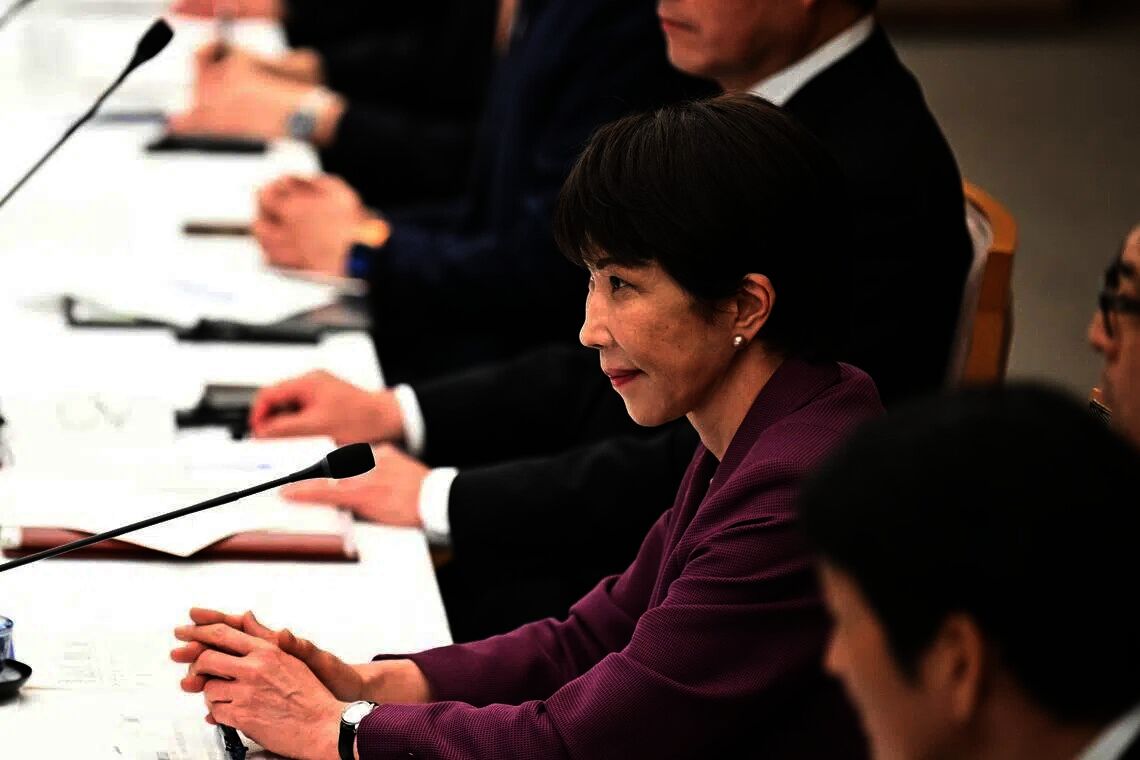
A video clip from a 2002 political debate programme has plunged Japanese Prime Minister Sanae Takaichi into fresh controversy, as her past assertions that Japan's military campaign against China constituted an act of self-defence rather than aggression have resurfaced on social media platforms and drawn considerable domestic condemnation. The footage, originally broadcast on TV Asahi, shows Takaichi arguing that imperial expansion into China during the 1930s represented accepted international practice, a characterisation that clashes sharply with historical consensus and has ignited considerable debate across Japanese society.
The debate's moderator at the time, respected journalist Soichiro Tahara, confronted Takaichi directly over her historical interpretation, denouncing her position as fundamentally flawed and intellectually indefensible. Tahara's contemporaneous criticism—that someone holding such views should not occupy a parliamentary seat—has gained fresh resonance now that Takaichi holds the nation's highest political office. His scepticism has been vindicated in the eyes of many commentators who view the emergence of this footage as especially troubling given her current position.
Reaction on social media has been swift and overwhelmingly negative, with YouTube comments reflecting a spectrum of concerns from accusations of historical ignorance to alarm at her elevation to prime minister. Users have expressed worry that someone willing to defend militaristic narratives has reached Japan's leadership, with several calling explicitly for her resignation. The viral nature of the debate excerpt suggests that public unease about Takaichi's approach to Japan's wartime past remains a potent political issue, one capable of mobilising online opinion and shaping broader perceptions of her government's legitimacy.
Yusuke Yamashita, an academic specialising in corporate responsibility at Sakushin Gakuin University, has contributed to the discourse by identifying a fundamental weakness in Takaichi's argumentation. Writing on social media, Yamashita suggests that her inability to articulate a coherent logical foundation for her self-defence claims indicates that her positions rest on emotional conviction rather than evidence-based reasoning. This diagnosis carries particular weight because it underscores not merely disagreement with historical facts but a failure of rational discourse—a distinction that amplifies concerns about her fitness to lead.
Politician Ichiro Ozawa, a veteran lawmaker with a career spanning from 1969 to 2026, has articulated the existential stakes. Ozawa's statement that ignorance at the helm of government poses a catastrophic risk reflects anxiety that ideologically-driven historical revisionism could translate into destabilising foreign policy decisions affecting both Japan and its regional neighbours. His plea for resignation carries the weight of someone with decades of experience navigating Japan's political system and its international relationships.
Takaichi's trajectory through Japanese politics reveals a consistent ideological pattern. Since entering the Diet in 1993, she has maintained membership in the Liberal Democratic Party's conservative-nationalist faction, consistently advocating positions that challenge post-war orthodoxy. Her calls for constitutional amendments to expand military scope and alter the nomenclature of Japan's defence establishment reflect a worldview that seeks to recalibrate Japan's security posture and its historical self-understanding. These positions do not emerge in isolation but form part of a broader intellectual current within segments of Japan's political establishment.
Takaichi's rhetoric aligns with narratives advanced by other right-wing Japanese politicians who challenge conventional understandings of the Asia-Pacific War's origins and consequences. These revisionists typically minimise or contest the severity of Japan's conduct toward China and other Asian nations, presenting wartime expansion as defensive necessity rather than imperial conquest. Such framings constitute what critics characterise as historical whitewashing—an effort to rehabilitate militaristic interpretations that most democratic nations and international bodies have long rejected.
The timing of this controversy's renewal coincides with a period of declining public confidence in Takaichi's administration. Opinion surveys conducted in July have documented eroding support, with disapproval margins expanding significantly and, in certain instances, overtaking approval ratings. Analysts suggest that this erosion reflects multiple pressures: the historical revisionism controversy compounds other political difficulties, particularly government struggles to address economic anxieties and cost-of-living concerns that weigh heavily on Japanese households. The juxtaposition of Takaichi's commitment to contentious historical and military policy positions against her apparent inattention to pressing domestic economic needs has generated a credibility gap.
From a regional perspective, Takaichi's prominence raises questions about Japan's future diplomatic trajectory. Southeast Asian nations, several with histories of Japanese military occupation and suffering, maintain sensitivities about how Tokyo addresses wartime conduct. Malaysia and other ASEAN countries, while prioritising pragmatic economic relationships with Japan, nonetheless monitor signals about how Tokyo's leadership approaches historical responsibility. A prime minister perceived as a historical revisionist potentially complicates Japan's efforts to maintain its postwar regional standing as a responsible democratic power committed to rules-based order.
The broader significance of the resurfaced debate extends beyond personal criticism of Takaichi herself. The controversy illuminates enduring tensions within Japanese political culture between constituencies favouring frank confrontation with wartime conduct and those advancing revisionist interpretations. That such fundamental disagreements about historical facts persist at Japan's highest leadership levels contrasts with the relative consensus in most developed democracies about accepting historical responsibility for past state actions. This internal division potentially constrains Japan's ability to project unified diplomatic messaging on sensitive regional issues.
Moving forward, the sustainability of Takaichi's premiership appears increasingly fragile. The convergence of historical controversy, declining public approval ratings, and substantive policy concerns regarding economic management creates multiple pressure points. Whether this administration can recover public confidence depends partly on whether Takaichi can demonstrate responsiveness to economic anxieties while maintaining her ideological commitments, or whether she must choose between positions that appeal to her political base and broader public opinion. The precedent of a sitting prime minister facing renewed scrutiny over wartime revisionism marks an unusual moment in contemporary Japanese politics, one that will likely influence discussions about how Tokyo balances historical interpretation with international responsibilities.

