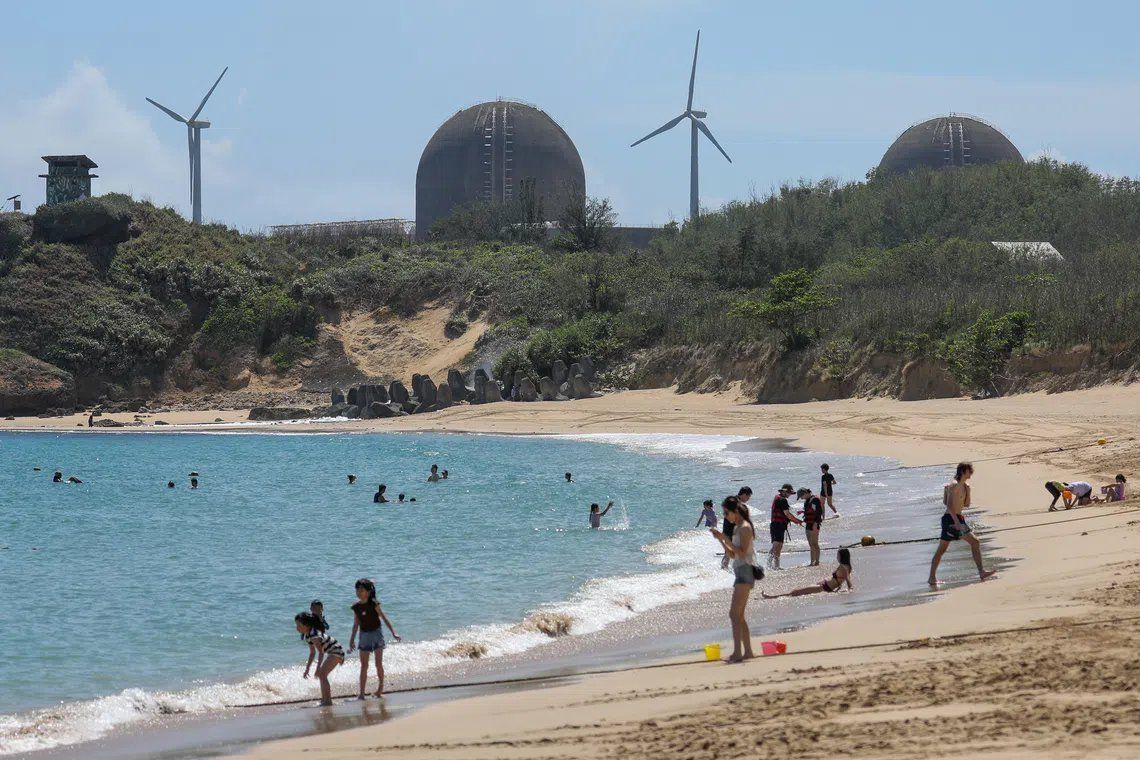
Taiwan's political landscape is set to become more contentious as voters prepare to weigh in on nuclear energy policy during the November 28 "nine-in-one" local elections. The referendum, asking whether the government should overturn its "Nuclear-Free Homeland" policy to bolster electricity supply, energy affordability, national defence capabilities, and artificial intelligence development, represents far more than a straightforward policy question. Beneath the technical arguments over energy security lies a calculated attempt by opposition parties to manipulate electoral dynamics and energise their core supporters during a critical midterm political moment.
The frequency of Taiwan's referendums has accelerated dramatically in recent years, creating a pattern that concerns democratic scholars and weary voters alike. This upcoming ballot marks the fourth national referendum focused on nuclear policy within just eight years, with the previous vote occurring only twelve months ago. Such rapid-fire policymaking instruments suggest that fundamental questions about Taiwan's energy future have not been adequately resolved through conventional political channels. The fact that the government felt compelled to place this issue before voters again so soon raises legitimate questions about whether referendums are now being weaponised as extensions of electoral competition rather than genuine mechanisms for democratic deliberation.
The Central Election Commission approved only one of three proposed referendums submitted this year, revealing the selective nature of which issues reach the ballot. Authorities rejected a proposal to legalise corporal punishment for serious crimes, citing human rights concerns, and dismissed another proposal concerning the allocation of traffic fine revenues. The approval of the nuclear referendum while blocking others demonstrates that not all policy questions are deemed equally appropriate for direct popular vote, yet the nuclear issue itself remains contentious and divisive enough to warrant continued attention through this democratic mechanism.
Since the last nuclear referendum in August 2025, global circumstances have shifted in ways that could plausibly influence public opinion. Disruptions to international oil supplies following the closure of the Strait of Hormuz have heightened concerns about energy security, whilst the rapid expansion of artificial intelligence industries has created unprecedented demand for electricity. These material changes provide ostensible justification for revisiting Taiwan's nuclear policy. However, political analysts emphasise that the underlying motivation driving the opposition Kuomintang and Taiwan People's Party to champion this referendum extends well beyond rational policy reconsideration into strategic electoral calculation.
The opposition's real objective appears to centre on mobilising conservative voters who prioritise law and order, national strength, and traditional values. By coupling the nuclear referendum with the local elections, opposition strategists hope to boost turnout among their natural constituencies in competitive races for county magistrates and other local officials. Historical precedent supports this theory: during the 2018 local elections, when ten national referendums appeared on the same ballot, the Kuomintang achieved remarkably strong results. The correlation between referendum campaigns that activate conservative voters and improved opposition performance in local contests is difficult to dismiss as coincidental. Senior analysts at regional research institutions note that these electoral considerations carry equal weight, if not greater significance, than the substantive policy merits of the referendums themselves.
The rejected proposal to legalise caning for serious crimes particularly illuminates the opposition's strategic playbook. Kuomintang politicians openly discussed this measure in terms of its potential to energise voters during the November elections, presenting themselves as champions of law and order despite lacking the executive authority to implement such policies. This framing borrows from an international perception that Singapore represents an exemplary model of effective governance combining strict law enforcement with prosperity. By positioning themselves as tough on crime but constrained by Democratic Progressive Party legislation, opposition figures seek to create a compelling narrative that appeals to voters prioritising security and social stability.
The accelerated pace of Taiwan's referendum process creates genuine concerns about the quality of democratic deliberation. Constitutional scholars point out that in Switzerland, the world's most experienced direct democracy system, national referendums typically require three to five years from initial proposal to final vote, allowing government agencies, civil society organisations, and the general public adequate time to research, debate, and understand complex policy implications. Taiwan's timeline proves starkly compressed by comparison: the 2025 nuclear referendum was announced on August 28 and scheduled for November 28 voting, compressing the entire process into a mere three-month window. Such brevity makes serious public deliberation about energy policy combinations, technological considerations, and long-term infrastructure planning virtually impossible.
The structural shift enabling this referendum proliferation occurred in 2017, when Taiwan substantially lowered the threshold for holding and passing referendums. Previously, a referendum required fifty per cent voter participation to achieve validity, a requirement that defeated former President Chen Shui-bian's cross-strait relations referendums in 2004 despite overwhelming majority support. The revised threshold now requires only that affirmative votes exceed negative votes and that valid "Yes" votes represent at least twenty-five per cent of the electorate. This dramatic reduction transformed referendums from rare constitutional moments into routine political tools, fundamentally altering their character and function within Taiwan's democratic system.
Political scientists warn that this transformation has perverted the original purpose of direct democracy mechanisms. Rather than being reserved for genuinely momentous constitutional questions requiring explicit popular authorisation, referendums have devolved into additional arenas for partisan competition. Opposition parties now deliberately propose highly contentious issues calculated to generate publicity, polarise the electorate, and mobilise their core constituencies. This weaponisation of direct democracy threatens to undermine public trust in the referendum process itself, as sophisticated voters increasingly recognise that they are being manipulated through carefully timed ballot initiatives designed to serve partisan interests rather than advance genuine deliberation about policy substance.
Public cynicism about referendum abuse appears to be rising measurably among Taiwan's electorate. Ordinary voters report becoming increasingly sceptical of direct democracy initiatives, viewing them as sophisticated propaganda tools wielded by competing political parties seeking electoral advantage. One Taipei resident who participated in the 2018 referendum election observed that whilst the original intention behind referendums seemed laudable, the mechanism has degraded into pure partisan manipulation of public opinion. Such voters describe becoming exhausted by the constant pressure to analyse multiple perspectives on complex policy questions, eventually abandoning engagement altogether. This erosion of public faith in referendums represents a dangerous consequence of their overuse and politicisation.
The upcoming November elections will prove consequential far beyond local politics, as voting patterns established during these midterm contests typically forecast national electoral trends. A total of 11,051 local public officials will contest office across Taiwan on November 28, making this the largest local electoral exercise in the current political cycle. Whilst campaigning typically emphasises parochial domestic issues affecting counties and municipalities, results often serve as bellwethers for larger national political trajectories. The performance of opposition parties in these local races may significantly influence momentum heading toward Taiwan's scheduled national elections in 2028, making the stakes of this seemingly local contest genuinely substantial for the island's political future.
Ultimately, Taiwan's approach to referendums reflects broader tensions within its democratic system regarding the appropriate mechanisms for policy decisions and electoral competition. The island's experience demonstrates that lowering thresholds for direct democracy, whilst appearing democratically progressive, can paradoxically undermine the serious deliberative purpose that referendums should serve. As opposition parties continue leveraging these tools for partisan advantage, Taiwan faces a critical choice about whether to restrict referendum usage to genuinely exceptional constitutional matters or accept that direct democracy mechanisms have become permanently incorporated into routine electoral strategy. The November vote will provide important evidence regarding whether Taiwanese voters will continue tolerating this apparent degradation of democratic institutions or begin demanding more disciplined application of these powerful but potentially destabilising policy instruments.

