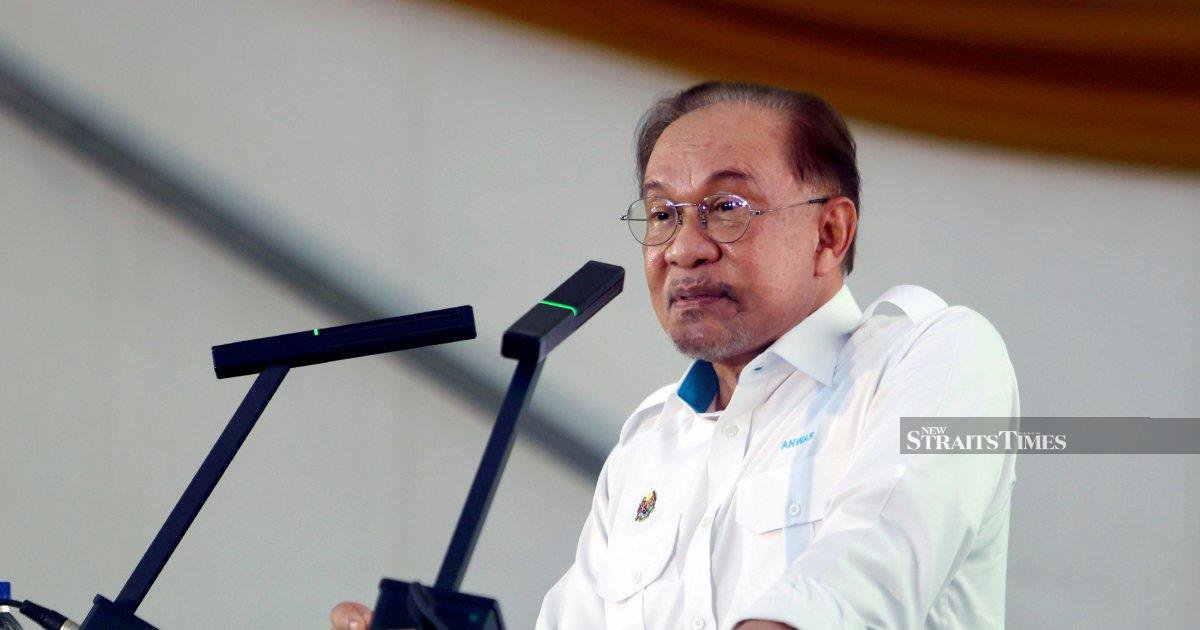
Taiwan Chamber of Commerce & Industry in Malaysia (TCCIM) has formally registered its anxiety regarding Prime Minister Datuk Seri Anwar Ibrahim's characterisation of Taiwan as "part of China", signalling that such pronouncements present a significant risk to the nation's ambitions in semiconductor manufacturing and the broader technology sector. The chamber's intervention highlights the delicate diplomatic terrain that Malaysia must navigate when balancing its relationship with China against the growing economic stakes involved in Taiwan's substantial technology presence in Southeast Asia.
The timing of TCCIM's statement underscores deepening tensions within Malaysia's foreign policy as it attempts to maintain equidistance between major powers whilst simultaneously courting investment from competing jurisdictions. Taiwan's semiconductor industry has become increasingly vital to global supply chains, particularly following recent geopolitical disruptions in East Asia. Malaysian policymakers face mounting pressure to articulate a coherent position that does not alienate either Beijing or Taipei, both of whom wield considerable economic leverage over the nation's development trajectory.
Taiwan's technology sector represents a crucial pillar of Malaysia's industrial strategy and economic growth prospects. Major semiconductor manufacturers and electronics firms headquartered or operating significant operations in Taiwan have established substantial facilities and supply chain networks throughout Malaysia, employing tens of thousands of skilled workers and generating export revenues worth billions of ringgit annually. These investments depend fundamentally on investor confidence in Malaysia's business environment and political stability, particularly the perception that foreign investors will be treated fairly and that government policy remains predictable and welcoming.
The chamber's articulation of "deep concern" reflects anxieties within Taiwan's business community that official statements minimising Taiwan's independent status might be interpreted as diminishing Malaysia's commitment to maintaining robust commercial ties with Taiwan. Such interpretations could trigger reassessments by Taiwanese companies contemplating expansion or re-investment decisions, particularly as geopolitical competition intensifies across the region and alternative locations in allied democracies become increasingly attractive to risk-averse investors.
Anwar Ibrahim's comments must be contextualised within Malaysia's complex diplomatic positioning, where the government maintains official recognition of the People's Republic of China whilst simultaneously nurturing pragmatic economic relationships with Taiwan through informal channels. This framework has historically allowed Malaysia to avoid contentious public statements regarding Taiwan's political status. However, the Prime Minister's explicit characterisation appears to represent a departure from this carefully calibrated neutrality, introducing ambiguity into the policy framework that investors rely upon when evaluating long-term commitments to the Malaysian market.
The semiconductor sector deserves particular attention given its strategic importance to Malaysia's economy and technological advancement. Taiwan dominates the highest-value segments of chip manufacturing and design, capabilities that Malaysian authorities have explicitly identified as essential for upgrading the nation's manufacturing base and competing effectively in the global knowledge economy. Any deterioration in Malaysia-Taiwan relations carries implications extending far beyond commerce, potentially affecting Malaysia's technological sovereignty and ability to access cutting-edge capabilities essential for developing higher-value industries.
Regional dynamics compound these concerns, as other Southeast Asian nations like Vietnam and the Philippines have also experienced tensions whilst attempting to maintain balanced relationships with Beijing and Taipei. How Malaysia navigates this situation will likely establish precedents for regional diplomacy and may influence the broader trajectory of Taiwan-Southeast Asia relations. The chamber's intervention thus carries significance transcending Malaysia's borders, potentially shaping how multinational investors from Taiwan assess political risk across the entire region.
The warning from TCCIM serves as a reality check regarding the concrete economic consequences of diplomatic overtures. Statements designed to cultivate favour with Beijing risk triggering countervailing consequences among investors from Taiwan and allied democracies who interpret such language as signalling deteriorating bilateral relations. Malaysia's government must weigh rhetorical alignment with Chinese positioning against the tangible losses that could result from investor hesitation, capital reallocation to competing jurisdictions, and reduced technology transfer opportunities.
Moving forward, Malaysian officials will face mounting pressure to clarify the government's actual policy stance toward Taiwan and Taiwan-headquartered companies operating within Malaysian territory. The private sector chamber's public intervention, whilst diplomatically mild, represents a clear signal that business interests expect government communication to distinguish between Malaysia's formal diplomatic recognition of Beijing and its practical commitment to sustaining mutually beneficial commercial relationships with Taiwan. Without such clarification, uncertainty could undermine investor confidence and damage Malaysia's carefully cultivated positioning as a reliable host for high-technology manufacturing and regional supply chain integration.

