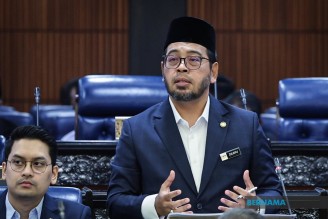
The financial troubles of Lembaga Tabung Haji (TH), Malaysia's Islamic pilgrimage savings fund, have been traced directly to its involvement with Putrajaya Perdana Bhd and its connections to 1Malaysia Development Bhd, according to findings presented to Parliament by Minister in the Prime Minister's Department (Religious Affairs) Dr Zulkifli Hasan. The Putrajaya Perdana investment alone triggered losses of RM145.3 million, making it one of 14 problematic investments that collectively caused billions of ringgit in losses detailed in the recently released Royal Commission of Inquiry report.
The circumstances surrounding TH's exposure to 1MDB dealings reveal structural governance problems that extended beyond a single misguided investment. At the height of 1MDB's financial crisis, Tabung Haji purchased land at the Tun Razak Exchange (TRX) directly from 1MDB itself—a transaction that raised immediate red flags among observers. More troublingly, the fund's chief executive officer simultaneously held a board position at 1MDB while serving TH's interests, creating an irreconcilable conflict of interest. This dual role raised uncomfortable questions about whose interests were truly being prioritised when TH committed its reserves to deals connected to 1MDB, a company then engulfed in scandal and investigation.
Dr Zulkifli highlighted the fundamental problem with particular sharpness during his parliamentary briefing. He questioned whether TH's investments at that critical juncture were genuinely made in the pilgrimage fund's interests, or whether the institution had inadvertently become a financial lifeline for 1MDB and associated entities facing mounting pressure. This query strikes at the heart of institutional oversight failures—TH's board and management appear to have allowed personal overlaps and vague strategic rationales to override fiduciary duty and independent decision-making.
The Putrajaya Perdana situation exemplifies how interconnected leadership can compromise institutional independence. By placing TH's then-chairman into the chairmanship of Putrajaya Perdana, the fund created multiple layers of potential misalignment between its objectives and those of a company with undisclosed or complex ties to 1MDB operations. Such arrangements typically allow transaction approval to proceed with minimal resistance, since the same individuals sit on both sides of the negotiation.
TH's entanglement with 1MDB extended to land transactions that would later prove deeply problematic. The fund had purchased TRX land from 1MDB when public scrutiny of the development company was intensifying. Years later, as TH's financial position stabilised and it regained greater operational independence, the fund reversed course. In 2024, Tabung Haji repurchased the same TRX land at RM270 million, having originally sold it in 2018 for RM400 million—a substantial markdown that underscores the weakened position from which these earlier sales occurred.
Beyond the direct 1MDB nexus, the Putrajaya Perdana episode sits within a constellation of failed investments that depleted TH's reserves and eroded public confidence in the institution's management. The Royal Commission identified 14 such problematic investments, suggesting systemic rather than isolated lapses in due diligence and risk assessment. For Malaysian Muslims who entrust their pilgrimage savings to TH, each failed investment represents both a breach of fiduciary responsibility and a reduction in the funds available for their future hajj journeys.
Another emblematic failure involved TH's heavy commitment to FGV Holdings, which the government had promoted as a triumphal national achievement when its initial public offering raised over RM10 billion. Rather than treating falling share prices as a signal to reassess and reduce exposure, TH maintained its large shareholding even as valuations collapsed by more than 80 per cent. The fund then compounded the error by altering its impairment accounting policies to obscure rather than transparently report these mounting losses to stakeholders—a form of financial camouflage that delayed necessary corrective action and allowed deterioration to continue unchecked.
TH's subsequent asset reacquisitions at reduced prices reveal both the severity of the earlier missteps and the fund's improved financial condition. The institution repurchased an oil palm plantation from UJ Estates (Holdings) Sdn Bhd that it had previously sold for RM800 million, acquiring it back at a 2024 valuation of RM695 million (including RM115 million in cash, equating to an enterprise value around RM580 million). These buyback operations, while financially sensible given current circumstances, serve as silent testimonies to poor judgment during periods of desperation when TH required liquidity and was willing to divest core assets below fair value.
The Royal Commission of Inquiry report, released publicly on July 29 following its submission to the King on August 30, 2022, comprises 211 pages documenting weaknesses in TH's management and operations between 2014 and 2020. This period precisely encompasses the years when governance failures were most acute and when individuals with multiple institutional roles made decisions that proved disastrous. The investigation uncovered structural vulnerabilities in oversight mechanisms and decision-making processes that allowed problematic transactions to proceed without adequate independent scrutiny.
Implementation of the RCI's remedial recommendations has proceeded relatively swiftly. As of late July 2024, Tabung Haji had actioned 75 per cent of the 25 recommendations contained in the report, demonstrating apparent organisational commitment to reform. These reforms likely address board composition, investment governance frameworks, conflict-of-interest protocols, and financial reporting transparency—all areas where the 1MDB entanglement and related failures revealed serious gaps.
For Malaysian Muslims and broader stakeholders, the Putrajaya Perdana and 1MDB episode underscores the critical importance of institutional independence and robust governance at bodies managing collective savings. The involvement of TH's leadership with 1MDB during the development company's crisis period created circumstances where the pilgrimage fund unknowingly or reluctantly assumed financial risk intended to benefit other parties. As TH implements reforms and strengthens its financial position, these historical failures serve as cautionary lessons about the dangers of allowing personal networks and overlapping directorates to compromise institutional mandates and fiduciary principles.

