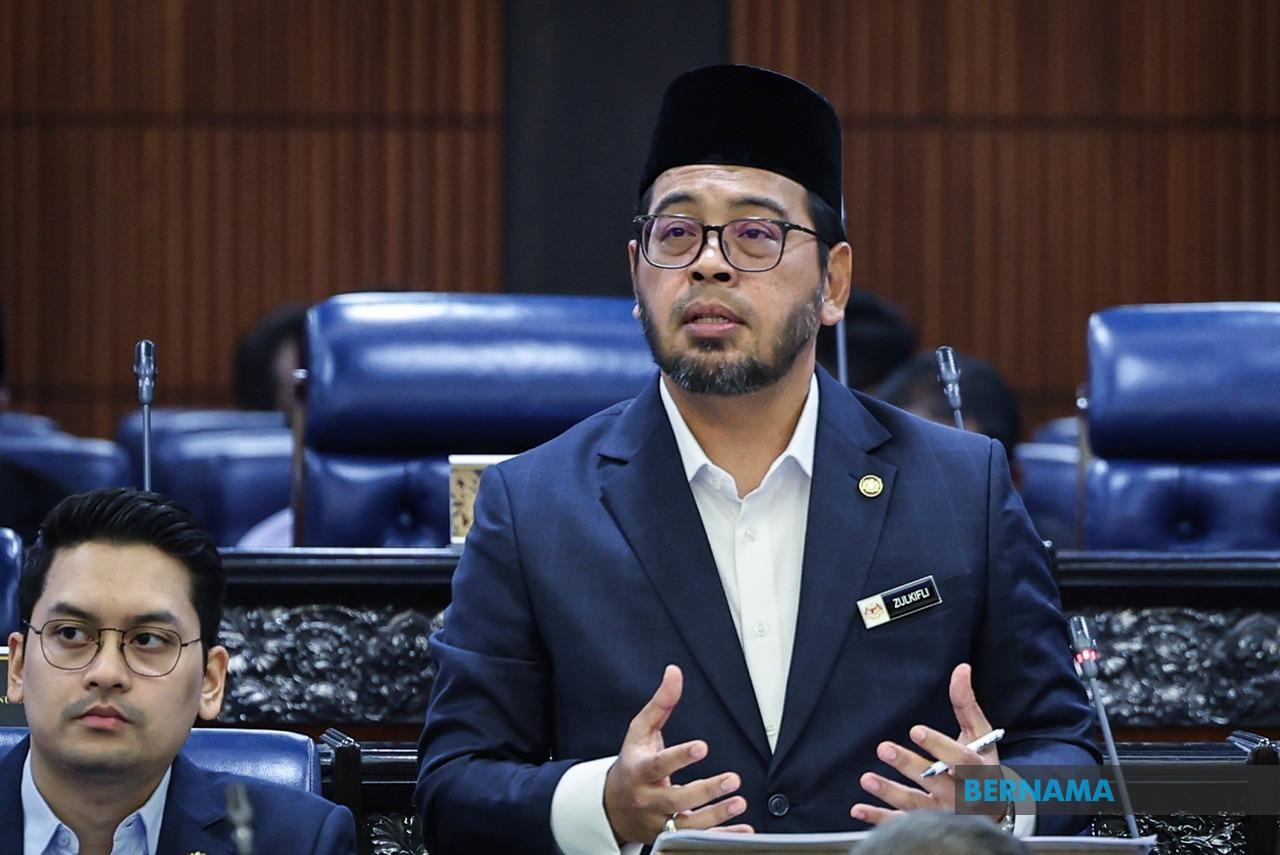
Tabung Haji has emerged from its financial crisis considerably stronger following a comprehensive recovery and reform programme initiated in 2018, according to Minister in the Prime Minister's Department (Religious Affairs) Dr Zulkifli Hasan. Speaking during a parliamentary briefing on the Royal Commission of Inquiry's findings into the Islamic pilgrim fund, Zulkifli outlined how the institution has undergone a fundamental transformation across multiple fronts, reversing years of mounting difficulties that had threatened its viability and public trust.
The rehabilitation strategy rested on nine foundational pillars designed to address both immediate financial vulnerabilities and structural weaknesses. Beyond the critical task of restoring balance sheet health, the reforms tackled governance architecture, investment discipline, and the paramount obligation to deliver sustainable value to the institution's 7.8 million depositors. This multifaceted approach recognised that Tabung Haji's travails extended beyond accounting problems into questions of institutional credibility and operational competence that demanded simultaneous repair.
Central to the recovery narrative has been the protection of the haj's accessibility for ordinary Malaysian Muslims. The government held firm on pricing, maintaining the cost of pilgrimage at RM33,300 across three consecutive seasons from 2024 through 2026, a remarkable achievement given the economic backdrop. Since the government introduced financial assistance for haj pilgrims in 2001, inflation has accumulated at roughly 250 per cent, fundamentally reshaping the currency's purchasing power across two decades. Against this inflationary tide, Tabung Haji's ability to freeze prices demonstrates either shrewd procurement or genuine operational efficiency gains—or plausibly both.
The mechanics behind this pricing stability reveal careful financial engineering. Tabung Haji negotiated long-term air travel contracts to contain the persistent pressure from aviation costs, a sector notoriously vulnerable to fuel price volatility and currency fluctuations. Simultaneously, the institution pivoted its hotel strategy, establishing direct relationships with property owners in Makkah and Madinah rather than purchasing through intermediaries. This disintermediation approach captured value further down the supply chain, allowing TH to access newer, higher-standard accommodation without proportionate cost increases. The strategy also reflects changing preferences among pilgrims for improved facilities in the Holy Land, suggesting that operational improvements and affordability are being pursued in tandem.
Zulkifli's characterisation of the reforms emphasised professional autonomy and structural insulation from political interference. He highlighted that TH's revival has been driven by competent leadership operating without undue government intervention, a framing that carries weight in Malaysian governance circles where institutional independence from political influence remains contested terrain. This emphasis suggests that part of Tabung Haji's original dysfunction stemmed from politicised decision-making or compromised management, a dynamic that the restructuring explicitly sought to eliminate. The appointment of capable professionals to leadership positions, paired with strengthened board governance, represents an institutional reset.
The governance improvements have yielded external validation. Tabung Haji secured the Labaytum Diamond Award for two consecutive years, representing the fifth Labaytum accolade the institution has received—a recognition scheme assessing Islamic financial institutions' management and service quality. This trajectory from crisis to repeated top-tier recognition suggests that the reforms have moved beyond cosmetic changes into substantive operational and cultural transformation. For Malaysian depositors who watched Tabung Haji's value deteriorate in preceding years, such external endorsements provide tangible assurance of institutional renewal.
The restructuring of Tabung Haji's asset and liability base formed the financial bedrock enabling these operational achievements. The institution faced significant mismatches between obligations to depositors and available resources, partly stemming from aggressive investment strategies that underperformed and strategic decisions that depleted reserves. The recovery plan rebalanced this equation, presumably through asset reallocation, enhanced provisioning, and more conservative investment positioning. This financial reordering proved essential; without restoring balance sheet solvency, all other reforms would have remained superficial gestures.
For Malaysian Muslims contemplating pilgrimage, the implications extend beyond mere pricing. The maintained affordability represents an implicit government commitment to preserving haj accessibility across socioeconomic strata, a principle deeply rooted in Islamic teaching and Malaysian public policy. Conversely, for policy observers across Southeast Asia, Tabung Haji's revival offers a case study in turnaround management within Islamic financial institutions, particularly regarding the interplay between governance reform, professional leadership, and institutional independence.
The RCI report itself, which prompted this parliamentary briefing, presumably contained detailed forensic analysis of how the institution's problems had accumulated and specific recommendations for prevention. The minister's account suggests that the government and TH's leadership have implemented these recommendations systematically, though full public disclosure of the inquiry's findings remains important for transparency and public confidence. The pilgrimage fund's health directly affects millions of Malaysian families' religious and financial futures, justifying comprehensive public understanding of both past failures and present remedial measures.
Looking forward, Tabung Haji's trajectory carries significance beyond its immediate depositor base. As Malaysia's Islamic financial sector continues maturing and as other Muslim-majority nations examine institutional models, Tabung Haji's recovery demonstrates that comprehensive reform—addressing governance, professional capacity, investment discipline, and customer affordability simultaneously—can rescue even deeply troubled institutions. The stability of haj pricing through 2026 provides a planning horizon for intending pilgrims while signalling management confidence in continued operational resilience.

