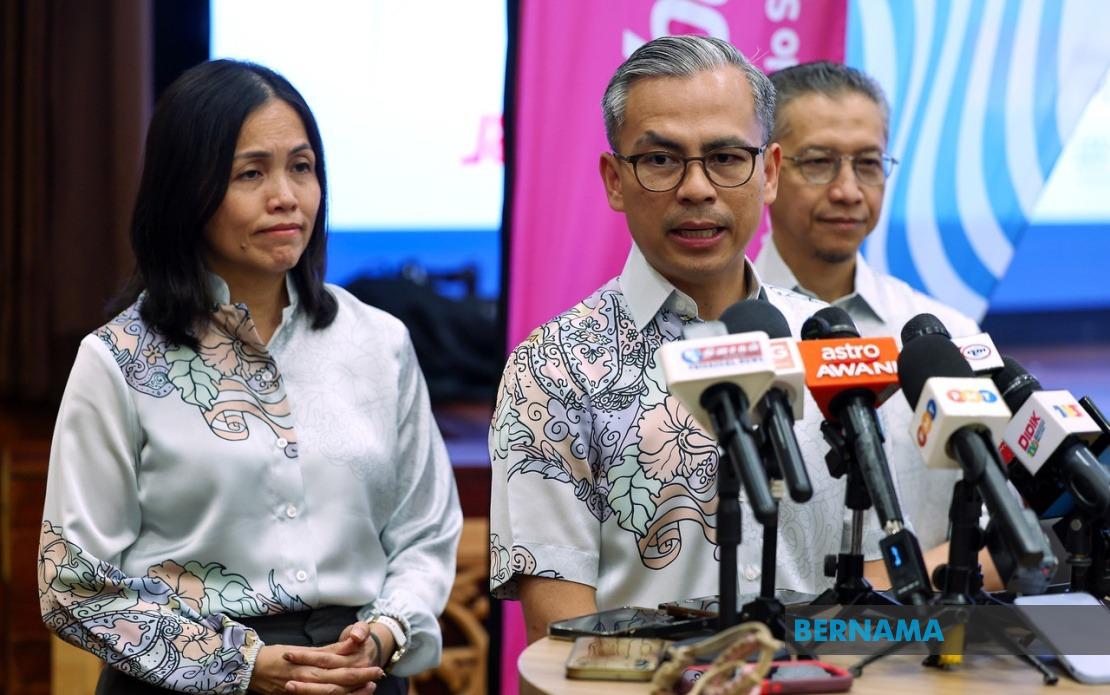
The findings from the Royal Commission of Inquiry into Tabung Haji's operational management have been formally referred to multiple law enforcement and regulatory bodies for investigative action, Communications Minister Datuk Seri Fahmi Fadzil announced in Putrajaya on August 12. The handover represents the government's commitment to pursue accountability mechanisms following the public disclosure of the RCI report on July 29, which detailed systemic governance challenges at the Islamic pilgrimage fund between 2014 and 2020.
The investigation will be distributed across several agencies to ensure comprehensive examination of the issues identified in the RCI findings. The Royal Malaysia Police, Malaysian Anti-Corruption Commission, Bank Negara Malaysia, the Inland Revenue Board, and agencies responsible for anti-money laundering and terrorism financing compliance have all been tasked with reviewing aspects of the report relevant to their respective mandates. This multi-agency approach reflects the complexity and breadth of the concerns raised by the commission, which encompassed financial management, operational governance, and regulatory compliance across TH's extensive operations.
Fahmi clarified that the distribution of investigative responsibilities follows guidance provided by Prime Minister Datuk Seri Anwar Ibrahim and incorporates information presented by Finance Minister II Datuk Seri Amir Hamzah Azizan and Minister in the Prime Minister's Department (Religious Affairs) Dr Zulkifli Hasan during parliamentary proceedings held to debate the RCI conclusions. The parliamentary sitting, which took place in the special Dewan Rakyat session focused entirely on the RCI report, provided a forum for government ministers to elaborate on the commission's 25 recommendations and the institutional responses already underway.
At the time of the RCI report's public release, Tabung Haji had already implemented approximately 75 per cent of the recommended reforms, indicating that institutional recalibration had begun prior to the formal disclosure of investigative findings. These improvements address operational deficiencies identified across the fund's management structure, internal control frameworks, and compliance procedures. The relatively advanced state of institutional reform suggests that TH's leadership recognised governance vulnerabilities even as the RCI was conducting its examination of the 2014-2020 period.
The question of whether the government should commission a subsequent inquiry covering the 2021-2025 period remains unresolved, with both Barisan Nasional and Pakatan Harapan parliamentarians having called for an extended investigation. Fahmi noted that initiating another RCI would require both Cabinet approval and the formal consent of the Yang di-Pertuan Agong, placing such a decision within the constitutional prerogative of the executive and the monarchy. This procedural requirement has effectively shelved immediate parliamentary pressure for expanded investigative scope, though the matter remains open to future consideration should the Cabinet and King determine its necessity.
The government's approach to the RCI findings has exposed parliamentary divisions along coalition lines, with particular scrutiny directed toward Perikatan Nasional opposition parties. Fahmi observed that Parti Pribumi Bersatu Malaysia parliamentarians participated substantively in the RCI debate, whereas other PN coalition partners, including PAS, notably abstained from the parliamentary proceedings. The absence carries historical irony, as the RCI was originally established in 2021 during an administration in which PAS members and current Opposition Leader Datuk Seri Hamzah Zainudin held Cabinet portfolios, affording them visibility into the commission's work from inception through completion.
The boycott by opposition lawmakers underscores deeper parliamentary tensions surrounding the RCI debate. Several PN-aligned MPs staged a walkout and refused to participate in the ministerial briefing and subsequent parliamentary discussion after objecting to Speaker Tan Sri Johari Abdul's decision to proceed with proceedings in the Prime Minister's absence. This dispute over procedural correctness and parliamentary protocol reflects broader disagreements between the government coalition and opposition regarding institutional conventions and the appropriate oversight mechanisms for examining government agency performance.
Twenty-nine parliamentarians ultimately engaged in substantive debate regarding the RCI report's conclusions and recommendations despite the procedural disruption. The level of parliamentary engagement, though constrained by the boycott, demonstrates that significant governance questions remain subjects of legitimate legislative interest and scrutiny. The debate encompassed accountability mechanisms, the adequacy of proposed reforms, and the government's responsiveness to institutional weaknesses affecting a fund that manages pilgrimage savings for hundreds of thousands of Malaysian Muslims.
For Malaysian readers and the broader Southeast Asian context, the Tabung Haji situation illustrates evolving standards regarding transparency and accountability in religious institutions managing significant public assets. The decision to establish an independent RCI, publish its findings publicly, and subsequently refer investigations to law enforcement agencies represents a contemporary approach to institutional accountability that contrasts with historical patterns of handling governance concerns within faith-based organisations. The implementation of 75 per cent of recommendations before formal public disclosure suggests proactive institutional reform, though the referral to law enforcement indicates that investigative authorities identified potential conduct warranting criminal or regulatory scrutiny beyond administrative remediation.
The multi-agency investigation architecture also reflects Malaysia's maturing institutional framework for addressing complex governance failures that may implicate multiple regulatory domains simultaneously. By distributing investigative responsibility across specialised agencies—each bringing distinct expertise in financial crime, corruption, money laundering, and tax compliance—the government theoretically maximises the likelihood of identifying wrongdoing that might be missed by any single investigative body. This collaborative approach, if executed effectively, could establish a precedent for addressing institutional failures across the public sector.
The outcome of investigations across these multiple agencies will significantly influence public confidence in both Tabung Haji's institutional reforms and the government's commitment to accountability. Given that the fund serves a religiously significant function for Malaysian Muslims undertaking the Hajj pilgrimage, any findings implicating misconduct or regulatory breaches could have reputational consequences extending beyond financial sectors into broader public discourse regarding institutional trustworthiness. The government's visible commitment to investigation and accountability mechanisms may serve to rebuild confidence, provided that investigative outcomes are ultimately disclosed transparently and result in meaningful consequences for substantiated misconduct.

