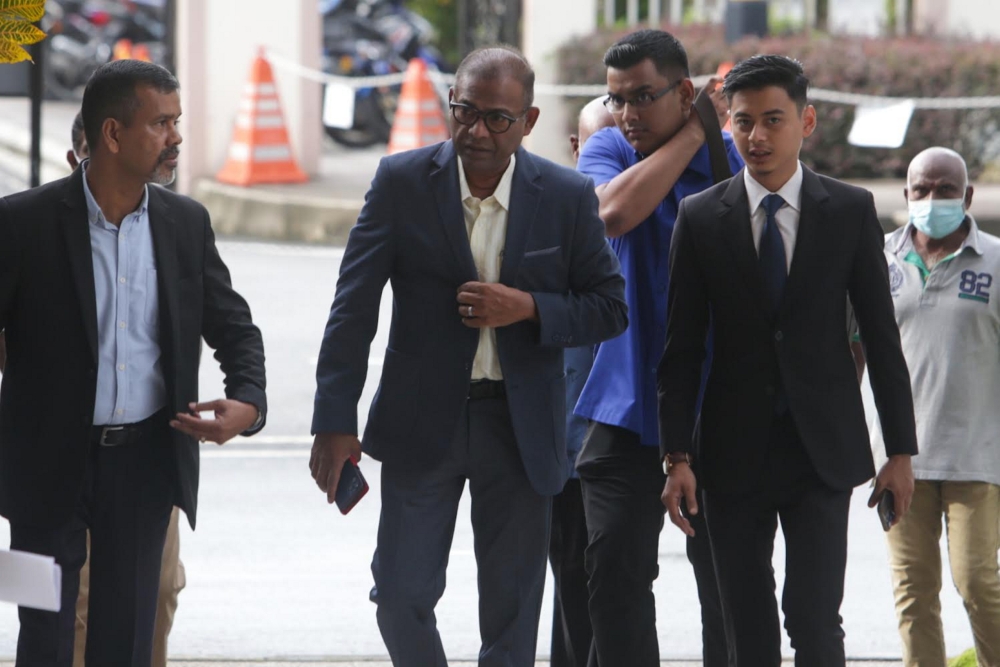
The son of former Baling Member of Parliament Datuk Seri Abdul Azeez Abdul Rahim has publicly dismissed allegations circulating on social media claiming his father faces imminent arrest by the Malaysian Anti-Corruption Commission over matters related to the Tabung Haji Royal Commission of Inquiry. Speaking out against what he characterised as baseless rumours, the younger Abdul Azeez stressed that no such development has transpired, seeking to quash the speculation that has gained traction among online communities in recent days.
The social media chatter surrounding the former parliamentarian appears to be part of a broader pattern of speculation regarding individuals connected to the Tabung Haji controversy, an issue that has attracted considerable public and political attention in Malaysia. The pilgrimage fund has been at the centre of intense scrutiny following the establishment of the Royal Commission of Inquiry, tasked with investigating irregularities and governance failures within the institution. This high-profile investigation has naturally sparked numerous theories and claims across digital platforms, many of which lack substantiation or official confirmation.
Datuk Seri Abdul Azeez served as the Member of Parliament for Baling, a constituency in Kedah, and his mention in connection with the Tabung Haji matter appears to stem from his political prominence and any historical associations with the fund's administration or oversight. The amplification of unverified claims through social media has become a recurring challenge in Malaysia's political landscape, where allegations can spread rapidly regardless of factual foundation. This episode underscores the difficulty in distinguishing between credible reporting and digital hearsay, particularly when sensitive government institutions and high-profile figures are involved.
The Royal Commission of Inquiry into Tabung Haji was established to provide clarity on how the organisation's assets and resources were managed, given past controversies surrounding investment decisions and administrative practices. The investigation carries significant weight because Tabung Haji manages the savings and hajj arrangements of millions of Malaysian Muslims, making transparency and accountability paramount to public trust. Any findings from the RCI could have implications for how pilgrim funds are overseen in future, potentially leading to structural or regulatory reforms.
The dismissal by Abdul Azeez's son reflects a broader frustration among families of public figures who find themselves subject to unverified allegations. In the age of instant digital communication, accusations can cause reputational damage and public concern even before formal investigations or official announcements materialise. The distinction between speculation and substantiated wrongdoing has become increasingly blurred in Malaysia's online discourse, complicating the relationship between media literacy and public understanding of governance issues.
From the perspective of media responsibility, the rapid spread of such claims highlights the importance of distinguishing between social media chatter and verified information from official sources such as the MACC, government statements, or credible news organisations. The Malaysian Anti-Corruption Commission, as the primary authority responsible for investigating corruption allegations, would typically issue formal notices or statements if it intended to take action against any individual. The absence of such official communication should normally serve as an indicator that claims circulating online merit careful scrutiny.
The Tabung Haji investigation itself remains an ongoing process, and the RCI's eventual report is expected to provide detailed findings regarding governance failures and potential misconduct. This formal mechanism for accountability is designed to deliver justice and reform based on evidence and testimony, rather than speculation. Premature accusations against individuals not yet formally implicated in the RCI's findings can potentially prejudice both public perception and the integrity of the inquiry process itself.
For Malaysian readers monitoring developments in governance and institutional accountability, the distinction between verified information and rumour carries practical consequences. Public discourse around the Tabung Haji matter affects not only the individuals named but also broader confidence in Malaysia's ability to investigate and address institutional failings transparently. When unsubstantiated claims dominate social media, they can obscure the substantive work of official investigations and complicate public understanding of what actually occurred.
The incident also reflects a wider challenge facing Malaysian society as it navigates digital communication platforms where verification standards are minimal and emotional engagement often outpaces factual accuracy. Public figures, their families, and institutions continue to grapple with managing their reputations in an environment where false allegations can gain traction before being properly addressed or refuted. As investigations like the Tabung Haji RCI proceed, maintaining public confidence in their impartiality and findings becomes more difficult when surrounding noise includes unverified claims about potential enforcement actions.

