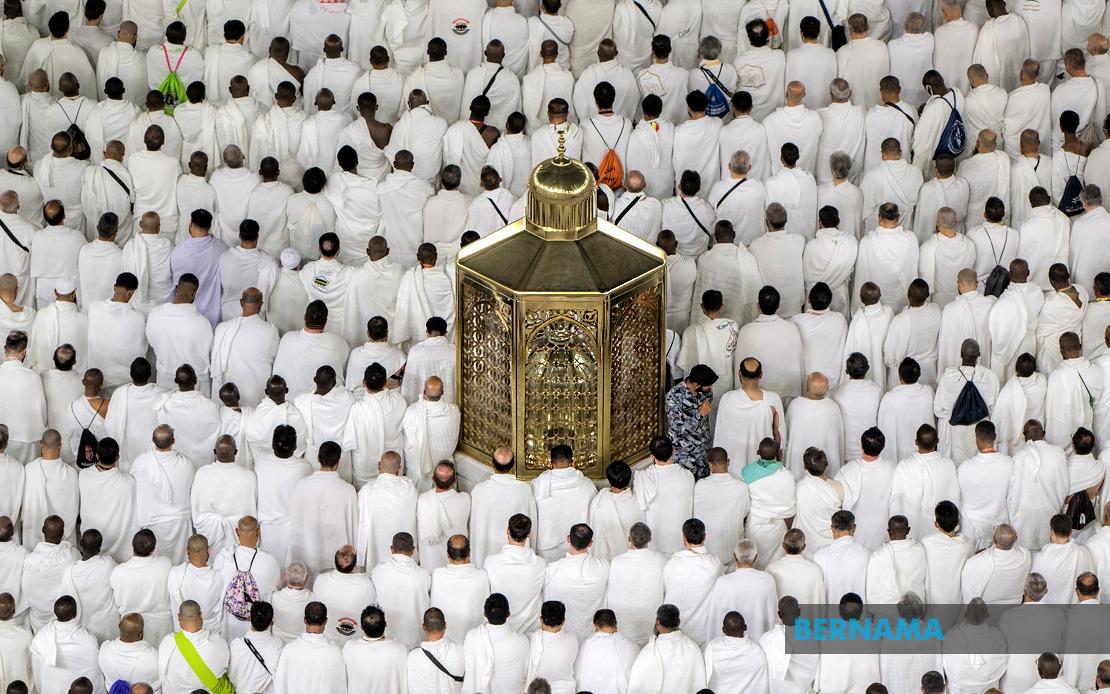
Tabung Haji has reaffirmed its commitment to allocating Haj pilgrimage slots through a first-registered, first-served system, rejecting suggestions to introduce preferential categories for specific groups of depositors. The decision, confirmed by Deputy Minister in the Prime Minister's Department (Religious Affairs) Marhamah Rosli during a parliamentary question session, underscores the religious institution's determination to maintain a transparent and equitable approach to managing Malaysia's oversubscribed Haj queue, which currently stretches years ahead for many hopeful pilgrims.
The affirmation came in response to a proposal from opposition legislator Abdul Latiff Abdul Rahman, who had advocated for creating a special Haj offer category for compulsory retirees receiving gratuity payments. The proposal reflected a practical concern: retirees often possess the financial means to perform the pilgrimage but face prohibitively long waits in the standard queue system. However, Marhamah argued that carving out exemptions would fundamentally undermine the integrity of the existing queue structure and create new inequities for depositors who have already endured extended waiting periods.
Marhamah's reasoning centred on the principle that fairness cannot be selectively applied. Introducing preferential pathways for one demographic group, she contended, would necessarily displace others from their rightful positions and contradict the transparent, merit-neutral allocation framework that Tabung Haji has maintained for decades. This institutional commitment reflects a broader Malaysian social value: that religious opportunities should be distributed according to consistent, universally applicable rules rather than exceptions granted to those with particular advantages.
All depositors enrolled with Tabung Haji receive advance notification of their anticipated Haj year, allowing them to prepare financially, health-wise, and spiritually for the journey well in advance. This predictability, however imperfect, at least provides certainty and planning horizons. The institution encourages such preparation systematically, recognising that Haj involves substantial logistical and personal readiness beyond mere financial capacity.
Tightened financial requirements have recently been introduced to strengthen the system's reliability. Beginning with the current Haj season, Tabung Haji mandates that prospective pilgrims maintain a minimum savings balance of RM15,000 before receiving an offer letter—despite the actual pilgrimage cost reaching RM33,300. This safeguard mechanism helps ensure that selected pilgrims can complete their financial obligations without defaulting, protecting both the institution's fiscal health and the pilgrim experience for those who do travel.
Despite the inflexible queuing policy, Tabung Haji does retain limited flexibility through its appeals mechanism. Depositors not yet due for an offer may submit appeals that are evaluated individually based on established criteria and priority considerations. This valve allows for genuine hardship cases or exceptional circumstances to receive consideration without dismantling the overall system's structure—a balance between rigidity and human responsiveness.
Malaysia's Haj allocation remains constrained by Saudi Arabian government quotas, which determine precisely how many pilgrims each nation can send annually. For the 1447 Hijrah season (2025-2026), Malaysia received an official allocation of 31,600 pilgrims—substantial in absolute terms but inadequate relative to the estimated queue of hundreds of thousands awaiting their opportunity. This structural constraint explains why the quota issue remains perpetually contentious in Malaysian Islamic affairs.
Tabung Haji commits to requesting additional quota allocations from Riyadh every year, yet such requests remain entirely within Saudi Arabia's discretionary authority. The kingdom balances competing demands from Muslim-majority nations and diaspora communities worldwide, making expansion unpredictable. This reality circumscribes what Malaysian policymakers can promise their constituents, necessitating transparent communication about quota limitations rather than offering false hope through alternative allocation schemes.
A positive development reported by Marhamah involves the elimination of Haj package fraud during the most recent pilgrimage season. The Haj Fraud Task Force, comprising Tabung Haji, the Royal Malaysia Police, and the Ministry of Tourism, Arts and Culture, recorded zero cases—an achievement attributed to strengthened enforcement and public awareness campaigns. The "No Visa, No Haj" initiative, which aligns Malaysian practice with Saudi Arabia's "No Haj Without Permit" policy, has proven effective in preventing unauthorised Haj operators from exploiting vulnerable pilgrims or circumventing official systems.
For Malaysian depositors, the cumulative implications are sobering yet clarifying. The queue system, while generating frustration for those facing years-long waits, at least operates transparently and equitably. The financial safeguards protect pilgrims from predatory arrangements. The fraud crackdown ensures that those eventually selected can confidently proceed through official channels. These protections collectively represent an institutional commitment to serving all depositors fairly rather than privileging some while disadvantaging others—a principle that resonates beyond Haj administration into broader Malaysian governance.

