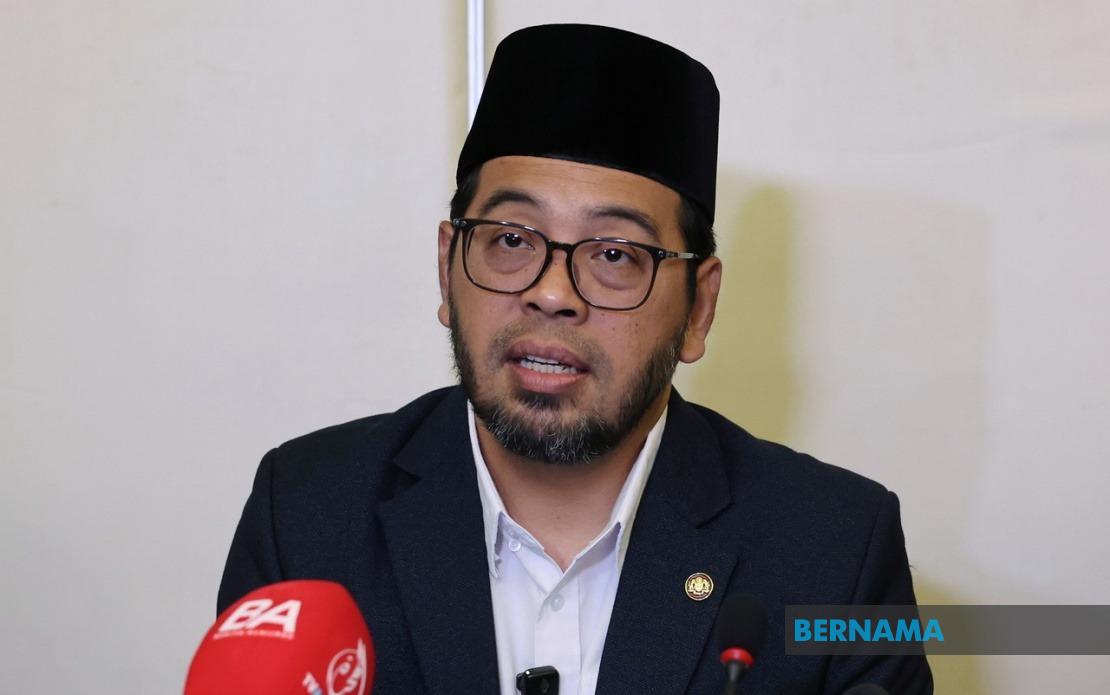
Tabung Haji has moved into a significantly more robust financial and operational position following an intensive institutional restoration programme, Religious Affairs Minister Dr Zulkifli Hasan announced during a special parliamentary sitting focused on the institution's recovery and governance reforms. The landmark briefing underscored the government's determination to address structural vulnerabilities that had plagued the Islamic pilgrimage fund for years and to pursue accountability for historical breaches of trust that directly affected millions of Malaysian depositors and their hajj aspirations.
When the MADANI Government commenced its administration in late 2022, Tabung Haji confronted a difficult inheritance of underperforming assets and operational inefficiencies that had accumulated since 2018, requiring urgent remedial action. Rather than rushing toward public disclosure, the administration opted to grant management sufficient latitude to stabilise the institution's internal systems and rebuild organisational health before transparency measures took effect. This calibrated approach reflects recognition that restoring operational capacity must precede public accountability mechanisms, particularly when addressing complex financial and asset management issues within a faith-based institution managing the savings of ordinary Malaysians.
The minister emphasised that Tabung Haji now stands sufficiently fortified that the government felt confident releasing detailed findings from the Royal Commission of Inquiry established under the previous administration. The RCI, chaired by former Chief Justice Tun Mohamed Raus Sharif and comprising five specialists in public administration, finance, banking, syariah compliance and accounting, had submitted its comprehensive examination to the King on August 30, 2022, following its formal establishment in January of that year. The 211-page report identified governance weaknesses spanning the 2014 to 2020 period and offered 25 specific recommendations for institutional improvement, with approximately three-quarters already operational as of late July.
The government's demonstration of resolve extends beyond institutional restructuring into the criminal investigation realm. Following Cabinet's unanimous July 29 decision to declassify and debate the RCI report through parliament, enforcement agencies including the Malaysian Anti-Corruption Commission and police immediately commenced formal investigations into alleged misappropriation allegations documented in the inquiry findings. Several key figures previously connected to the institution have been detained as part of this enforcement initiative, signalling that the government and investigative authorities will not tolerate abuse of power or breach of trust affecting pilgrims' sacred funds regardless of the individuals implicated.
Minister Zulkifli situated this enforcement action within the explicit directive issued by His Majesty Sultan Ibrahim, King of Malaysia, that all RCI findings be examined comprehensively, transparently and without compromise, with investigators obliged to pursue every avenue of inquiry thoroughly. This royal guidance frames the investigation not merely as an administrative exercise but as a matter of constitutional and spiritual significance, reflecting the deep concern that breaches of trust within an institution managing pilgrim savings constitute a violation extending beyond financial harm into the realm of religious and national duty. The emphasis on thoroughness without compromise distinguishes this investigation from potential half-measures or politically convenient settlements.
The moral and social dimensions of Tabung Haji's breach of trust require particular attention given the institution's depositor base. The fund does not primarily serve wealthy investors seeking maximum returns but rather functions as the principal savings vehicle for ordinary Malaysians—teachers, small-scale traders, retirees, farmers, fishermen, rubber tappers and taxi drivers—who accumulate modest sums over many years to fulfil the pilgrimage obligation to Mecca. Many parents establish accounts for children's future hajj journeys, treating these deposits as sacred commitments rather than mere financial instruments. When institutional leaders misappropriate or mismanage such funds, they undermine not only financial security but also the spiritual aspirations and religious fulfilment of ordinary working Malaysians whose savings represent genuine sacrifice and religious commitment.
Minister Zulkifli articulated this distinction pointedly, arguing that institutions entrusted with such spiritually significant deposits cannot be treated through conventional financial management optics. The government explicitly rejected any possibility of obscuring problematic findings behind statistical ambiguity, sweeping controversies quietly aside through administrative discretion, or permitting politically motivated narratives to supersede the interests of actual depositors and the broader Muslim community. This rhetorical positioning stakes out moral high ground while simultaneously pressuring enforcement agencies and the judiciary to demonstrate that accountability mechanisms function independent of political calculation or media cycle considerations.
The institution's recent international recognition provides a counterpoint to historical governance failures. Tabung Haji has received five World's Best Haj Management Awards across four consecutive years, indicating that competent, trustworthy leadership operating with genuine integrity can restore institutional effectiveness and public confidence. These accolades suggest that the current management trajectory contrasts sharply with earlier mismanagement periods, offering evidence that the recovery programme has produced tangible improvements in operational standards and service delivery. The awards carry particular significance because they derive from independent international assessment rather than government assertion, lending external credibility to claims of institutional rehabilitation.
The RCI's identification of specific weaknesses and the articulation of targeted improvements spanning multiple institutional dimensions reflects the complexity of reforming an organisation embedded within Malaysia's Islamic financial and religious governance structures. The recommendations address procedural deficiencies, oversight mechanisms, asset management practices and compliance frameworks, with implementation progress tracked at the level of individual reform items rather than sweeping categorical changes. This granular approach permits measurement of progress while accommodating the inevitable delays and complications arising when transforming decades-old institutional practices and embedded organisational cultures.
For Malaysian depositors, particularly those from modest economic backgrounds, the government's demonstrated commitment to investigation and reform carries substantial reassurance value. The public parliamentary debate, enforcement agency engagement, and ministerial emphasis on accountability signal that the state takes seriously the sacred trust reposed in institutions managing Muslim savings. However, outcomes of ongoing investigations will ultimately determine whether these symbolic commitments translate into meaningful justice for those whose retirement funds or children's pilgrimage savings were compromised by institutional malfeasance. The investigation trajectory and eventual prosecutorial outcomes will substantially influence public perception of whether governance reform represents genuine institutional transformation or merely cosmetic adjustment designed to restore public confidence without addressing underlying structural or cultural problems.
Looking forward, the implementation trajectory of remaining RCI recommendations and the effectiveness of reformed governance structures will require sustained monitoring. Tabung Haji operates within the distinctive context of Islamic finance in Malaysia, requiring integration of secular governance standards and compliance frameworks with syariah principles and religious objectives. The tension between maximising deposit returns and ensuring pilgrim access to hajj opportunities creates legitimate institutional complexity that external observers and depositors must understand. Nonetheless, the fundamental principle that institutions managing sacred funds must operate with transparency, professional integrity and genuine accountability remains non-negotiable, and the government's actions in recent months suggest this principle now commands genuine political commitment.

