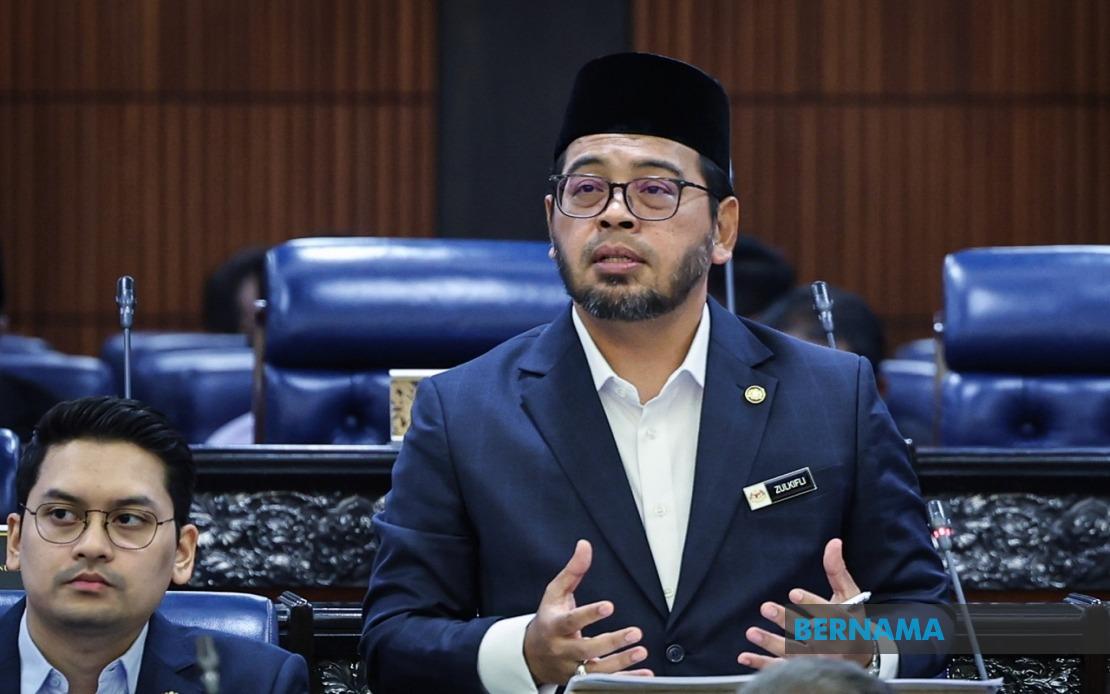
The financial collapse of Lembaga Tabung Haji (TH) need never have happened, a senior Malaysian government minister has argued, pointing to systematic failure to heed repeated warnings from the country's central bank. Speaking during parliamentary debate on a Royal Commission of Inquiry (RCI) report into the pilgrimage fund on August 11, Religious Affairs Minister Dr Zulkifli Hasan emphasized that Bank Negara Malaysia (BNM) had alerted TH leadership to mounting financial vulnerabilities across a two-year period beginning in 2014.
The central bank's warnings, conveyed through five formal letters between August 2014 and September 2016, specifically flagged concerns about TH's reserve adequacy, liquidity position, and overall financial health. Despite these explicit alerts, Zulkifli noted, TH management appeared to treat them with remarkable indifference. The institution's financial condition instead worsened progressively, ultimately forcing the government to orchestrate a massive rescue operation when the organization's liabilities exceeded its assets by roughly RM10 billion as of end-2018.
What makes this institutional failure particularly striking is that timely corrective action in the mid-2010s could plausibly have prevented the need for taxpayer intervention altogether. The minister characterized BNM's oversight role as routine yet serious—the regulator continuously monitored developments within Malaysia's non-bank financial institutions, including TH, as part of its responsibility for systemic financial stability. When BNM communicated its concerns and sought assurances about remedial steps, TH leadership claimed to be addressing the issues raised. In practice, however, the warnings appear to have been essentially disregarded.
The RCI, having completed its investigation, concluded that TH should never have received a clean audit certificate from its auditors during this critical period. Instead of a passing mark, the audit opinion should have been qualified, with major unresolved issues noted as non-compliance rather than mere "Emphasis of Matter" observations. This distinction matters considerably: a qualified audit would have signaled serious doubts about TH's viability and might have triggered stronger intervention from regulators and the government earlier.
Particular focus has fallen on TH's dividend distribution practices, which violated prudent financial management principles and potentially breached the Tabung Haji Act. The institution continued declaring and paying hibah (shareholder distributions) to members even when its liabilities exceeded its assets—a practice that directly contradicted Section 22 of the legislation governing TH. These imprudent distributions persisted until 2017, continuing to erode the fund's already-weakened financial foundation and reducing its capacity to absorb losses.
The RCI's findings have prompted the government to commit to rapid legislative reform. Zulkifli announced that amendments to the Tabung Haji Act 1995 will be implemented promptly to embed lessons learned and strengthen governance structures already undertaken. Separately, comprehensive forensic auditing has been commissioned to examine investments identified in the RCI report as presenting elevated loss risk. These twin investigative and preventive measures reflect official acknowledgment that TH's governance architecture was fundamentally inadequate during the period when the crisis was developing.
Additionally, the government has embraced the RCI's proposal to establish a Multi-Agency Task Force that will investigate each problematic investment identified in the inquiry. This inter-agency approach recognizes that salvaging value from TH's troubled assets requires specialized expertise spanning banking, finance, Islamic finance, and investigation. The task force concept reflects broader acknowledgment that the institutions responsible for TH oversight in the past operated in silos rather than coordinating effectively.
Zulkifli outlined what he characterized as a clear government strategy moving forward: investigating wrongdoing, pursuing enforcement action against responsible parties, recovering misplaced or improperly invested assets, and enacting legislative changes that prevent recurrence. The overarching objective centers on restoring and maintaining public confidence in TH among the millions of Malaysian Muslims who place their savings with the institution in preparation for the hajj pilgrimage—one of Islam's five pillars. For ordinary Malaysians, particularly those of modest means saving gradually for this profound religious obligation, TH represents far more than a financial institution; it embodies a trust-based relationship that extends decades.
The parliamentary debate itself proved extensive and notably serious in tone. Thirty-nine Members of Parliament participated across a session lasting more than ten hours from 10:00 am, with contributions from both government and opposition benches. Speaker Tan Sri Johari Abdul acknowledged the thoroughness of parliamentary questioning and debate, noting that the special meeting had formally concluded but that further scrutiny would continue. A third parliamentary session addressing outstanding questions is scheduled for October, signaling that accountability and transparency regarding TH's collapse remains an ongoing legislative priority.
For Malaysian readers and the broader Southeast Asian context, the TH crisis underscores critical governance vulnerabilities that extend beyond a single institution. When central bank warnings go unheeded, when audit functions fail to convey true financial condition, and when management demonstrates apparent indifference to mounting red flags, large financial organizations can deteriorate rapidly with cascading consequences for ordinary citizens. The crisis has forced recalibration of oversight mechanisms, particularly regarding how closely related institutions—pilgrimage funds, Islamic financial vehicles, and hybrid public-private organizations—are monitored and held accountable. The RCI process itself, while coming after substantial damage had occurred, demonstrates Malaysia's capacity for institutional self-examination and course correction, though the necessity of learning lessons only after a major crisis represents an institutional process failure worthy of reflection.

