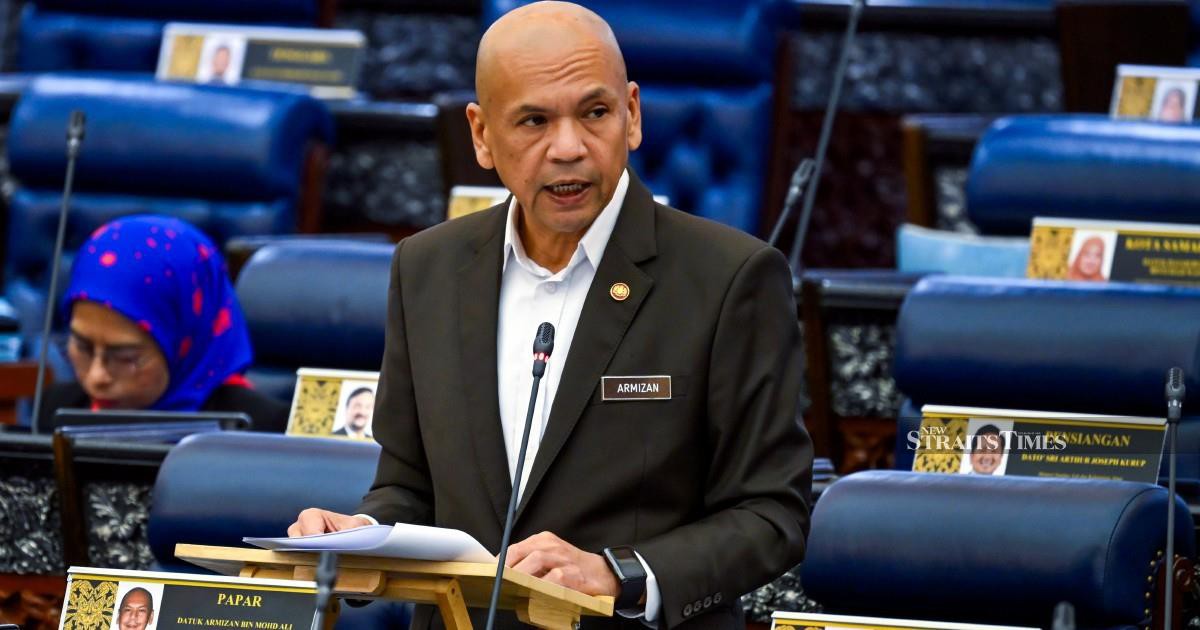
Discrepancies uncovered by the Royal Commission of Inquiry into Tabung Haji have triggered fresh scrutiny of the hajj management fund's audit procedures, with lawmakers expressing dismay over the apparent gap between audited accounts and the RCI's findings. The inquiry's conclusions have prompted difficult questions about whether independent auditors adequately scrutinised the organisation's financial operations before senior government officials and parliamentarians relied on those reports for governance decisions.
The RCI's assessment appears to contradict the impression conveyed by previous audit reports that were formally tabled before Cabinet ministers and Members of Parliament. If auditors failed to detect issues that the inquiry subsequently identified, this suggests either deficiencies in audit methodology, insufficiently robust verification procedures, or inadequate depth in examining transaction records and fund management practices. For Malaysian legislators, the revelation raises fundamental concerns about the utility of statutory audit frameworks that are supposed to provide early warning of financial irregularities at major national institutions.
Tabung Haji holds enormous significance within Malaysia's governance structure. As the repository of savings and investments from millions of Muslim pilgrims preparing for the hajj, the fund operates at the intersection of religious obligation, public trust, and state management. When audit systems fail to provide clear visibility into potential problems at such an institution, confidence in financial accountability mechanisms across other government-linked bodies comes into question. Parliamentary members are understandably troubled by implications that standard audit reporting may have masked material issues.
The timing of the RCI report adds another dimension to the scrutiny. Tabung Haji has faced mounting pressure over recent years from concerns about its investment portfolio and operational challenges. The decision to establish a Royal Commission represents formal acknowledgment that ordinary oversight channels—including regular audits—had not adequately addressed public apprehension about the fund's health. That subsequent inquiry findings now diverge from audited accounts creates a credibility vacuum that threatens to undermine faith in multiple accountability layers simultaneously.
For the audit profession in Malaysia, these revelations carry significant implications. If Tabung Haji's auditors operated within accepted standards yet still failed to identify issues the RCI uncovered, this may indicate that current audit protocols are insufficiently rigorous for complex financial institutions managing public resources. Alternatively, if auditors did identify concerns but failed to communicate them with sufficient clarity and force, that points to communication breakdowns between auditors and the bodies receiving their reports. Either scenario demands institutional reflection and potentially revised audit engagement approaches.
Parliamentary systems depend fundamentally on the reliability of information provided through formal reporting channels. Cabinet ministers making policy decisions about Tabung Haji, and MPs voting on related legislation, operate on the assumption that audited financial statements represent the best available assessment of an organisation's financial position. When that foundation proves unstable, downstream governance decisions become questionable. Lawmakers noted that previous audit endorsements may have inadvertently provided false assurance that diminished external scrutiny and delayed necessary interventions.
The incident also illustrates a broader governance challenge across Southeast Asia, where reliance on formal audit reports sometimes eclipses more probing institutional investigations or forensic examination. In Malaysia's case, the parliamentary focus on audit integrity reflects recognition that dependence on a single verification mechanism created blind spots. The RCI's alternative investigative approach—unconstrained by standard audit scope limitations—revealed gaps that conventional auditing missed.
Government officials now face pressure to clarify what specific audit conclusions are being questioned and why the RCI reached different assessments. Public articulation of these discrepancies is crucial for rebuilding confidence in Tabung Haji's governance trajectory. Without transparent explanation of where audit reports fell short, suspicion may grow that other government-linked companies whose financial health rests on audit certification also warrant similar independent investigation.
The parliamentary concern also connects to regulatory architecture. Malaysia's audit standards are established through professional frameworks designed to ensure consistency and quality across sectors. If Tabung Haji's auditors operated within these parameters yet still produced reports that the RCI subsequently contradicted, lawmakers may push for standards review. Alternatively, if auditors deviated from established practices, that points to supervision and quality control deficiencies within the audit profession's own regulatory apparatus.
Moving forward, the Tabung Haji situation is likely to influence how Malaysian policymakers approach oversight of large public institutions. The experience may lead to complementary investigative mechanisms running parallel to traditional audits, greater parliamentary committee scrutiny of audit reports before reliance on them, or revised audit engagement letters that demand deeper, more probing examination of high-risk areas. The hajj fund's governance challenges thus carry implications extending well beyond Tabung Haji itself.
For ordinary Malaysian pilgrims whose savings are entrusted to Tabung Haji, the RCI report and subsequent audit questioning underscore why transparency and rigorous independent oversight matter. The fund's beneficiaries deserve confidence that their contributions are managed prudently and that institutional controls actually function as advertised. Rebuilding that confidence requires not just identifying what went wrong, but fundamentally reassessing whether the systems designed to prevent problems are adequate or require structural improvement.

