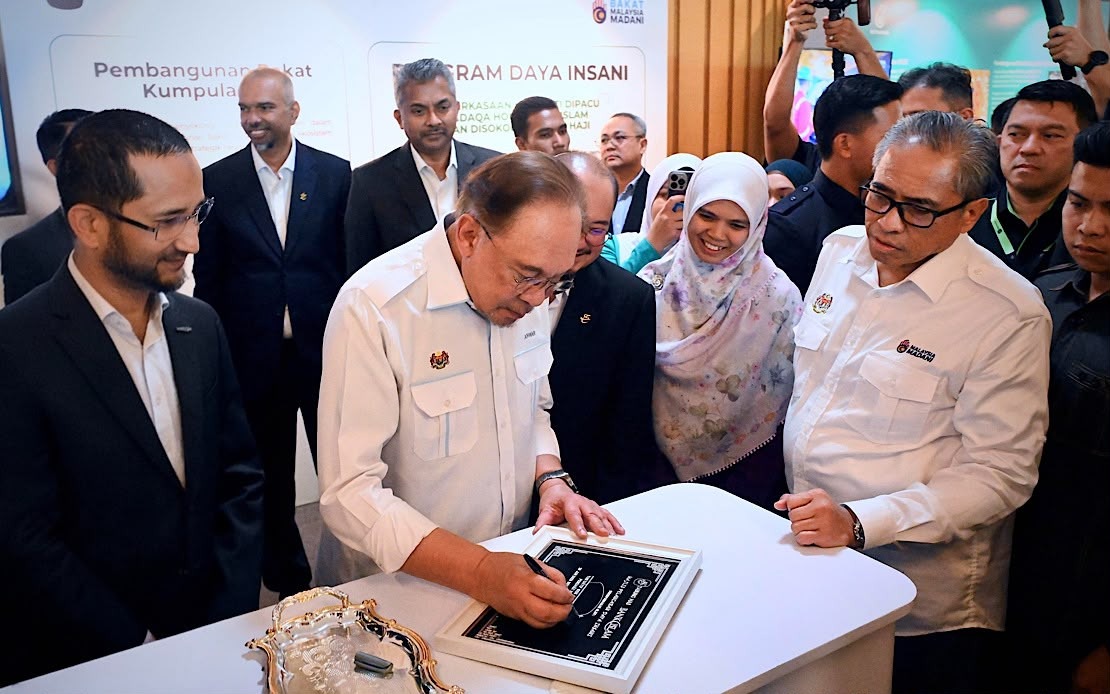
Tabung Haji and Bank Islam Malaysia Berhad have jointly launched the Asnaf Youth Development Programme for Inclusive and Sustainable Empowerment, known as DAYA INSANI, pledging RM1 million in initial funding to transform employment prospects for vulnerable young Malaysians. The programme represents a coordinated effort between Malaysia's leading Islamic financial institutions to address skills gaps and create pathways into stable, well-paying careers for asnaf youth—those qualifying for Zakat assistance—and orphans who lack access to conventional support networks. The initiative was formally unveiled on Monday during Prime Minister Datuk Seri Anwar Ibrahim's launch of the broader MADANI Talent initiative in Sendayan, Negeri Sembilan, positioning it as a cornerstone of the government's human capital development strategy.
The DAYA INSANI framework operates on a tripartite model that combines intensive skills training, direct industry exposure, and structured job placement guarantees. Rather than offering generic vocational education, the programme targets three high-demand professional sectors where Malaysia faces acute talent shortages and where asnaf communities remain significantly underrepresented. By integrating classroom learning with workplace experience and employment guarantees, the designers aim to eliminate the common disconnect that leaves graduates without practical credentials or employment networks. This approach acknowledges that disadvantaged youth often possess the aptitude for professional roles but lack the social capital, mentorship, and industry connections that privileged peers take for granted.
The nursing track, developed in partnership with Kolej Universiti Bestari and Kumpulan Medic Iman Sdn Bhd, represents one of three specialised streams. Malaysia's healthcare sector faces sustained nursing shortages as experienced professionals migrate abroad and demographic ageing increases patient volumes. The diploma programme, which commenced in 2024, currently enrolls 19 asnaf students, with one graduate already successfully placed in the workforce—demonstrating both feasibility and immediate labour market demand. This early success validates the model and suggests potential for scaling across additional healthcare disciplines where similar shortages persist.
Technical vocational training through the Kulim Hi-Tech Park Skills Centre addresses Malaysia's ongoing challenge of matching manufacturing and semiconductor industry needs with locally-trained technicians. The first cohort of thirteen participants began training in June, with organisers targeting expansion to one hundred trainees in the near term. This sector offers particularly attractive prospects for asnaf youth, as technical roles command competitive salaries, provide stable long-term employment, and exist in geographic clusters where skills training can directly feed into established employer networks. The Kulim hub's strategic location in Kedah positions graduates for integration into northern Malaysia's thriving electronics and precision manufacturing ecosystem.
Accountancy training through the Malaysian Professional Accountancy Centre represents the programme's white-collar pathway. By producing certified accountants from asnaf backgrounds, the initiative addresses two interconnected challenges: the persistent underrepresentation of disadvantaged communities in professional services, and the broad-based talent shortage in qualified accounting personnel as businesses expand and regulatory requirements grow more complex. Certified accountants earn professional-level incomes while enjoying geographic flexibility, making this track particularly valuable for breaking intergenerational poverty cycles. Collaboration with INCEIF University further expands opportunities into Islamic finance and banking specialisations, sectors experiencing rapid growth across Southeast Asia.
Therapy training through Showme Education rounds out the core offerings, addressing emerging demand in Malaysia's expanding mental health and wellness sectors. As awareness of psychological well-being increases and regulatory frameworks develop, qualified therapists face strong employment prospects. This specialisation also reflects evolving social needs, particularly among younger Malaysians navigating mental health challenges that previous generations often ignored or stigmatised. For asnaf youth, therapy careers offer meaningful work addressing community needs whilst maintaining professional income security.
Tabung Haji Group Managing Director Mustakim Mohamad framed the initiative as fundamental to the organisation's core mission of investing in human capital as the optimal long-term development strategy. His statement emphasised that capacity-building represents the most durable form of poverty alleviation—creating sustainable income streams and social mobility rather than temporary welfare transfers. This philosophical orientation aligns DAYA INSANI with Islamic finance principles that prioritise productive investment over consumptive aid, embedding religious values within contemporary development practice. Mustakim's emphasis on institutional commitment signals that the programme reflects not marginal corporate social responsibility but central strategic orientation.
Bank Islam Group Chief Executive Officer Raja Datin Paduka Teh Maimunah Raja Abdul Aziz articulated the programme's social finance logic—demonstrating that profit-seeking financial institutions can simultaneously address community welfare and shareholder interests. By channelling capital toward human capital development with measurable employment outcomes, Bank Islam models how Islamic banking principles translate into tangible poverty reduction. This approach potentially offers replicable templates for other financial institutions, whether Islamic or conventional, seeking to embed development impact within commercial operations.
The programme's funding structure deliberately remains open to additional corporate, institutional, and individual contributions, transforming the initial RM1 million into a foundation for sustained expansion. This crowdfunding approach acknowledges that while Tabung Haji and Bank Islam provide catalytic capital and institutional infrastructure, scaling requires broader business and philanthropic participation. Malaysian corporates increasingly face stakeholder expectations around social responsibility, skills development investments, and supply chain resilience—areas where DAYA INSANI contributions simultaneously advance genuine community benefit and corporate strategic interests. The open-contribution model thus potentially mobilises substantially greater resources than the initial allocation alone.
For Malaysian policymakers, DAYA INSANI exemplifies how public-private collaboration can address structural development challenges that neither government nor private sector fully solves independently. The programme targets genuine market failures—asnaf youth possess latent productive capacity that conventional labour markets fail to mobilise due to information asymmetries, credential gaps, and social exclusion. By combining financial capital, institutional expertise, and employment networks, the partnership creates conditions enabling dormant talent to become productive. As Malaysia pursues higher-income economy transitions requiring expanded professional workforces, programmes systematically unlocking talent across all socioeconomic layers become increasingly essential.
The initiative also signals broader sectoral dynamics shaping Southeast Asian development. Nursing, technical vocational work, accounting, and therapy represent sectors where regional demand substantially exceeds supply, with skilled professionals from developing economies finding ready employment throughout wealthy Southeast Asian nations and globally. DAYA INSANI graduates will thus contribute not only to Malaysian development but potentially strengthen regional human capital flows as they advance careers. Malaysian investment in asnaf youth skills development thus generates benefits extending beyond immediate beneficiaries toward broader regional competitiveness and integration.
Implementation success will depend on several factors beyond programme design. Employer engagement must translate training into genuine job placement rather than credentials without opportunity. Graduate retention requires not merely initial employment but career progression pathways preventing brain drain. Participant selection processes must identify not only those with greatest need but those most likely to complete demanding training and succeed professionally. These operational realities, less visible than funding announcements and partnership agreements, ultimately determine whether DAYA INSANI transforms lives or generates credentials without employment transformation. The programme's early track record—particularly the nursing diploma's demonstrated placement success—provides encouraging preliminary evidence, though sustained monitoring will prove essential as scale increases substantially.

