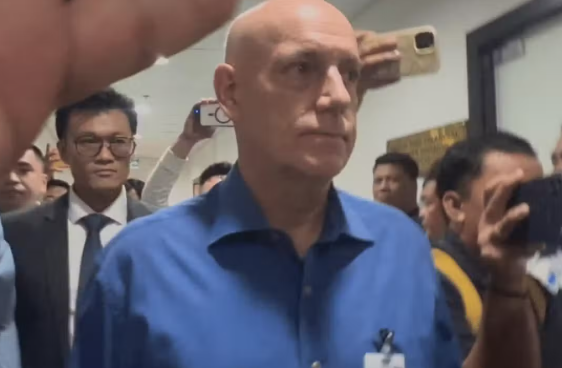
Tab Baldwin, the former head coach of Ateneo de Manila University's men's basketball team, made a delayed appearance before the National Bureau of Investigation on Tuesday afternoon as authorities intensify their inquiry into a tragic drowning incident that claimed the lives of two young athletes. Baldwin arrived at the NBI Homicide Division around 1:45pm accompanied by his legal counsel, Karl David, to answer questions regarding the deaths of student-athletes Rene Baterbonia and Divine Adili, who lost their lives during a team-organised water activity in the remote municipality of Dipaculao, Aurora, earlier in June.
The appearance marks Baldwin's first interaction with the NBI after he conspicuously failed to present himself at two previously scheduled sessions. His initial no-show on June 16 prompted his legal representative to submit a statement explaining that Baldwin was in poor health and unable to attend the proceedings. This medical excuse, however, became more complicated when Baldwin subsequently missed the rescheduled appointment on June 19, the same day he opted instead to meet with investigators from the Philippine National Police-Criminal Investigation and Detection Group at their facilities.
The dual investigations by both the NBI and the PNP underscore the seriousness with which Philippine authorities are treating the deaths of Baterbonia and Adili. The tragic incident, which unfolded during what should have been a routine team activity in the mountainous Aurora province, has drawn widespread scrutiny in a country where collegiate sports safety remains a pressing public concern. The involvement of multiple law enforcement agencies suggests authorities are determined to establish a comprehensive account of the circumstances surrounding the drowning and to assess accountability across all parties involved in the supervision and management of the activity.
One key aspect of the current investigation involves comparing the statements Baldwin provided to different agencies. According to National Bureau of Investigation Director Melvin Matibag, investigators plan to meticulously cross-reference Baldwin's account given to the NBI with the testimony he previously delivered to the CIDG on the preceding Friday. This comparative analysis reflects standard investigative protocol designed to identify inconsistencies or discrepancies that might point toward negligence, insufficient supervision, or other failures in duty of care. Such methodical verification is essential in cases involving the deaths of young people under institutional supervision.
The circumstances surrounding the drowning have raised fundamental questions about athlete safety protocols in Philippine collegiate sports. The fact that two students died during an officially sanctioned team activity has prompted wider discussion about the adequacy of safety measures, the qualification of supervisory personnel, and the institutional accountability mechanisms that should exist within university athletic programmes. These concerns extend beyond Ateneo de Manila and touch upon broader systemic issues affecting student-athlete welfare across Philippine universities and sports organisations.
Baldwin's profile as a significant figure in Philippine basketball adds another layer to the public interest in this case. As a foreign national who has held a prominent position within a prestigious Filipino institution, his conduct and the decisions made under his leadership have become matters of both institutional and national concern. The investigation therefore represents not merely a routine inquiry into a tragic accident but also an examination of how well-established protocols function when foreign coaching expertise intersects with local institutional structures and safeguarding systems.
The timing of Baldwin's appearance, occurring nearly a week after his initial scheduled session, reflects the complexities that can emerge when high-profile figures face criminal investigations. The involvement of legal counsel, the health considerations cited by his representatives, and the apparent consultation with multiple investigative bodies suggest this case involves substantive legal and procedural dimensions. For Baldwin, the extended process may represent an attempt to carefully navigate legal obligations while protecting his interests, though it has also extended media attention and public speculation about his role in the tragic incident.
Philippine authorities have indicated they intend to wrap up their initial investigative phase this week, suggesting that a preliminary determination about potential charges or culpability could emerge relatively soon. This timeline places Baldwin's Tuesday appearance at a critical juncture in the investigation, making his statement potentially determinative in how investigators proceed. The information he provides may clarify crucial details about planning, supervision, emergency preparedness, and response protocols during the fateful activity.
The case has implications beyond the immediate circumstances for Philippine institutional governance and athlete safety standards. Universities and sports organisations across the country will likely review their own protocols for off-campus activities, particularly those involving water-based components. The investigation serves as a sobering reminder of the responsibilities that educational institutions and coaching staff bear toward the young athletes entrusted to their care, and the potential legal consequences when those responsibilities are not adequately discharged.
For the families of Baterbonia and Adili, the investigation represents the formal institutional process through which answers will be sought and, potentially, accountability determined. While the investigative process unfolds, the broader Philippine sporting community continues grappling with the loss of two young athletes and the urgent questions their deaths have raised about systemic safety and oversight mechanisms.