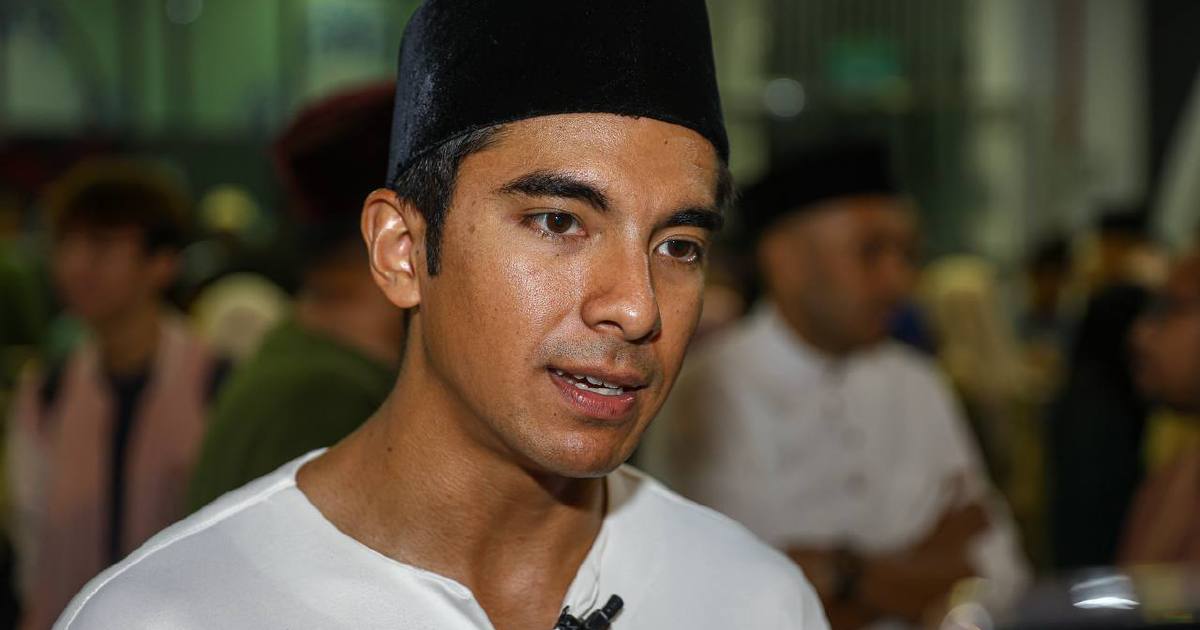
Syed Saddiq Abdul Rahman, the former youth and sports minister whose political career has been marked by considerable turbulence, has signalled a spiritual resignation regarding an imminent Federal Court decision that could significantly reshape his legal standing and future in Malaysian politics. In remarks that reflect both the gravity of his situation and a deeply personal approach to navigating uncertainty, the Muar Member of Parliament has indicated that he is placing his ultimate faith in God's plan, a statement that resonates with the spiritual inclinations common among many Malaysian political figures facing critical junctures.
The forthcoming Federal Court ruling represents a crucial turning point for Syed Saddiq, whose tenure as youth and sports minister under the previous administration ended amid considerable controversy. His political trajectory has been defined by both notable achievements in youth engagement and subsequent legal challenges that have tested both his resolve and public support. As the nation's highest court prepares to deliver its verdict, observers across the political spectrum have been monitoring developments closely, recognising that the outcome could influence not only his personal circumstances but also broader dynamics within Malaysian politics.
Syed Saddiq's public statement about leaving his fate in God's hands carries particular significance given the high-stakes nature of Federal Court proceedings. Unlike lower court decisions that may be appealed or revisited, rulings from the nation's apex court are typically final, making this moment uniquely consequential for the politician. His choice to frame the impending decision within a spiritual context suggests he has come to terms with the unpredictability inherent in the legal process, whilst simultaneously maintaining his dignity and composure in the public eye.
The timing of Syed Saddiq's remarks underscores the psychological and emotional toll that prolonged legal proceedings exact on public figures and their families. Throughout Malaysia's political landscape, numerous politicians have found themselves entangled in judicial processes that stretch across months or years, creating a liminal space between professional stability and uncertainty. For someone of Syed Saddiq's standing, whose career aspirations and public identity remain closely intertwined with his political status, the prospect of a Federal Court decision carries existential weight extending well beyond the courtroom.
Within the context of Malaysian politics, Syed Saddiq represents a generation of younger leaders who emerged during significant periods of political transition. His appointment as youth and sports minister reflected broader attempts to inject fresh perspectives into government decision-making, targeting demographics increasingly influential in electoral politics. The legal challenges he has subsequently faced have thus acquired symbolic dimensions, resonating with questions about institutional accountability, political fortunes, and the mechanisms through which Malaysia's legal system intersects with its political arena.
The Federal Court's authority to deliver definitive rulings means that Syed Saddiq's situation has evolved beyond the realm of tactical political manoeuvre into territory where legal expertise, judicial interpretation, and adherence to constitutional principles become determinative. This shift explains why his comments have adopted an almost philosophical tone, reflecting an awareness that certain outcomes rest beyond individual control or influence. Many observers recognise that such acceptance, whilst spiritually motivated, also represents a mature political stance in acknowledgement of institutional limitations and judicial independence.
For Malaysian observers and political analysts, the approaching ruling carries implications extending throughout the political ecosystem. Questions about due process, the treatment of political figures by the judiciary, and the broader health of democratic institutions have emerged as central concerns. Syed Saddiq's case has attracted attention from civil society organisations and legal commentators who view it through the broader lens of judicial fairness and the consistency with which legal processes are applied across different political affiliations and constituencies.
The statement about trusting in divine will also reflects cultural and religious values deeply embedded within Malaysian society, where many citizens—regardless of their political orientation—ground major life decisions within frameworks of faith and spiritual conviction. By articulating his position in these terms, Syed Saddiq connects his personal journey to experiences resonating with significant segments of the Malaysian population, rendering his situation more relatable beyond strictly political discourse.
As the Federal Court prepares to announce its decision, the political community remains watchful regarding not only the substantive ruling but also its potential ramifications for Malaysian politics more broadly. Syed Saddiq's apparent equanimity in the face of an uncertain outcome demonstrates the capacity of political figures to endure extended periods of institutional scrutiny. Whether the court's decision ultimately vindicates his position or upholds previous determinations, his handling of this challenging period may itself become a defining characteristic of his political legacy.
The imminent ruling will conclude a chapter that has tested Syed Saddiq's resilience whilst maintaining public prominence despite considerable legal obstacles. His spiritual approach to the impending decision offers a counterpoint to the often adversarial and politically charged atmosphere surrounding judicial proceedings in Malaysia. As the nation awaits the Federal Court's determination, Syed Saddiq's faith-based composure stands as a reminder that outcomes in the legal arena, whilst consequential, ultimately rest within frameworks transcending individual aspiration or political calculation.

