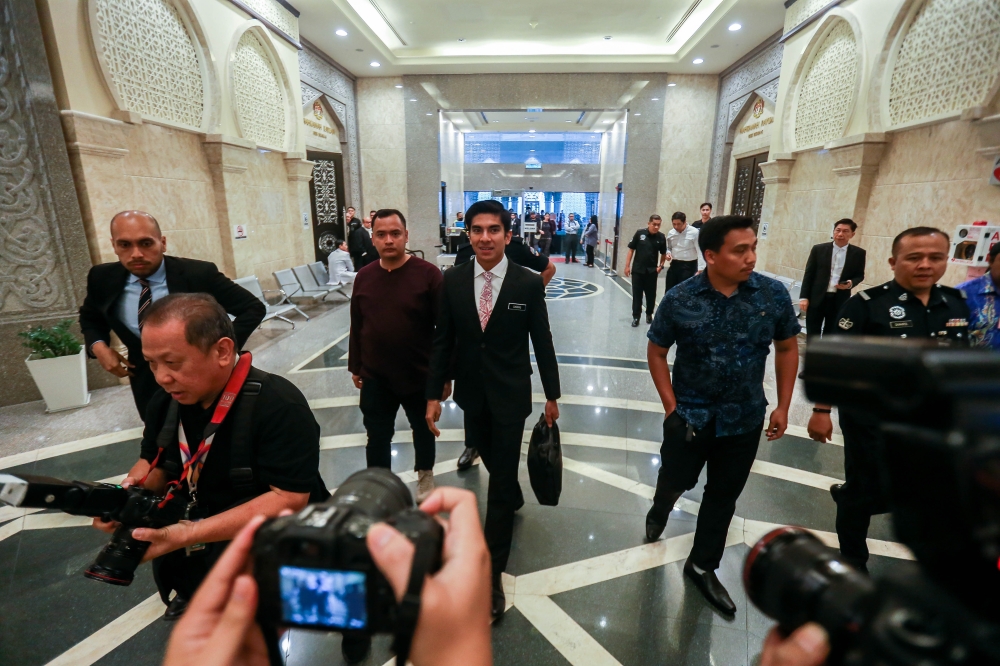
Muar Member of Parliament Syed Saddiq Syed Abdul Rahman arrived at the Palace of Justice in Putrajaya on July 13 to face a consequential Federal Court decision regarding misconduct allegations against him. The appearance drew considerable public attention, with supporters and family members gathering outside the courthouse in what observers described as a show of solidarity for the embattled politician. The ruling represents a critical juncture not only for Syed Saddiq's personal legal standing but also carries broader implications for parliamentary ethics and accountability standards in Malaysia's political system.
The case has generated significant interest beyond the immediate parties involved, reflecting deeper concerns about governance, party discipline, and the mechanisms through which Malaysia's judicial system processes political misconduct allegations. Federal Court proceedings of this nature typically attract media scrutiny and public discourse, particularly when involving sitting parliamentarians whose conduct may influence their ability to serve constituents effectively. Syed Saddiq's presence at the courthouse, accompanied by his family and fiancée, underscored the personal dimensions of the legal challenge alongside its political consequences.
Young and relatively prominent within Malaysian politics, Syed Saddiq has maintained a visible public profile that has made this proceeding especially newsworthy. The attendance of his immediate family members and his fiancée at the Palace of Justice highlighted the personal toll that prolonged legal proceedings can impose on political figures and their loved ones. Early morning gatherings by supporters suggested organized mobilization around his case, indicative of the polarized nature of contemporary Malaysian political discourse where legal outcomes become intertwined with factional allegiances.
The Federal Court, as Malaysia's highest judicial authority, holds considerable weight in determining the ultimate resolution of such matters. When cases reach this level, they typically involve significant legal questions or challenges to lower court decisions that warrant the apex court's attention and interpretative authority. The gathering of crowds and media presence reflected widespread recognition that the court's judgment would carry substantial precedential value and implications extending beyond Syed Saddiq himself.
Misconduct allegations directed at parliamentarians exist within a specific regulatory framework designed to maintain institutional integrity and public confidence in elected representatives. The Federal Court's handling of such cases shapes how these standards are understood and enforced across Malaysia's political landscape. The precise nature of the misconduct charges, the evidence presented, and the legal arguments advanced during proceedings would inform the court's reasoning and ultimate determination.
Political observers have noted that cases involving parliamentary misconduct often intersect with broader party politics and factional dynamics within Malaysian politics. The outcome of Syed Saddiq's case could influence how political parties subsequently address similar allegations within their own ranks and may affect the trajectory of his career within parliament and his party organization. The presence of family members and fiancée at the courthouse suggested that supporters viewed the proceeding as a moment requiring visible demonstration of backing, regardless of the eventual judicial outcome.
The Palace of Justice, as the physical setting for this proceeding, represents the formal institutional space where Malaysian law is interpreted and applied at its highest level. The structure and solemnity of the Federal Court environment contrasts sharply with the political realm from which such allegations originate, highlighting the distinct roles played by judicial and legislative institutions in Malaysian governance. The crowd's gathering outside this institution embodied the intersection between legal and political spheres that characterizes high-profile cases involving elected officials.
As news of the proceeding spread through Malaysian media and social networks, the case became part of broader national conversations about political accountability, judicial independence, and the standards expected of public representatives. The involvement of Malaysia's highest court in resolving the matter underscored the significance of the allegations and the legal questions they raised. The eventual Federal Court determination would likely be closely analyzed by legal scholars, political commentators, and parliamentary observers seeking to understand the boundaries of acceptable conduct for elected officials.
The early arrival of supporters and the significant crowd presence testified to Syed Saddiq's continued ability to mobilize supporters despite the legal challenges he faced. In Malaysian politics, such demonstrations of backing can influence public perception of a figure's standing and viability, even as formal legal proceedings follow their own procedural timeline and logic independent of public sentiment. The juxtaposition of personal support systems and formal judicial processes provided a window into how contemporary Malaysian politics navigates the intersection between democratic participation and rule of law.
As the Federal Court prepared to deliver its judgment, the stakes extended beyond Syed Saddiq's immediate legal situation to encompass broader questions about parliamentary ethics, party accountability mechanisms, and the role of courts in adjudicating political disputes. The case represented a test of Malaysia's institutional capacity to address misconduct allegations through established legal channels while maintaining public confidence in both judicial and political processes. The court's decision would inevitably shape subsequent discussions about standards of conduct for parliamentarians and the enforcement mechanisms available to ensure compliance with those standards.

