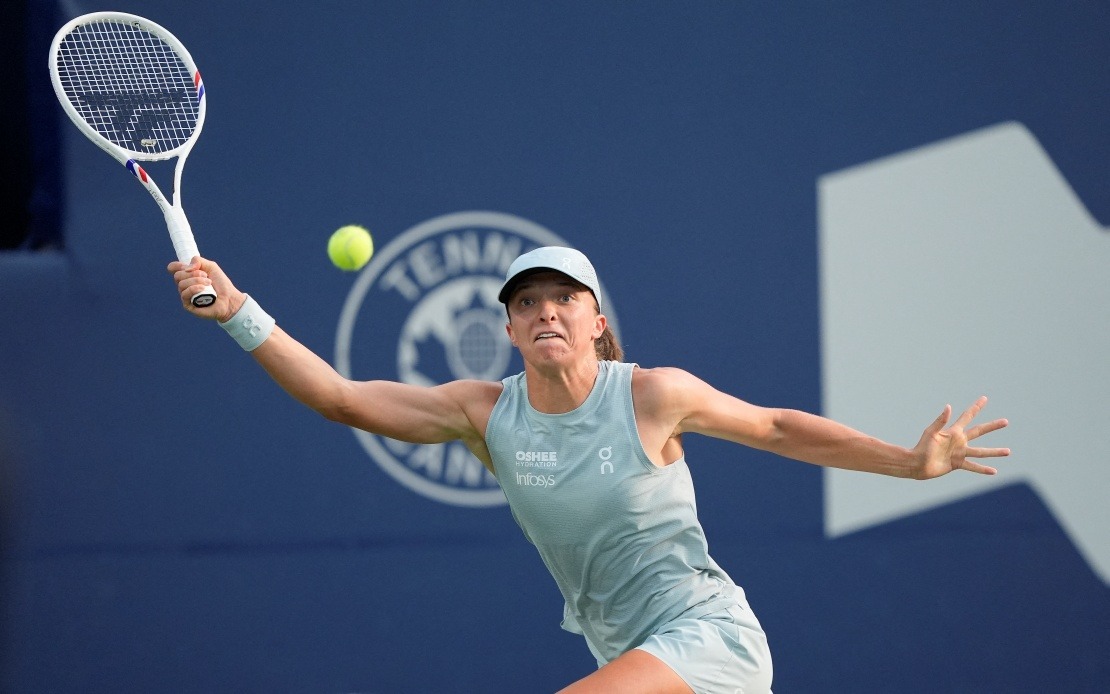
Iga Swiatek has ended an extended stretch without championship silverware by crushing Elena Rybakina in the National Bank Open final in Toronto, securing a decisive 6-2, 6-3 victory that underscores her return to peak competitive form. The Polish seventh seed's triumph represents a significant breakthrough after months of tournament drought, reasserting her credentials among the sport's elite performers and providing momentum heading into the year's final stages.
Rybakina, competing as the world's second-ranked player, proved unable to withstand Swiatek's relentless intensity from the opening moments of the match. The pivotal breakthrough came early when the Kazakhstani star's service game unraveled amid a succession of back-to-back double faults, gifting Swiatek a crucial break point opportunity that she immediately capitalized upon. This early advantage proved decisive in shaping the trajectory of the entire encounter.
The first set saw Swiatek leverage her momentum into complete dominance. Having seized the break, she sustained the quality of her play throughout the remaining games, maintaining aggressive shot selection and solid court positioning. Rybakina's typically formidable serve, which has served as a cornerstone of her game, failed to provide its usual security blanket. Swiatek's consistent pressure and precise baseline play allowed her to control rallies and dictate terms, ultimately closing out the opening set with relative ease at 6-2.
Into the second frame, Swiatek's confidence swelled while Rybakina struggled to find answers. The second-ranked player compounded her difficulties through a series of unforced errors, particularly two wayward backhand attempts that proved especially costly. These mistakes directly resulted in another break of service for Swiatek, extending the Polish player's advantage and further tilting the balance decisively in her favor.
Despite the mounting pressure, Rybakina demonstrated resilience by saving a championship point during the closing stages of the match. However, such resistance proved merely a temporary reprieve. Swiatek seized her second opportunity at 6-2, 3-0 to convert the final break point and serve out the match, clinching victory and her maiden title since capturing silverware last September—a notably extended gap for a player of her caliber.
The significance of this victory extends beyond the immediate trophy. For Malaysian and Southeast Asian tennis followers, Swiatek's dominant display serves as a reminder of her position among the world's most accomplished women players. Her technical proficiency, mental toughness, and ability to execute under pressure remain benchmarks in contemporary women's tennis. The regional interest in top-tier women's sports continues growing, with players like Swiatek commanding attention across Asia.
At the post-match ceremony, Swiatek offered remarks that transcended the sporting arena. She dedicated her achievement to "everyone who is dealing with unfair judgement and hate," delivering a message that resonated beyond the confines of professional tennis. Her words reflected a maturity and social consciousness increasingly common among contemporary athletes, particularly younger players navigating intense public scrutiny.
Swiatek elaborated on her philosophy by encouraging others to "keep pushing, keep growing, keep focusing on yourself because you know what's best for you." This mantra encapsulates her approach to managing external pressures and expectations—a lesson particularly pertinent in an era of ubiquitous social media commentary and instantaneous global judgment. She emphasized the importance of maintaining perspective and directing attention toward future possibilities rather than dwelling on present challenges.
The Toronto triumph marks a potential inflection point in Swiatek's season. Having endured a championship drought spanning nearly a year, she now possesses momentum entering major competitions. Her dominant display against the world number two suggests she has resolved technical or mental challenges that may have contributed to her previous struggles. The decisive nature of the victory—conceding only five games across two sets—demonstrates a player operating at peak efficiency.
For broader tennis audiences in Southeast Asia, this result carries additional implications. Swiatek's resurgence underscores the depth of women's professional tennis, where even extended title droughts do not diminish a player's fundamental quality. Similarly, Rybakina's loss, though decisive, should not overshadow her remarkable achievements or suggest permanent decline. The competitive landscape among top-ranked women players remains remarkably fluid, with form fluctuations and tournament-specific factors wielding tremendous influence.
The Canadian hard court environment proved ideally suited to Swiatek's aggressive baseline game and serve-and-volley capabilities. Her ability to dictate rallies from the baseline, combined with her improved serve consistency, created an exceptionally challenging tactical puzzle for Rybakina to solve. This performance reinforces that Swiatek possesses the complete skillset required to contend for major championships across varying surfaces and conditions.
Looking forward, Swiatek's championship here provides valuable psychological reinforcement as she approaches the sport's most prestigious remaining tournaments. Confidence derived from dominant tournament victories frequently translates into improved performances in subsequent competitions. For Malaysian tennis enthusiasts following these developments, Swiatek's breakthrough offers compelling evidence that perseverance through challenging periods ultimately yields rewards, a narrative with universal resonance beyond sports.
The National Bank Open victory fundamentally restores Swiatek's narrative as a championship-caliber performer. After months of questioning whether she could recapture winning form, she has decisively answered critics through authoritative performance against elite opposition. This triumph establishes her among the favorites entering the sport's concluding chapters, offering tantalizing prospects for dramatic conclusions to the tennis calendar.

