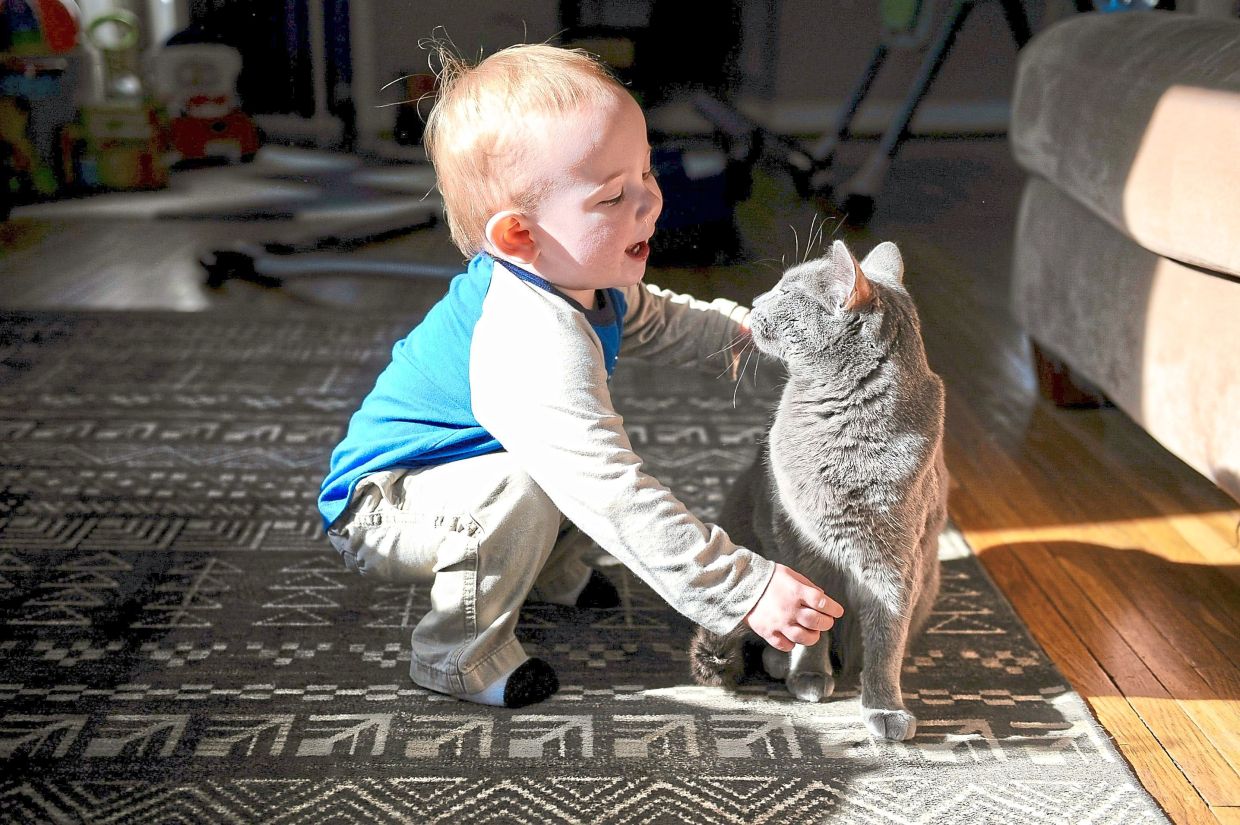
Asthma ranks among the most prevalent chronic illnesses affecting children worldwide, driving countless hospital admissions and disrupting family life. According to the Global Asthma Network, the condition affects approximately 9.1% of children and 11% of adolescents globally, though prevalence rates fluctuate considerably depending on geography, regional climate patterns and environmental factors. Pet cats have long occupied a prominent place in public health warnings about asthma triggers, with many healthcare providers cautioning families against feline companionship when children show respiratory symptoms. Yet a comprehensive Swedish study spanning two decades of patient records now challenges this conventional wisdom, suggesting that the widespread assumption about cats as asthma culprits may warrant reconsideration.
The condition emerges from a complex interplay of biological and environmental factors. Established risk contributors include prolonged exposure to air pollution and secondhand smoke, recurrent viral infections during early childhood, elevated body weight, and pre-existing allergic conditions such as eczema or allergic rhinitis. Anecdotal accounts from patients and families frequently cite animal dander as a precipitating factor in asthma flare-ups, fuelling the perception that cats represent a genuine hazard for affected children. However, the scientific literature examining this relationship has remained surprisingly inconclusive, with existing evidence drawn largely from small, geographically limited investigations that may not reflect broader population patterns.
Researchers at Karolinska Institutet in Stockholm conducted a landmark investigation that provides substantially more robust data on this contentious question. Dr Resthie R Putri, a postdoctoral fellow leading the analysis, emphasised the significance of their findings: children residing with cats demonstrated asthma severity, attack frequency, symptom control and breathing capacity equivalent to those raised without feline pets during the observation period. The team detected no meaningful differences based on the number of cats in the household, the animal's biological sex, or its age, suggesting that exposure intensity and cat characteristics play negligible roles in determining respiratory outcomes.
The research encompassed 30,277 children aged between four and seventeen years at study inception, all born during the 2006 to 2020 period and carrying confirmed asthma or airway allergy diagnoses. Researchers monitored these young participants across twenty-four consecutive months concluding in 2024, accessing comprehensive clinical information through Sweden's integrated health registries. The Swedish National Patient Register, Prescribed Drug Register and National Airway Register provided detailed documentation of diagnostic codes, hospital and emergency department attendances, medication dispensations, standardised asthma control questionnaire responses, and objective lung function measurements obtained through spirometry testing. This multi-sourced approach eliminated reliance on patient recall or subjective reporting, substantially strengthening data quality and reliability.
Sweden's mandatory cat registration system, implemented in 2023 for all cats born after 2008, supplied accurate household pet information unavailable in most other countries. Researchers determined whether parental households contained at least one registered cat during 2023, identifying such exposure in just 9.4% of participating children. This relatively low prevalence reflects broader Swedish patterns and enabled meaningful statistical comparisons between exposed and unexposed groups, though it also means cat ownership remained uncommon enough to require careful analytical interpretation.
The quantitative results proved strikingly consistent across multiple asthma indicators. Moderate-to-severe disease classification, determined by prescribed medication intensity, occurred in 9.6% of cat-exposed children compared with 10.1% among those without household cats, a negligible and statistically non-significant difference. Asthma exacerbations, representing acute symptomatic deteriorations requiring clinical intervention, affected 3.3% of the exposed cohort versus 3.5% of the unexposed group. These marginal variations fall well within expected statistical variation and could easily reflect random chance rather than genuine biological effects. A subset of 1,428 children with available objective lung function testing showed no meaningful disparities between groups in standard spirometry measurements, further confirming the absence of detectable physiological differences.
The research team proposed several explanations for their counterintuitive findings. Dr Putri noted that cat allergen exposure pervades modern urban environments far beyond individual households, with shared spaces including schools, public transit vehicles and recreational facilities exposing even non-cat-owning children to feline proteins. This widespread environmental distribution might effectively equalise exposure levels between households with and without cats, rendering home-based pet ownership a negligible additional risk factor. Children without cats at home may therefore encounter sufficient allergen quantities in community settings to trigger sensitisation and symptoms equivalent to those experiencing household exposure.
Despite the study's considerable strengths and large scale, the researchers acknowledged important methodological constraints. The investigation lacked detailed immunological data on which specific allergens each child had developed sensitivity towards, preventing analysis of whether allergen-sensitised subgroups might experience different outcomes than the broader population. The National Cat Register's recent establishment means some children genuinely living with cats before mandatory registration began may have been incorrectly classified as unexposed, potentially obscuring true associations. These limitations suggest that while the findings provide substantial reassurance for most families, certain high-risk subpopulations might warrant individualised assessment.
The implications of this research extend beyond individual clinical decision-making to influence public health messaging and family psychological wellbeing. Generations of asthmatic children have grown up deprived of pet cat companionship based on theoretical risk that this large Swedish investigation now demonstrates does not materialise in practice. For Malaysian families and those across Southeast Asia contending with rising asthma prevalence, these findings suggest that restrictive pet ownership policies based solely on animal dander concerns lack robust scientific justification. Healthcare providers counselling asthmatic patients may now feel more confident permitting cat ownership when families desire such companionship, potentially improving quality of life without compromising respiratory outcomes.

