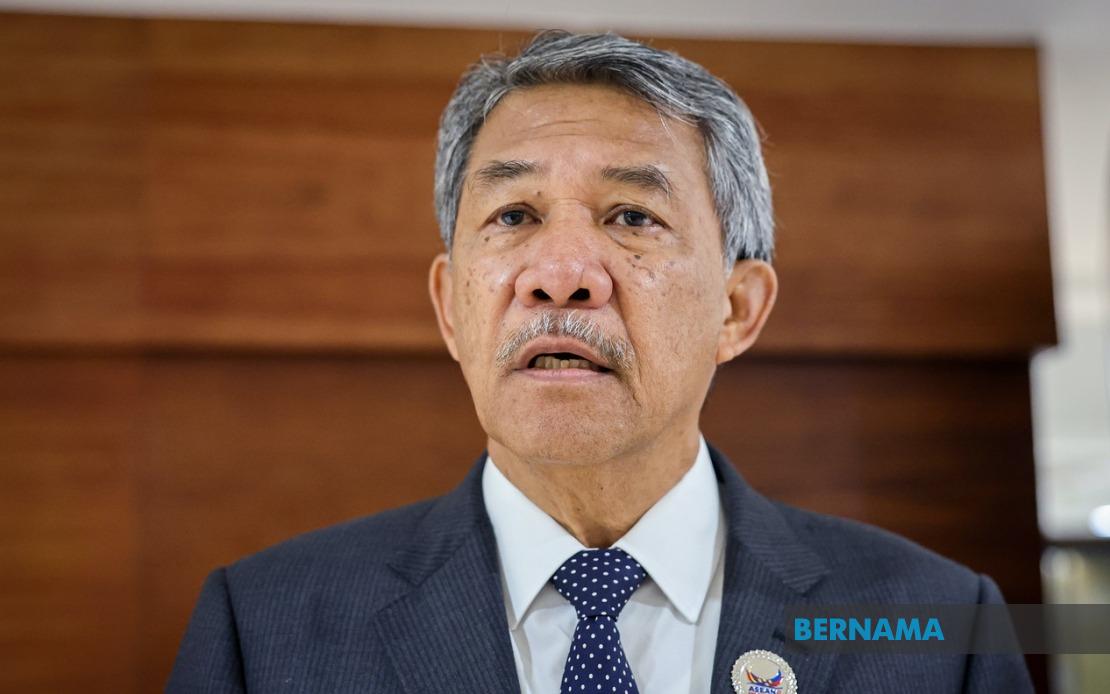
The Association of Southeast Asian Nations has expanded its diplomatic reach significantly by welcoming four additional European signatories to its foundational Treaty of Amity and Cooperation. Sweden, Poland, Romania, and Lithuania were formally accepted into the TAC during the 59th ASEAN Foreign Ministers' Meeting held in Manila on July 21, with the four nations scheduled to sign their instruments of accession on July 25 during ceremonies commemorating the treaty's 50th anniversary. Malaysia's Foreign Minister Datuk Seri Mohamad Hasan confirmed that the accessions represent a milestone moment for regional diplomacy, demonstrating how ASEAN's principles continue to resonate far beyond Southeast Asia's shores.
The timing of these European admissions underscores a broader pattern of international engagement with ASEAN frameworks. With the latest additions, the TAC now encompasses 58 High Contracting Parties, reflecting the treaty's evolution from a regional instrument into a vehicle for global diplomatic cooperation. Beyond the ASEAN member states themselves, the treaty already counts among its signatories major powers including the United States, China, Japan, and India, alongside established democracies such as Australia and New Zealand. The inclusion of four European Union members signals that traditional Western powers view participation in ASEAN's foundational agreements as strategically valuable, particularly as regional tensions persist and great power competition intensifies across Asia-Pacific.
Sweeden, Poland, Romania, and Lithuania bring particular significance to the TAC's expansion. Sweden maintains longstanding neutrality traditions and has historically positioned itself as a bridge between different geopolitical blocs. Poland represents a NATO member at the alliance's eastern frontier, while Romania similarly balances NATO membership with engagement across multiple regional frameworks. Lithuania, the smallest of the four, has been notably vocal in its support for democratic principles and international rules-based order. Their collective accession suggests that even European nations grappling with security challenges in their own regions recognize the value of subscribing to ASEAN's principles of peaceful coexistence, mutual respect for sovereignty, and non-interference in internal affairs.
The Treaty of Amity and Cooperation, established in 1976, remains the bedrock of ASEAN's diplomatic architecture nearly five decades after its inception. The instrument codifies commitments to peaceful settlement of disputes, mutual respect for territorial integrity, non-interference in internal affairs, and cooperation among signatories. These principles, while seemingly straightforward, have proven remarkably durable in an era of shifting geopolitical alignments. For Southeast Asian nations, the TAC provides a framework through which great powers can be encouraged to respect regional autonomy and engage within multilateral structures rather than pursuing unilateral strategic advantages. The treaty's expansion demonstrates that this framework retains relevance even as international relations grow increasingly complex.
Malaysia's Foreign Minister emphasized that the growing roster of TAC members reflects international confidence in ASEAN as a peaceful regional bloc committed to stability and cooperation. This characterization carries particular weight given current tensions in the Indo-Pacific, including disputes over maritime boundaries, technological competition between superpowers, and military buildups across the region. By joining the TAC, countries signal their acceptance of ASEAN's preferred diplomatic approach—one emphasizing dialogue, consensus-building, and respect for established international norms. For Southeast Asian nations concerned about being pulled into great power rivalries, the TAC's expansion among diverse countries suggests that the region's diplomatic preferences carry weight internationally.
The ASEAN Secretariat in Jakarta has indicated that numerous additional applications from countries seeking TAC membership are currently under processing. This pipeline of prospective members suggests that diplomatic demand for participation in ASEAN frameworks extends well beyond the four European nations admitted this month. The backlog may reflect strategic calculations by countries worldwide that formal subscription to ASEAN's founding principles offers diplomatic and economic benefits, whether through enhanced bilateral relations with ASEAN members, participation in regional economic arrangements, or broader positioning within evolving international alignments. The willingness of so many nations to formally commit to these principles validates ASEAN's decades-long effort to establish itself as the region's primary diplomatic institution.
The 59th ASEAN Foreign Ministers' Meeting, held under the Philippines' chairmanship this year, operated under the theme "Navigating Our Future, Together." This framing appears deliberately inclusive, suggesting ASEAN's intention to address regional challenges through expanded partnership networks rather than exclusive arrangements. The Philippines' emphasis on collective navigation through uncertain waters reflects genuine concerns facing Southeast Asian nations—from climate change and pandemic preparedness to maritime security and economic resilience. By expanding the TAC at this particular moment, ASEAN appears to be consolidating international support for its vision of how regional challenges should be addressed.
For Malaysia and other Southeast Asian nations, the expansion of the TAC membership offers both opportunities and considerations. On one hand, the broader international subscription to ASEAN's foundational principles strengthens the normative framework within which regional diplomacy operates. Countries that have formally committed to peaceful coexistence and non-interference face reputational costs if they subsequently violate these commitments, creating behavioral constraints even for powerful nations. On the other hand, the TAC's value depends substantially on members' willingness to uphold its principles in practice. The admission of diverse nations with varying strategic interests requires ongoing diplomatic work to ensure that formal membership translates into substantive commitment to peaceful regional order.
The geographic distribution of TAC members also warrants attention. Traditional great powers—the United States, China, Russia, India, and Japan—already participate, as do various middle powers from Europe, the Middle East, Africa, and the Americas. This near-universal participation theoretically creates a global diplomatic framework centered on Southeast Asian principles. However, meaningful implementation requires that countries privilege TAC commitments over other strategic considerations when conflicts arise. The real test of the treaty's effectiveness lies not in the number of signatories but in whether members actually reference and uphold its provisions when disputes emerge or strategic interests diverge.
The timing of the four European admissions during TAC's 50th anniversary year carries symbolic weight. Half a century of continuous operation represents significant institutional durability in international relations. That ASEAN has managed to maintain and expand this treaty through multiple generations of geopolitical shifts—Cold War, post-Cold War unipolarity, and now multipolar competition—suggests genuine utility. The framework has proven flexible enough to accommodate countries with fundamentally different political systems, security alignments, and strategic interests. This adaptability may explain why states continue seeking membership even as traditional power balances shift.
For Malaysian foreign policy specifically, the TAC's expansion reinforces Malaysia's longstanding diplomatic orientation. Malaysia has consistently advocated for rules-based international order, non-interference in internal affairs, and peaceful dispute resolution. The country's own security interests—managing maritime boundaries, protecting economic interests, and maintaining autonomy amid great power competition—align closely with TAC principles. By supporting the admission of new members, Malaysia reinforces the international legitimacy of these principles while strengthening the coalition of countries ostensibly committed to upholding them.
The expanded TAC membership also creates practical implications for ASEAN's economic and security cooperation frameworks. Many regional trade arrangements, military dialogue mechanisms, and development initiatives reference the TAC as their foundational agreement. As more countries formally subscribe to these principles, they potentially become eligible for deeper participation in various ASEAN-centered mechanisms. This progression can gradually expand the network of countries with institutional stake in regional stability, though effectiveness ultimately depends on implementation and the degree to which signatory nations prioritize TAC commitments when their strategic interests face challenge.
Looking forward, the continuing applications under ASEAN Secretariat review suggest that TAC membership expansion will likely persist. Whether this expansion strengthens ASEAN's diplomatic influence or dilutes the treaty's binding force remains an open question. The answer will depend substantially on how rigorously ASEAN and its member states—including Malaysia—monitor compliance with TAC principles and respond when signatories violate them. The treaty's future utility as a framework for peaceful regional order hinges not on the number of members but on the credibility of its enforcement through diplomatic and institutional mechanisms.

