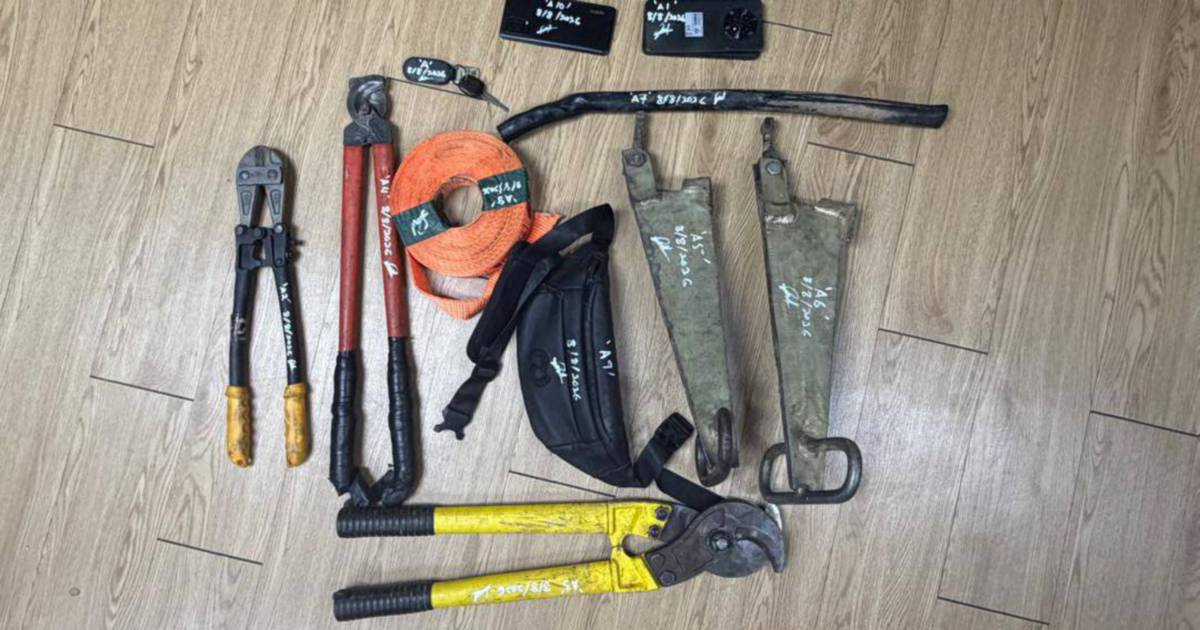
A man accused of stealing cables is now in custody following an extended pursuit across Melaka that showcased the determination of local law enforcement. The dramatic incident unfolded in the early hours when officers detected suspicious activity and initiated a chase that would test both the suspect's driving skills and police response capabilities across the sprawling district.
The chase covered nearly 50 kilometres, demonstrating the considerable distance between the suspect's initial location and where the incident eventually concluded. This substantial span highlights the challenges faced by police in populated and sprawling areas of Melaka, where suspects attempting to evade authorities can create potentially dangerous situations affecting public safety on multiple routes.
The pursuit terminated dramatically in Sungai Chohong, located within the Jasin jurisdiction, when the vehicle the suspect was operating collided with a support cable structure. The impact brought the vehicle to a halt, effectively ending the high-speed evasion attempt and allowing law enforcement to take the suspect into custody without further incident. The collision itself underscores the risks inherent in vehicular pursuits, where desperate individuals behind the wheel pose dangers not only to themselves but to innocent road users and infrastructure.
The suspect's alleged involvement in cable theft represents a persistent problem in Malaysia's infrastructure ecosystem. Cable thefts, particularly those targeting communication lines, electrical installations, and metal infrastructure, create cascading disruptions affecting communities reliant on these services. Such crimes have become increasingly prevalent in recent years, with perpetrators often targeting areas where monitoring is less intensive or where infrastructure sits in exposed locations vulnerable to opportunistic theft.
For Malaysian readers, cable theft crimes carry particular relevance given the country's rapid infrastructure development and the critical importance of reliable electrical and telecommunications networks to economic productivity. When thieves pilfer cables, they damage not just the physical infrastructure but also the service continuity that businesses and households depend upon. The financial impact extends beyond replacement costs to include lost productivity and the expense of emergency repairs needed to restore services.
The incident also reflects the operational sophistication required of police forces managing vehicle pursuits in built-up regions. The near 50-kilometre distance suggests the suspect navigated through multiple municipalities and traffic conditions, creating extended periods of risk where the pursuit could have resulted in collateral damage or civilian injury. Melaka police would have needed to coordinate across districts and maintain situational awareness throughout the chase to ensure public safety remained paramount.
The specific outcome—a collision with a support cable—presents an interesting intersection of consequences. While the crash stopped the suspect, it potentially damaged infrastructure that serves the surrounding community. This dual consequence reflects the broader societal cost of crime, where both the criminal act itself and the circumstances of apprehension can create negative externalities affecting innocent parties who depend on the infrastructure.
Cable theft operations often involve organized networks rather than isolated individuals, raising questions about whether this suspect operated independently or as part of a larger scheme. If investigations reveal connections to coordinated theft rings, it could prompt broader police operations targeting the supply chains through which stolen cables are recycled and sold. Such networks typically funnel stolen materials through scrap dealers and recycling operations, where seemingly legitimate transactions mask the origin of the materials.
The arrest contributes to Melaka's ongoing efforts to combat property crimes that, while sometimes perceived as victimless, generate substantial costs to utility companies and infrastructure providers. These costs frequently translate into higher service fees for consumers, creating an indirect economic impact on households and businesses throughout Malaysia. Understanding the full consequences of such theft helps contextualize why law enforcement dedicates resources to pursuing suspects even across lengthy distances.
Looking forward, this incident may prompt discussions about enhanced monitoring and security measures for critical infrastructure in Melaka and similar regions. Authorities might consider increased surveillance in areas vulnerable to cable theft, protective fencing around exposed installations, or rapid-response protocols for reported suspicious activity. The dramatic nature of this particular case—with its high-speed chase and dramatic conclusion—serves as a public reminder that such crimes do not escape official attention.
The suspect now faces the legal process to determine culpability and appropriate penalties. The charges could involve theft, reckless driving during the pursuit, and damage to property depending on what prosecutors believe the evidence supports. Malaysian courts take such matters seriously, particularly when suspects endanger public safety through their attempts to evade law enforcement. The case will likely proceed through the judicial system in Melaka, where authorities will consolidate evidence from the pursuit and the crash scene to build their prosecutorial case against the accused individual.

