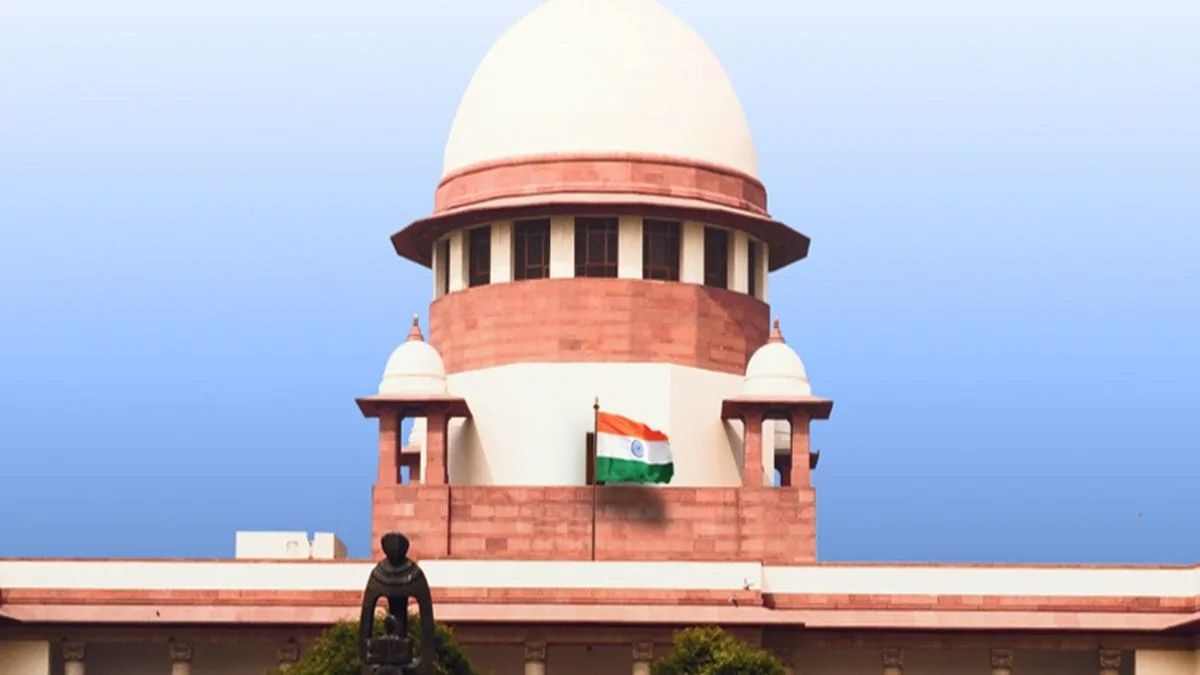
India's Supreme Court has intervened in a contentious animal welfare dispute, temporarily suspending a Madras High Court judgment that sought to prohibit all cow and calf slaughter throughout Tamil Nadu. A Bench comprising Justices Vikram Nath and Sandeep Mehta granted the interim stay on Monday while hearing the Tamil Nadu government's appeal against the May 27 order, signalling potential concerns about whether the lower court had exceeded its mandate in crafting such sweeping relief.
The case centres on a fundamental tension in Indian law between regulating animal slaughter through established statutory frameworks and imposing blanket prohibitions on the practice. The original public interest litigation, filed by K Surya Prasanth of the Hindu Makkal Katchi, had sought relatively narrow relief: preventing cow slaughter in public spaces and restricting the activity to authorised facilities. However, the Madras High Court's response dramatically expanded the scope of the requested remedy, issuing directions that no cow or calf could be slaughtered anywhere in the state, regardless of location, facility status, or religious occasion—explicitly covering days such as Bakrid when Muslim communities traditionally observe animal sacrifice as part of their faith practice.
The Tamil Nadu government's appeal challenges this approach as fundamentally at odds with the legal architecture governing animal slaughter within the state. Officials contend that the High Court's order effectively nullified decades of regulatory legislation, including the Tamil Nadu Animal Preservation Act of 1958, which establishes a conditional framework permitting cattle slaughter under specified circumstances rather than an absolute prohibition. The state argues that existing law provides for regulation and oversight, not wholesale elimination of the practice, and that the High Court's judgment contradicts the statutory scheme by purporting to ban slaughter even within designated slaughterhouses that comply with legal requirements.
Justice Nath's observation during the hearing that the impugned order required "correction" before interim relief could be granted suggests the Supreme Court recognised substantive flaws in the High Court's reasoning or scope. This phrasing indicates judicial concern that the lower court may have strayed beyond addressing the specific grievance before it—the alleged use of temporary sheds in Coimbatore for slaughter during the Bakrid period—into broader constitutional territory without adequate justification for such expansive relief.
The state government's appeal invokes multiple layers of legislative authority to demonstrate that Parliament and the state legislature have deliberately chosen a regulatory rather than prohibitionist approach. The Prevention of Cruelty to Animals Act of 1960, the Slaughter House Rules of 2001, Tamil Nadu's Urban Local Bodies legislation, and modern food safety regulations all establish conditions for permissible slaughter while prioritising animal welfare considerations. This layered regulatory structure reflects a conscious policy choice to balance religious practices, food security, and animal protection rather than to eliminate slaughter entirely.
The Madras High Court's reliance on Article 48 of the Indian Constitution provides the doctrinal foundation for its expansive interpretation. This constitutional provision directs states to endeavour to prohibit cow slaughter and protect cattle, particularly breeding and draft animals essential to agriculture. However, constitutional scholars note that Article 48 falls within the Directive Principles of State Policy—aspirational guidelines that courts traditionally interpret as instructing legislatures to frame policy, not as self-executing mandates permitting courts to override enacted statutes. The High Court's treatment of Article 48 as a basis for judicial imposition of an absolute ban potentially elevates constitutional aspiration above legislative will in ways that merit Supreme Court reconsideration.
The court's reliance on a 1976 Government Order banning cow and heifer slaughter in designated facilities similarly troubled the Supreme Court's interim assessment. The state argues that this administrative directive, issued decades ago, cannot supersede or fundamentally alter the statutory scheme established by the Animal Preservation Act. The question of whether an old government order carries binding force equivalent to legislation, particularly when subsequent statutes and rules have been enacted to regulate the same subject matter, represents precisely the kind of interpretive issue demanding Supreme Court clarity.
The temporary stay granted by Justices Nath and Mehta operates as a significant procedural victory for the state government while the substantive appeal proceeds. However, the Supreme Court's cautious language—requiring "correction" of the judgment before granting relief—signals that the court is unlikely to simply affirm the government's position wholesale. Instead, the Supreme Court appears positioned to craft a more nuanced ruling that acknowledges constitutional concerns about cow protection while respecting statutory frameworks and the religious practices of minority communities for whom animal slaughter carries ritual significance.
For Malaysian observers, this dispute illuminates recurring tensions in South Asian constitutional democracies between majoritarian religious sentiment and minority rights protection, between aspirational constitutional principles and statutory specificity, and between judicial activism and legislative deference. The case demonstrates how high courts sometimes extend remedies far beyond the particularised grievances before them, creating friction with established law and generating Supreme Court intervention. The interim stay preserves the status quo while substantive arguments proceed, meaning Tamil Nadu's existing regulatory framework—which does permit slaughter under prescribed conditions—continues in effect pending final adjudication.
The Supreme Court's ultimate decision will likely reshape how Indian courts interpret animal protection constitutional provisions and govern the intersection of majority religious preferences with minority practice. Whether the final judgment emerges as a template for other states seeking to impose stricter cattle protections, or as a cautionary precedent limiting judicial discretion to rewrite statutory schemes through creative constitutional interpretation, remains to be determined as the case progresses through substantive hearings.

