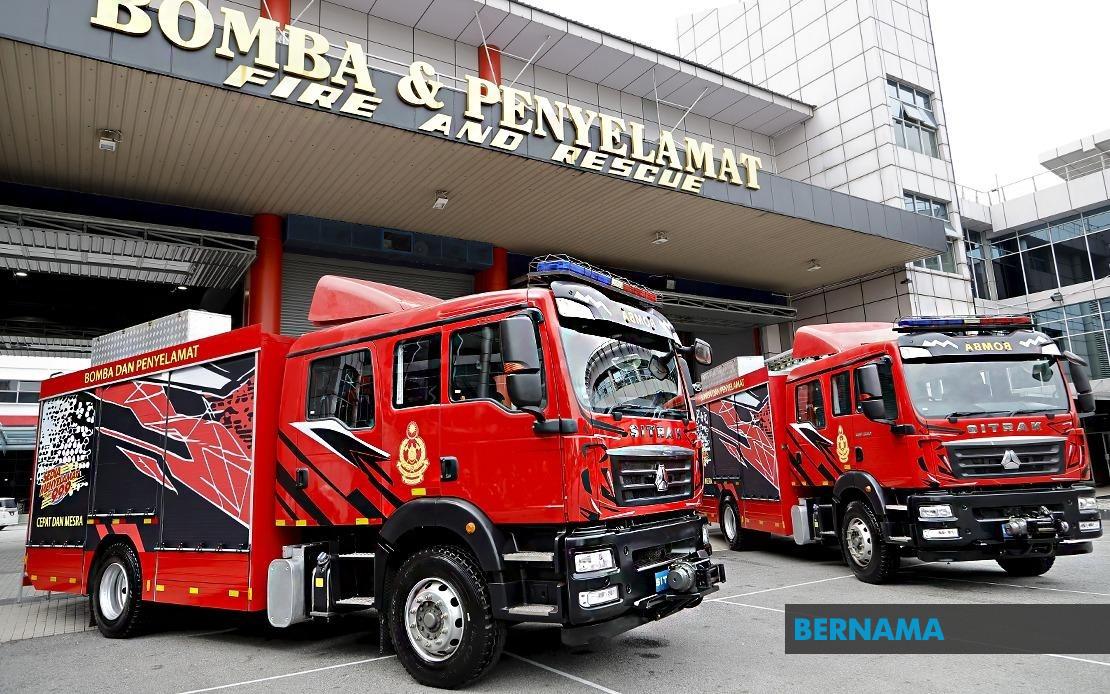
A moderate earthquake centred off the coast of North Sumatra sent tremors across the Klang Valley region on Wednesday, prompting Malaysia's Fire and Rescue Department to mobilise inspection teams across three separate locations. The 5.7-magnitude quake, which struck at 12.18 pm and had its epicentre approximately 55 kilometres southwest of Langsa in Indonesia, was felt by residents and office workers scattered across the greater Kuala Lumpur metropolitan area, triggering a wave of emergency calls and social media inquiries that underscored the heightened awareness of seismic activity in the region.
The first distress call reached the Selangor Fire and Rescue Department at 12.31 pm, reporting tremors at the Kajang Municipal Council building in Kajang. Minutes later, at 12.40 pm, a second alert came in from INTI International College Subang along Jalan SS15, where staff and students had experienced noticeable shaking. These rapid-fire reports reflected the widespread geographical reach of the tremor, which covered a substantial area of the densely populated valley. Selangor JBPM assistant director of operations Ashrul Riezal Asbar confirmed that teams from both the Kajang and Subang Jaya fire stations were dispatched immediately to conduct comprehensive structural assessments.
The third report arrived at 12.32 pm from Menara B2 Maju Link, a commercial office building located on Jalan Lingkaran Tengah 2 in Bandar Tasik Selatan. The Kuala Lumpur Fire and Rescue Department responded by sending personnel from the Sungai Besi station to evaluate the building's condition. By the time emergency responders arrived, most occupants had already taken precautionary measures and evacuated to designated assembly areas, a response that highlighted the importance of workplace earthquake preparedness protocols in high-rise buildings across the metropolitan region.
All three building inspections yielded reassuring results for the occupants and property owners. The assessment teams conducted thorough examinations of structural integrity at each location, specifically looking for visible cracks, settlement patterns, or other indicators of damage that could compromise occupant safety. In each case, the fire and rescue personnel found no evidence of structural compromise. The buildings were declared safe for immediate reoccupancy, and normal operations resumed within a short timeframe. The swift return to normalcy reflected both the relatively moderate intensity of the earthquake and the robust construction standards that have become increasingly stringent in Malaysia's commercial building sector.
The duration of the tremor provided another data point for residents attempting to assess the severity of the event. Occupants reported that the shaking lasted approximately 15 seconds, a timeframe that is neither insignificant nor catastrophic. Fifteen seconds of sustained motion is sufficient to unsettle people, cause minor object displacement, and prompt evacuation responses, yet typically insufficient to cause structural failure in well-designed buildings. This moderate duration, combined with the moderate magnitude and distance of the epicentre, meant that the earthquake generated considerable public concern without resulting in any reported injuries or material damage across the affected areas.
Social media platforms became an immediate hub of activity and information-seeking following the tremor. The Threads platform, in particular, witnessed a surge of posts as residents across Shah Alam and surrounding suburbs sought to confirm their experiences and compare observations with others. A user identified as 'nabilaishah' posted from Section 26, describing the tremor experience, while 'nadiaxzailan' shared an account of initially mistaking the shaking for imagination before consulting colleagues and other online users for verification. These social media exchanges reflected a modern pattern in earthquake response whereby citizens use digital networks to rapidly establish collective awareness of seismic events, particularly in contexts where official warnings or notifications may lag slightly behind the physical sensation of ground movement.
The psychological and institutional response to earthquake tremors in Malaysia reveals broader patterns about regional seismic awareness and disaster preparedness. Whilst the Klang Valley and wider Peninsular Malaysia experience relatively infrequent significant earthquakes compared to regions situated directly along the Ring of Fire, tremors originating from Sumatra's active geological zones are sufficiently common that they generate immediate recognition and appropriate precautionary responses among emergency services and building occupants. The fire department's rapid deployment and thorough inspection protocols demonstrate institutional readiness that has developed through both experience with previous seismic events and professional training standards.
The geographic distribution of reports across Kajang, Subang Jaya, and Bandar Tasik Selatan demonstrates that the tremor's effects were not localised but rather dispersed across a wide area of the Klang Valley's urban expanse. This widespread nature of the tremor sensation actually underscores the distance of the epicentre in Sumatra and the transmission efficiency of seismic waves through the Earth's crust and across the Strait of Malacca. For Malaysian earthquake monitoring officials and building engineers, such events provide valuable data about how seismic energy propagates across regional distances and how different building types and structural systems respond to moderate-intensity motion.
The rapid clearance of all three locations following inspection—coupled with the absence of any injuries or damage reports—suggests that current building codes and construction practices in the Klang Valley provide adequate protection against moderate seismic events originating from regional sources. However, the incident also serves as a reminder of the importance of maintaining earthquake awareness and preparedness measures in what many residents might perceive as a relatively low-seismic-hazard region. Regular building inspections, structural maintenance, and staff training on earthquake response procedures remain important investments in public safety, particularly in high-occupancy commercial and institutional buildings.
For residents and workers across the region, the earthquake and its aftermath provided a tangible, if brief, reminder that seismic activity in Southeast Asia remains a real phenomenon capable of reaching into peninsular Malaysia. Whilst no damage occurred on this occasion, the incident reinforced the value of emergency preparedness—both institutional, in the form of rapid fire department response, and individual, through the instinctive reactions of occupants to evacuate to safety. As urbanisation continues to expand across the Klang Valley, maintaining robust building standards and emergency response capabilities becomes an increasingly important element of urban infrastructure management.

