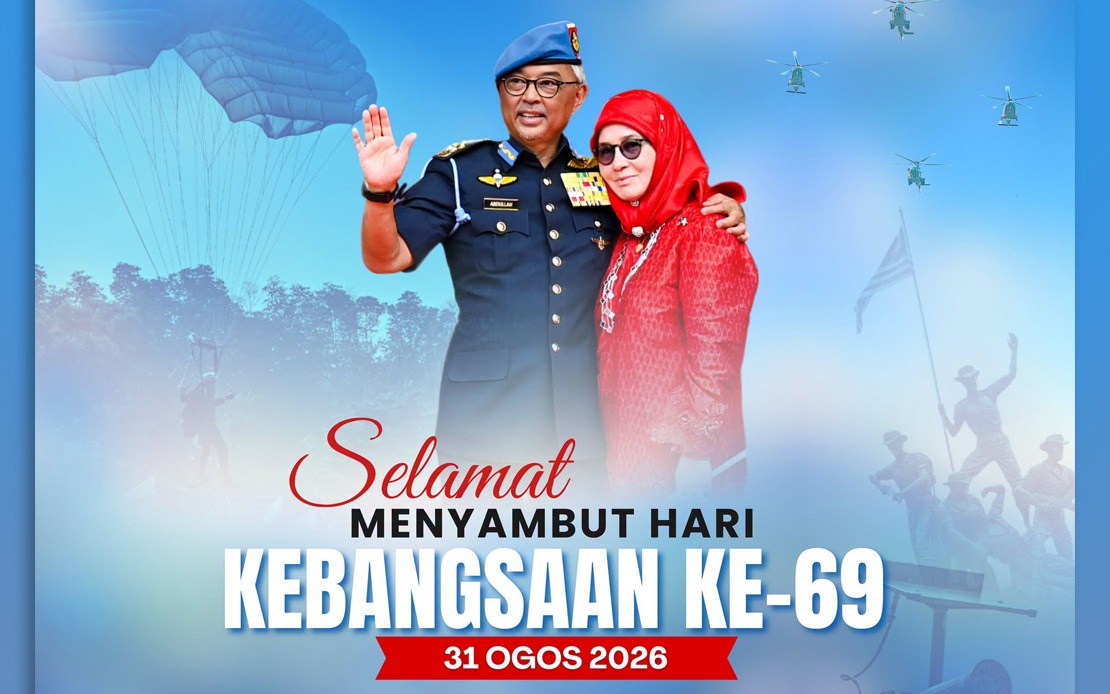
The Sultan of Pahang Al-Sultan Abdullah Ri'ayatuddin Al-Mustafa Billah Shah and Tengku Ampuan Pahang Tunku Azizah Aminah Maimunah Iskandariah marked Malaysia's 69th year of independence by extending heartfelt greetings to the people of Pahang, underscoring themes of national pride, social cohesion, and shared responsibility for the country's future. Their message, shared via the Pahang Sultanate's official social media channels on August 30, reflected the ceremonial importance placed by Malaysia's royal institution on marking the annual milestone that commemorates the nation's establishment as an independent state.
Central to the royal couple's message was an expression of profound gratitude to Allah for the circumstances that have sustained Malaysia throughout seven decades of independence. They specifically highlighted the blessings of peace, prosperity, and communal harmony that the nation has experienced over this extended period, framing these outcomes not as inevitable but as divine gifts requiring active stewardship and appreciation. This framing carries particular resonance in the Malaysian context, where religious acknowledgement and secular governance are deliberately intertwined in official discourse, reflecting the constitutional position of Islam in the Federation.
The Sultan and Tengku Ampuan articulated a foundational principle central to Malaysian political philosophy: that independence and national sovereignty represent profound trusts that demand collective preservation and vigilance. This language moves beyond mere ceremonial rhetoric, invoking the concept of custodianship that has long underpinned discussions of royal prerogative and national stewardship in the Malaysian system. By positioning sovereignty as something to be "preserved together," the royal message emphasised that maintenance of the nation's independent status remains an ongoing endeavour rather than an accomplishment to be taken for granted, a sentiment that carries weight in regional geopolitics where national resilience continues to be tested.
The royal household further emphasised that unity, reciprocal respect, and tolerance constitute the essential pillars upon which national harmony and political stability rest. This triad of values reflects Malaysia's historical experience as a multiethnic, multireligious federation where peaceful coexistence among diverse communities has required deliberate institutional design and sustained commitment to foundational principles. The invocation of these values on National Day serves as an annual reaffirmation of the social compact that underpins Malaysian governance, particularly relevant during periods when communal tensions or political polarization threaten to undermine these foundations.
Importantly, the Sultan and Tengku Ampuan explicitly called upon all residents of Pahang to maintain and strengthen the spirit of patriotism in their individual conduct and collective endeavours. They further urged adherence to the Rukun Negara, Malaysia's five constitutional principles established at independence, as a practical framework for channelling patriotic sentiment into daily behaviour. This emphasis on translating national ideals into concrete practice reflects recognition that patriotism, when divorced from institutional reinforcement and individual commitment, risks becoming merely symbolic rather than substantive.
The royal message directed particular attention to Malaysia's younger generation, encouraging them to develop deeper understanding and appreciation of the nation's independence struggle and the historical sacrifices that preceded current prosperity. This intergenerational appeal acknowledges a fundamental challenge facing all nations: ensuring that subsequent generations maintain connection to foundational narratives and do not treat hard-won freedoms as automatic inheritance. For Malaysia specifically, where the independence struggle occurred within living memory of many citizens, this generational transmission of historical consciousness takes on heightened importance.
Beyond historical memory, the royal couple emphasised the youth's critical role in preserving and advancing Malaysia's cultural heritage and social harmony going forward. This framing positions young citizens not as passive recipients of national identity but as active agents responsible for its evolution and protection. Given Malaysia's demographic profile, with substantial portions of the population under 40, this articulation of youth responsibility carries particular significance for long-term national trajectory and social cohesion.
The Sultan and Tengku Ampuan concluded their message with prayers requesting divine protection and blessing for Pahang specifically, invoking continuance of peace, prosperity, and general well-being within the state. This localisation of the national message, focusing particularly on Pahang's welfare, reflects the constitutional and ceremonial role of state sultans as custodians of their respective territories' interests and welfare. The invocation of state-level blessings within a national context underscores the federal structure of Malaysian governance, where subnational identities and concerns hold considerable political and cultural significance.
The timing of such messages during National Day celebrations holds importance within Malaysia's political calendar. As the nation periodically grapples with questions of national unity, intercommunal relations, and the relevance of foundational principles to contemporary challenges, royal affirmations of commitment to these principles carry weight beyond ceremonial significance. When senior figures within Malaysia's constitutional monarchy emphasise themes of shared responsibility, mutual respect, and historical consciousness, such statements contribute to broader national discourse regarding collective identity and social cohesion.
For Pahang specifically, the royal message comes amid the state's ongoing development challenges and its role within Malaysia's broader regional economy. By extending National Day greetings that emphasise both national unity and state-specific well-being, the Sultan and Tengku Ampuan reinforced the complementary relationship between local and national identities. This dual emphasis reflects understanding that genuine national harmony emerges not through subordination of state interests to federal priorities, but through recognition of their interdependence and mutual reinforcement.
The reliance on social media platforms for disseminating the royal message also reflects modernisation of traditional royal communication patterns. By utilising Facebook to reach broader audiences, the Pahang Sultanate demonstrated adaptation to contemporary information ecosystems while maintaining the formal register and ceremonial tone appropriate to royal pronouncements. This blend of traditional authority and modern communication channels characterises contemporary Malaysian governance.
Ultimately, the Sultan and Tengku Ampuan's National Day message articulated enduring principles that remain central to Malaysian national life: the value of independence, the necessity of multireligious and multiethnic coexistence, the importance of institutional frameworks like the Rukun Negara, and the critical role of successive generations in perpetuating national identity and values. In an era of rapid social change and periodic political turbulence, such regular reaffirmations of foundational commitments serve important functions in maintaining continuity and reinforcing the philosophical underpinnings of the Malaysian state.

