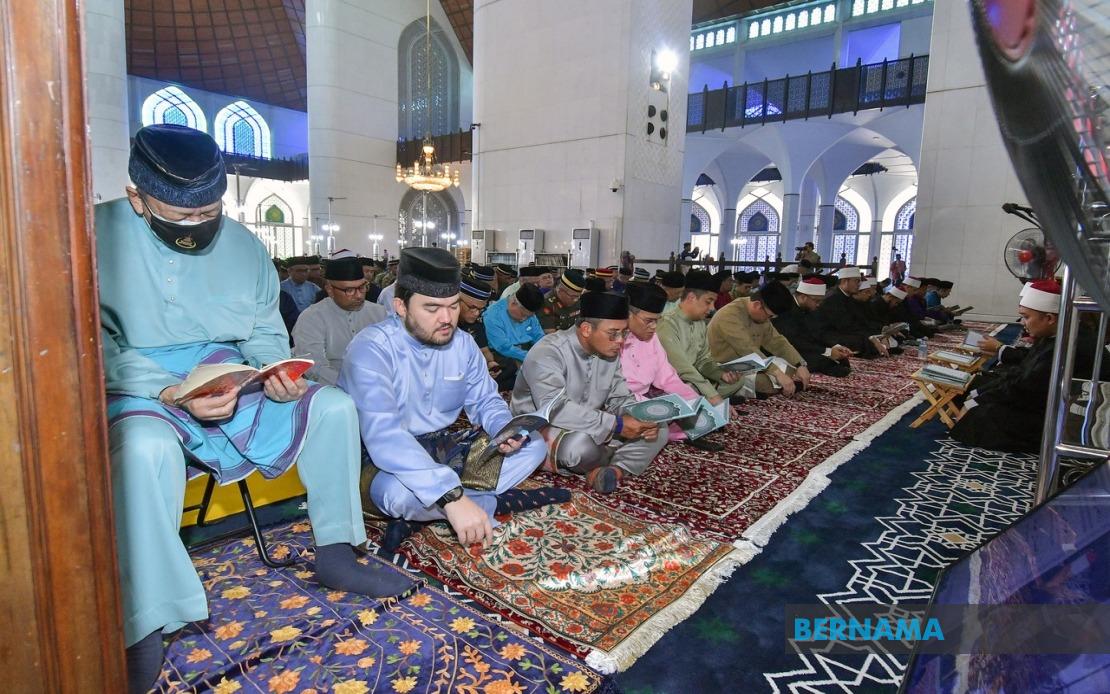
Sultan Sharafuddin Idris Shah, the reigning Sultan of Selangor, participated in a significant spiritual gathering at Masjid Sultan Salahuddin Abdul Aziz Shah in Shah Alam on August 28, attending a Surah Yassin recitation and Friday prayers. The occasion took on added ceremonial importance as the state prepared for its National Day celebrations, with the royal participation underscoring the integration of religious observance into the national festivities. The Raja Muda of Selangor, Tengku Amir Shah Sultan Sharafuddin Idris Shah, also graced the event with his presence, reinforcing the significance of the gathering within the state's leadership hierarchy.
Upon his arrival at the mosque, Sultan Sharafuddin was received by Selangor Menteri Besar Datuk Seri Amirudin Shari, who extended official greetings on behalf of the state government. The welcoming committee further included Dr Mohammad Fahmi Ngah, chairman of the State Islamic Affairs and Innovation Culture Committee, demonstrating the coordinated involvement of both state administrative and religious authorities in orchestrating the event. The presence of senior Islamic officials, namely Datuk Mohd Shahzihan Ahmad, director of the Selangor Islamic Religious Department (JAIS), and Datuk Salehuddin Saidin, chairman of the Selangor Islamic Religious Council (MAIS), illustrated the institutional significance accorded to the religious programme.
Approximately 1,000 worshippers participated in the Surah Yassin recitation, a figure that encompassed members of the security forces stationed throughout Selangor. The inclusion of military and enforcement personnel in the religious observance reflected deliberate efforts to foster spiritual communion across institutional boundaries within the state. Such gatherings serve as important occasions for reinforcing social cohesion and shared values among diverse professional and community groups, particularly as the nation approaches significant national commemorations.
Following the recitation, Sultan Sharafuddin performed the Friday prayer services, during which he listened attentively to a sermon delivered by Muhammad Farhan Wijaya, the mosque's Grand Imam. The sermon's title, "Merdeka Daripada Belenggu Kerakusan" (Freedom from the Shackles of Greed), carried thematic resonance with national values of freedom and integrity, concepts integral to Malaysia's foundational principles. The choice of sermon topic suggested intentional alignment with broader national discourse on ethical governance and societal values, transforming a routine religious service into a platform for addressing contemporary concerns about accountability and moral conduct.
The timing of this religious observance held particular significance, occurring merely two days before Selangor's state-level National Day celebrations were scheduled to commence. By participating in the Surah Yassin recitation and Friday prayers, Sultan Sharafuddin demonstrated the inseparability of religious and national sentiment within the Malaysian constitutional framework, where Islam occupies a constitutionally recognised position within the federal system. Such demonstrations of royal engagement with religious obligations carry symbolic weight, especially for a state like Selangor, which serves as the administrative and economic heartland of the nation.
Selangor's National Day celebrations were configured to take place at Kajang Stadium at 8 pm on Sunday, August 30, operating under the state-specific theme "Malaysia MADANI: Kesejahteraan Dinikmati" (Malaysia MADANI: Well-being Enjoyed), which complemented the national thematic framework. The alignment between the spiritual preparations undertaken by the Sultan and the broader celebratory programme reflected coordinated efforts to ensure that the state's National Day observances would incorporate both ceremonial grandeur and spiritual depth. This integration of religious and national themes has become increasingly characteristic of Malaysian state-level commemorations, reflecting the nation's approach to balancing secular nationalism with Islamic principles.
The mosque venue itself, Masjid Sultan Salahuddin Abdul Aziz Shah, holds particular symbolic importance within Selangor, serving as one of the state's principal places of worship and religious congregation. The selection of this location for the pre-National Day gathering underscored the deliberate positioning of religious institutions as central to national identity and celebration. For Malaysian readers, particularly in Selangor, such royal participation in mosque-based activities carries implications regarding the continued prominence of Islam in the state's public life and governance structures, issues that remain pertinent to ongoing discussions about religious affairs in Malaysia's federal framework.
The participation of security force personnel in the religious observance deserves particular attention, as it reflects broader efforts within Malaysian governance to ensure that institutions responsible for national security and public order remain anchored in the nation's spiritual and moral foundations. This cross-institutional gathering signalled that preparations for national celebrations transcend purely administrative or ceremonial dimensions, incorporating deep engagement with the ethical and spiritual values that the celebrations are designed to commemorate and reinforce throughout the population.
For regional observers, the event illustrates how Malaysia's constitutional monarchy functions within a multi-religious federal system, with royal figures actively participating in religious observances while maintaining the secular legal framework that governs the nation. Such balancing acts, visible in the Sultan's engagement with both state administrative officials and Islamic religious authorities, characterise the ongoing negotiation of identity and governance in a diverse Southeast Asian democracy. The Selangor Sultan's actions during this pre-National Day period provided a microcosm of how Malaysian institutions attempt to integrate religious observance with national sentiment, a challenge that extends beyond Selangor to the broader Malaysian context.

