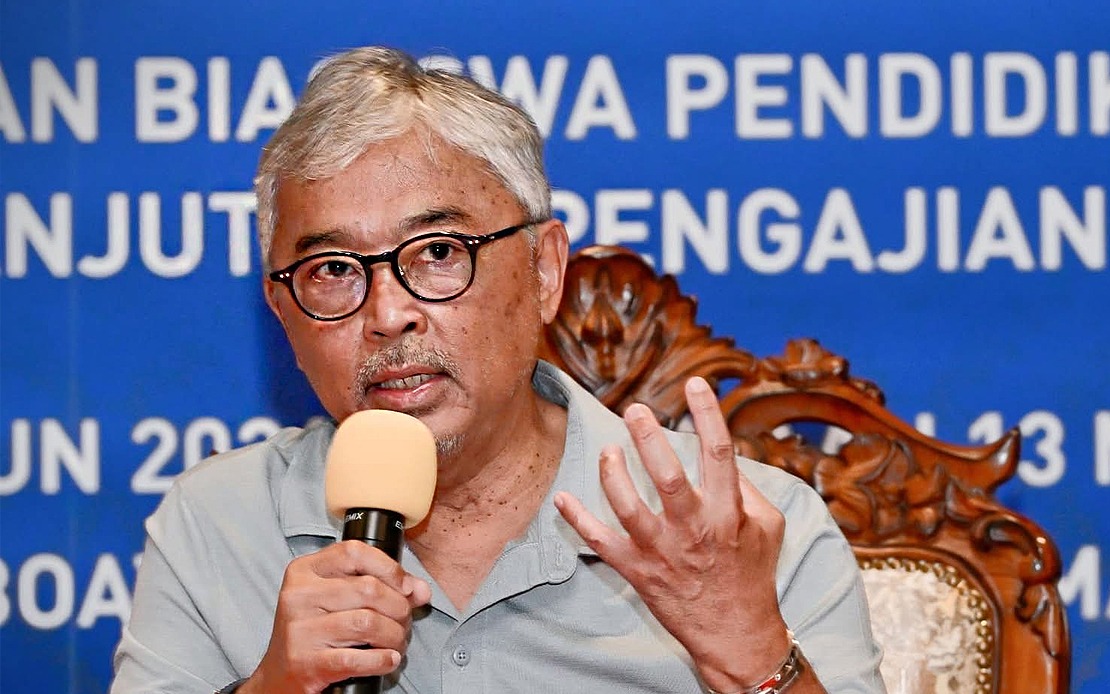
The Sultan of Pahang, Al-Sultan Abdullah Ri'ayatuddin Al-Mustafa Billah Shah, has issued a strong call for universities throughout Pahang to expand their corporate social responsibility efforts by offering scholarships to promising students from Tioman Island. Speaking through an official statement, His Royal Highness emphasised that geographic isolation should not diminish educational opportunities for talented youth from the island community, and that tertiary institutions have a moral obligation to nurture human capital from rural and remote areas.
The royal directive comes in response to Institut Jantung Negara University College's (IJNUC) decision to award scholarships to two outstanding Tioman Island students entering higher education. The Sultan has recognised this initiative as a model that deserves emulation across Pahang's education sector, using it as a benchmark for institutional commitment to inclusive development. By publicly endorsing the IJNUC scholarship programme, Al-Sultan Abdullah has signalled that such efforts align with the state's development priorities and merit replication by other universities seeking to demonstrate genuine community investment.
The significance of this intervention extends beyond simple encouragement. As the constitutional head of state, the Sultan's intervention carries substantial symbolic weight within Pahang's institutional landscape and sends a clear message to university leadership that scholarship programmes targeting underrepresented communities will receive royal recognition and support. This form of gentle but unmistakable pressure from the palace often translates into institutional action, as universities in Malaysia typically respond to signals from their state's royal patronage with concrete policy changes.
Tioman Island presents a particular case study in educational disadvantage. Located in the South China Sea off Pahang's east coast, the island's geographic separation from the mainland creates logistical and economic barriers that disproportionately affect educational progression. The limited availability of advanced educational facilities on the island means that secondary school graduates typically must relocate to pursue tertiary qualifications, imposing financial hardship on families with limited resources. By targeting Tioman specifically, the Sultan has identified a community facing acute educational access challenges that warrant proactive institutional intervention.
The Sultan's emphasis on merit-based selection underscores an important principle: that expanded access need not compromise academic standards. Both scholarship recipients were chosen based on academic excellence and demonstrated potential, establishing that inclusion and quality are compatible objectives. This framing helps address potential concerns that widened scholarship availability might dilute institutional standards, while simultaneously affirming that talented students from disadvantaged backgrounds possess the capacity to excel when given opportunity.
Al-Sultan Abdullah has also provided direct counsel to the two scholarship recipients, framing their educational journey as representative of broader community aspirations. His insistence that failure is not an option, coupled with the assertion that their success will serve as a benchmark for future Tioman youth, places these students in a position of ambassadorial responsibility. This rhetorical positioning transforms individual scholarship awards into a collective investment in the island community's developmental trajectory, and signals that these students carry expectations extending beyond personal achievement to community leadership.
The Sultan's public commendation of Institut Jantung Negara extends beyond the scholarship initiative to encompass the institution's broader engagement with Pahang's communities. His recognition of IJN's annual corporate social responsibility activities, including healthcare outreach to remote settlements such as Kampung Bantal, reflects an appreciation for institutions that integrate community service into their operational philosophy. This acknowledgment serves to incentivise other universities by demonstrating that proactive community engagement earns royal favour and public recognition.
The international standing of Institut Jantung Negara as a centre of cardiac excellence provides additional context to the Sultan's commendation. IJN's recognition throughout Asia as a leading medical institution lends credibility to its scholarship programme, signalling to Tioman students that academic support from such an institution provides not merely a qualification but association with internationally respected expertise. This positioning helps attract and retain talented students who might otherwise perceive island-based recruitment as offering inferior educational credentials.
For Malaysia's broader higher education sector, the Sultan's intervention highlights growing recognition that equity in tertiary access remains a substantive policy concern requiring institutional action beyond government mandate. While federal scholarship schemes exist, the role of individual universities in addressing regional disadvantage remains underexploited. The Sultan's public intervention signals that state governments and royal patronage increasingly expect institutional leadership in educational inclusion, particularly for geographically marginalised communities where government schemes may prove insufficient.
The timing of this directive reflects evolving national conversations about inclusive growth and equitable development. As Malaysia seeks to position itself as a regional knowledge economy, the full participation of human capital from all geographic regions becomes strategically important. Students from Tioman Island represent untapped potential that, if properly cultivated, can contribute to both state and national development objectives. The Sultan's emphasis on producing quality human capital acknowledges that economic competitiveness depends on identifying and nurturing talent wherever it exists, rather than concentrating educational investment in urban centres.
The directive also carries implicit messaging about institutional responsibility. By positioning scholarship programmes as an expected component of corporate social responsibility rather than as exceptional generosity, the Sultan reframes educational equity as an institutional obligation. This rhetorical shift may influence how universities in Pahang conceptualise their relationship to marginalised communities, potentially embedding inclusion considerations more deeply into institutional planning and resource allocation processes.
Moving forward, the Sultan's call will likely be monitored for institutional response, with particular attention to whether other Pahang universities establish comparable scholarship programmes in subsequent academic years. The political capital invested in this public directive suggests genuine expectations for demonstrable follow-through, and universities that remain unresponsive may find themselves increasingly questioned regarding their commitment to state development priorities. For Tioman Island's youth, the directive represents a genuine expansion of educational pathways, provided that universities respond substantively to the Sultan's invitation.

