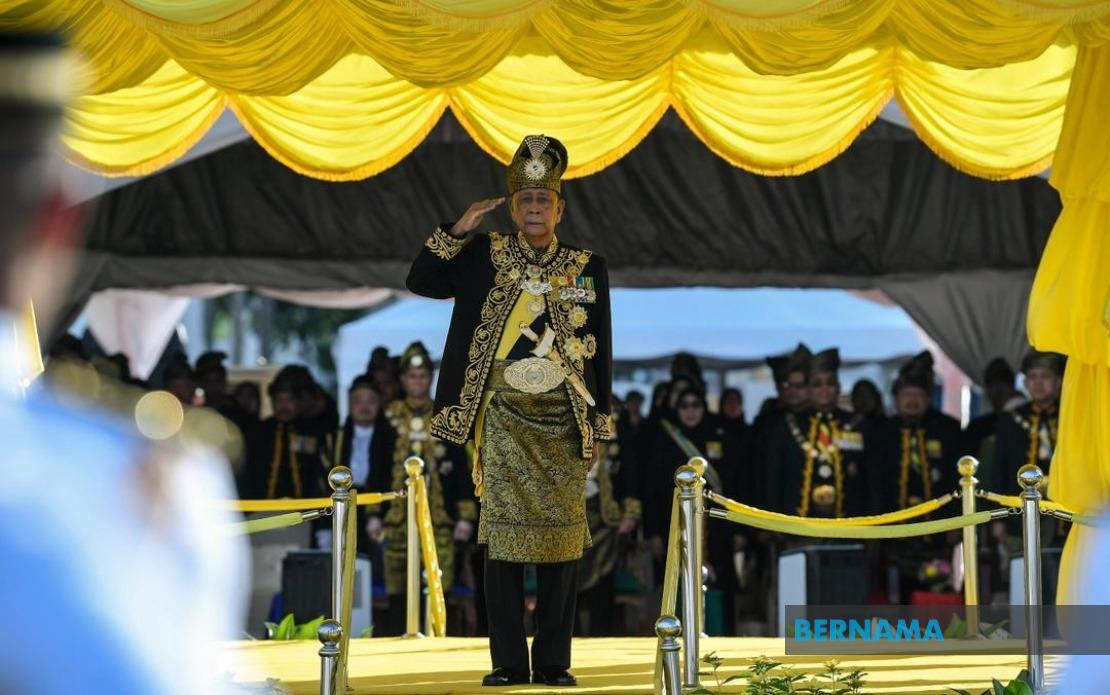
The Sultan of Kedah, Al Aminul Karim Sultan Sallehuddin Sultan Badlishah, was honoured with an elaborate military parade marking his 84th birthday at Dataran Medan Bandar in Alor Setar on July 5. The ceremonial occasion brought together senior state officials and military personnel to pay tribute to the respected royal figure, reflecting the significance accorded to the reigning monarch's milestone age in Malaysia's constitutional framework.
Among the dignitaries present was the Raja Muda of Kedah, Tengku Sarafudin Badlishah Sultan Sallehuddin, whose attendance highlighted the continuity of the state's royal institution. The event also drew the participation of Kedah Menteri Besar Datuk Seri Muhammad Sanusi Md Nor and State Secretary Datuk Seri Norizan Khazali, along with members of the State Executive Council, underscoring the state government's formal recognition of the occasion.
The centrepiece of the celebration was the ceremonial guard of honour, which involved 103 soldiers and three commissioned officers from the 6th Battalion of the Royal Malay Regiment (RAMD). The military display was orchestrated by Major Muhammad Nasrullah Abdullah, with precise coordination of ceremonial elements that characterize Malaysia's formal state events. The colour bearer, Lieutenant Mohamad Aiman Hanif Samsudin, carried the national flag, whilst Warrant Officer 1 Mohd Fairuz Ramli held the regiment standard, both positions of considerable symbolic importance in military protocol.
The RAMD Central Band, conducted by Captain Muhamad Fauzee Japar with support from Sergeant Mohd Shahrilaizad Bakhtiar, provided the musical accompaniment that gave the ceremony its ceremonial gravitas. Military bands remain central to Malaysian state functions, lending them an air of formality and national pride. The musical elements of such ceremonies serve not merely as background accompaniment but as an integral component of the spectacle that reinforces respect for constitutional authority.
One of the most striking features was the aerial display, which demonstrated the capabilities of Malaysia's military aviation resources. Two EC120B aircraft from the Flying Training Institute (INSPEN) 2 and three PC-7 MK II aircraft from INSPEN 1 executed a coordinated flypast above the gathering. Such demonstrations serve multiple purposes: they showcase national military training capacity whilst creating a memorable visual dimension to the celebration that resonates with public sentiment regarding defence capability and institutional pride.
Complementing the aerial component was the traditional 21-gun salute, fired by the 41st Battery of the Royal Artillery Regiment (Ceremonial) under the command of Major Hafizan Md Ghani, stationed at Sungai Buloh Camp in Selangor. The ceremonial artillery salute remains one of Malaysia's most venerable traditions, with its precise execution requiring significant coordination across military units. The presence of Selangor-based artillery personnel at a Kedah state occasion demonstrates the cross-state military logistics that support such high-level ceremonial functions.
In the Malaysian context, royal birthday celebrations carry particular constitutional significance beyond mere festive observance. The Sultans occupy a unique position within Malaysia's federal structure, serving as heads of state in their respective states whilst collectively electing the Yang di-Pertuan Agong. Formal celebrations of royal milestones therefore carry implications for broader questions of constitutional legitimacy and institutional continuity. The elaborate military ceremony reflects the state's commitment to honouring the Sultan's position and tenure.
For Kedah specifically, the prominence given to this celebration underscores the stability of the state's leadership during a period when several Malaysian states have experienced significant political transitions. The Raja Muda's presence alongside the Sultan symbolizes dynastic continuity and succession planning, matters of considerable constitutional weight in Malaysia's system of constitutional monarchy. Such public displays of institutional solidity can have stabilizing effects on perceptions of governance and administrative continuity.
The coordination required to mount such an event—involving aviation training institutes, artillery units stationed in different states, and multiple branches of the military—reveals the substantial logistical infrastructure that supports Malaysia's ceremonial traditions. These events function as periodic affirmations of national cohesion and the subordination of military power to constitutional civilian authority, principles fundamental to Malaysia's post-independence political order. The success of such ceremonies depends on months of planning and rehearsal by personnel who rarely receive public recognition for their contribution.
The attendance of senior government officials, particularly the Menteri Besar and State Executive Council members, reflected the intertwining of royal and executive authority within Kedah's governance structure. In Malaysia's constitutional framework, whilst the Sultan holds formal head-of-state powers, the Menteri Besar exercises executive authority, and their joint presence at such occasions symbolizes this complementary relationship. This partnership, when visibly harmonious, contributes to institutional legitimacy and public confidence in state governance.
The scale and formality of the celebration also signal to the wider public the respect and reverence with which Malaysia's constitutional framework treats its royal institutions. Such ceremonies serve an important civic function by reinforcing societal values regarding respect for established institutions and constitutional order. In an era when democratic institutions globally face various pressures and challenges, Malaysia's elaborate ceremonial traditions represent a deliberate investment in institutional symbolism and continuity.
For observers of Malaysian politics and governance, royal birthday celebrations provide a window into the state's institutional health and the functioning of its military and civilian establishments. The flawless execution of such ceremonies requires not only meticulous planning but also the goodwill and cooperation of numerous agencies and officials. The successful completion of the Sultan's 84th birthday celebration in Alor Setar exemplified these principles and reinforced the institutional frameworks that structure Malaysia's constitutional order.

