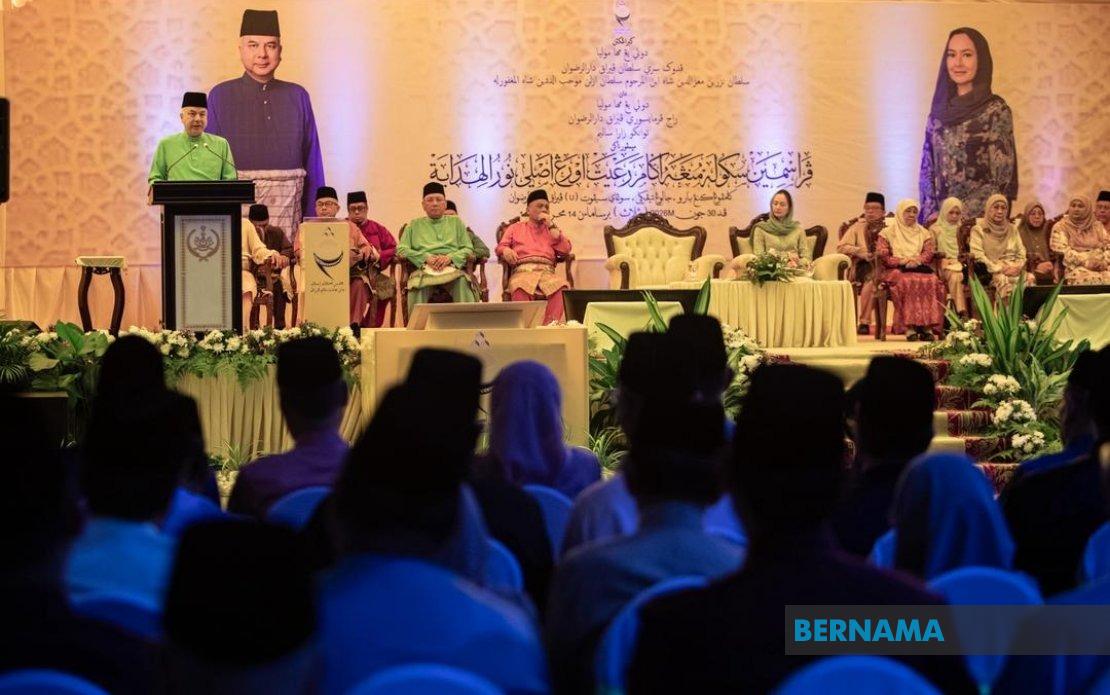
Sultan Nazrin Shah of Perak officially inaugurated Sekolah Menengah Agama Rakyat (SMAR) Orang Asli Nurul Hidayah in Kampung Kenang, Sungai Siput Utara, on June 30, recognizing the institution as a pivotal development in supporting educational advancement and skills development within the indigenous Orang Asli population across the state. The ceremonial opening brought together senior members of the Perak royal family, including Raja Muda Raja Jaafar Raja Muda Musa and Raja Iskandar Dzurkarnain Sultan Idris Shah, alongside state government officials and religious authorities, underscoring the significance placed on this educational milestone by Perak's leadership.
The establishment of this school represents a watershed moment for indigenous education in Malaysia. As the nation's first SMAR facility dedicated specifically to Orang Asli students, the institution combines academic instruction with religious education within a unified framework—a model that emerged gradually from the school's origins as a community learning centre focused on Islamic teachings and foundational religious studies. Over more than three decades, the institution has evolved into a comprehensive educational facility that now serves as a beacon for what structured, culturally-sensitive education can achieve within marginalized communities.
In his remarks, the Sultan articulated a vision of education that extends far beyond classroom instruction. He characterized the school's establishment as fundamentally a long-term investment in the future security and prosperity of Orang Asli children, emphasizing that providing quality schooling to this population constitutes a commitment to national development rather than merely a charitable gesture. This framing positions indigenous education within the broader context of Malaysia's aspirations for inclusive growth and equal opportunity, reflecting contemporary government priorities around ensuring that geographic isolation or socioeconomic disadvantage do not prevent any Malaysian from accessing quality learning.
The Perak Islamic Religious and Malay Customs Council's backing of the school demonstrates institutional alignment with objectives to advance both religious education and community welfare among indigenous populations. By channeling resources toward an integrated curriculum that balances secular knowledge with Islamic instruction, the council effectively addresses a historical gap in educational provision for Orang Asli students, many of whom have had limited access to schools that respect their cultural and religious contexts while delivering academically rigorous instruction.
Sultan Nazrin's address placed particular emphasis on the comprehensive nature of education as a developmental process. He described schooling as fundamentally concerned with nurturing four interconnected dimensions—intellectual, spiritual, emotional, and physical capability—rather than merely transferring information. This holistic conception of education's purpose reflects broader regional and global thinking about learning's role in producing citizens equipped not only with technical knowledge but also with moral clarity, emotional resilience, and physical wellbeing.
The school's track record offers compelling evidence of its effectiveness. According to the Sultan, student outcomes have been notably encouraging, with former pupils increasingly returning to their communities to contribute to further educational development and awareness-raising efforts. This cycle of alumni giving back to their origins suggests the institution successfully instills both competence and commitment to community service, transforming education into an engine for localized social advancement rather than merely individual economic mobility.
For Malaysian policymakers and regional observers, the SMAR Orang Asli model merits closer examination. Indigenous populations across Southeast Asia face persistent educational disadvantages stemming from geographic isolation, economic constraints, and historical marginalization. By demonstrating that purpose-built institutions combining academic rigor with cultural and religious sensitivity can succeed, Perak's experience offers a potentially replicable template. The school's emphasis on preserving syariah values and moral character alongside academic excellence also addresses a frequent tension in indigenous education—the concern that schooling may alienate young people from their heritage while failing to deliver genuine economic opportunity.
The Sultan further noted the school's particular contribution to Perak's educational ecosystem, observing that it has succeeded in producing not merely knowledgeable individuals but young people grounded in religious conviction and ethical commitment. This dual achievement—intellectual competence paired with moral and spiritual anchoring—represents the kind of human capital development that societies increasingly recognize as essential for social cohesion and sustainable progress. In Perak's context, where Orang Asli communities have historically experienced educational underinvestment, the school's existence signals a deliberate policy choice to direct resources toward closing opportunity gaps.
The Sultan's vision for the school's future role emphasized its potential to inspire enhanced teaching quality and student motivation. The provision of improved physical infrastructure creates conditions for pedagogical innovation and greater academic ambition among the student body. Infrastructure alone, however, cannot guarantee educational transformation; the school's success ultimately depends on the continued commitment of educators, families, and community leaders to supporting learning and reinforcing values of intellectual curiosity and moral integrity among young Orang Asli.
The emphasis on character development and religious values reflects wider concerns across Malaysia about ensuring that educational advancement does not come at the cost of cultural erosion or spiritual diminishment. For indigenous communities particularly, schooling has sometimes represented a threat to traditional ways of life and identity. By constructing an institution that explicitly integrates Islamic education and moral formation into its curriculum, SMAR Orang Asli Nurul Hidayah attempts to model an educational approach that expands opportunity without requiring cultural abandonment.
Looking forward, the school's continued success will likely influence how Malaysian policymakers approach indigenous education more broadly. As pressures mount to improve outcomes among historically underserved populations, the replicability and scalability of the Perak model become important considerations. Whether additional SMAR facilities dedicated to Orang Asli students might be established in other states, and what conditions would need to accompany such expansion, remain open questions that state and federal education authorities may increasingly address.
The broader significance of this opening extends to questions about equity in access to quality education across Malaysia. The Sultan's remarks positioning educational access as a fundamental right regardless of "background or geographical location" articulate a principle that many regional governments endorse rhetorically but struggle to implement materially. SMAR Orang Asli Nurul Hidayah's existence and demonstrated effectiveness suggest that genuine educational equity remains achievable through targeted institutional investment, culturally informed pedagogy, and sustained political commitment—a lesson with relevance well beyond Perak's borders.

