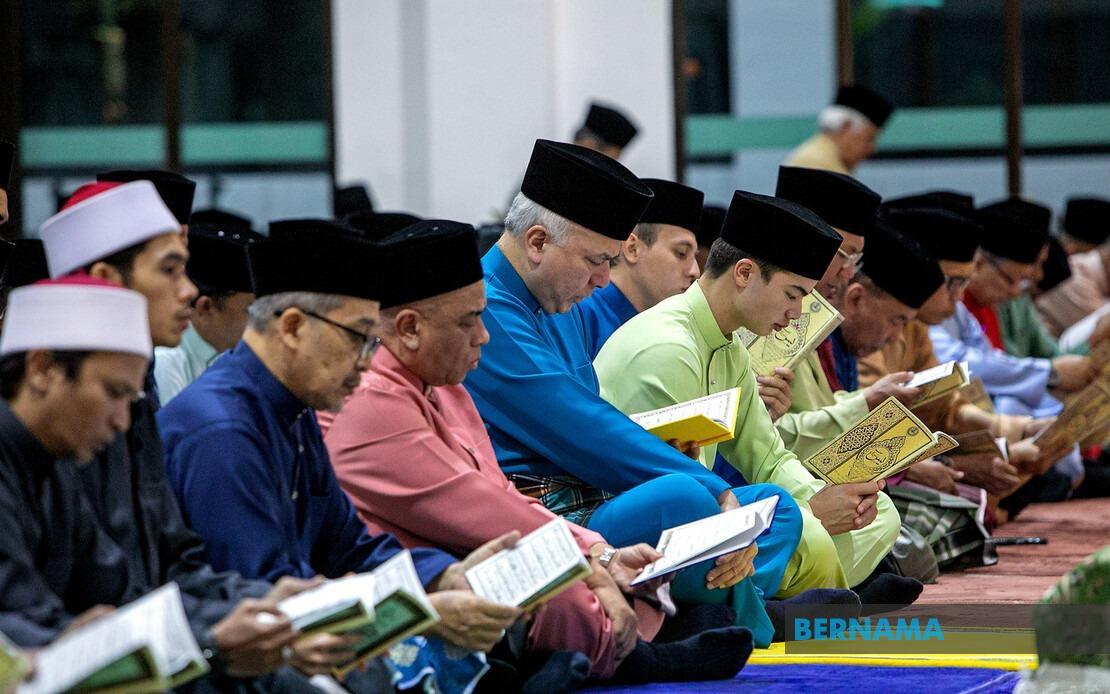
Sultan Nazrin Shah of Perak presided over a solemn Islamic observance in Ipoh on August 30, attending the Yasin recitation and tahlil ceremony held as part of the state's National Day commemoration. The religious gathering at Masjid Imam As Syafie drew approximately 1,000 worshippers and included an array of state dignitaries, underscoring the significance of integrating spiritual reflection into the nation's premier patriotic occasion.
Among those present at the ceremony were Menteri Besar Datuk Seri Saarani Mohamad and Tan Sri Mohd Annuar Zaini, president of the state Islamic Religious and Malay Customs Council (MAIPk). The participation of senior political and religious leadership reflected the dual emphasis on national unity and Islamic observance that characterises contemporary Malaysian state-level celebrations, particularly in Perak where Sultan Nazrin has maintained an active role in ceremonial and religious functions.
The evening's centrepiece was the formal inauguration of Masjid Imam As Syafie, a newly completed religious facility representing a substantial investment in Perak's Islamic infrastructure. The mosque, which cost RM8.7 million to construct, exemplifies ongoing efforts by state authorities to expand worship spaces in expanding urban areas. Its 1,600-person capacity positions it as a significant addition to Ipoh's existing network of mosques, capable of accommodating large congregations during peak prayer times and special religious occasions.
The symbolic unveiling itself carried ceremonial weight: Sultan Nazrin drew back the covering cloth on the inaugural plaque in a gesture intended to formally mark the mosque's opening. This ritualistic element, combined with his participation in the doa selamat, or prayer for general well-being, demonstrated the role that sultanates continue to play in validating and blessing major institutional developments within their respective states. For religious institutions in Malaysia, royal patronage and ceremonial participation remain significant markers of legitimacy and community importance.
Following the formalities, Sultan Nazrin joined the assembled congregants in the Yasin recitation and tahlil, both central practices in Islamic devotional life. The Yasin chapter is traditionally recited for spiritual blessing and is commonly performed during commemorative occasions, whilst tahlil involves the repetition of Islamic phrases expressing faith. By participating directly in these practices rather than merely observing, the Sultan modelled religious engagement and underscored the spiritual dimension of national observance beyond its secular or patriotic content.
The evening concluded with Sultan Nazrin joining the congregational Isyak prayer, the night prayer in the Islamic schedule. This full participation throughout the ceremony—from the formal inauguration through to the completion of evening prayers—reflected a deliberate commitment to spiritual leadership that has become increasingly visible in Malaysian royal practice. The extended duration of the Sultan's presence sent a message about the compatibility of national sentiment with religious devotion, a particularly relevant messaging strategy in an era when secular and religious identities are sometimes perceived as competing.
For Perak specifically, the investment in mosque infrastructure addresses the practical reality of urban expansion. Ipoh and surrounding areas have experienced population growth that strains existing religious facilities during congregational prayers, particularly during Friday services and festival periods. The addition of a 1,600-capacity facility provides relief to the city's prayer network whilst offering modern amenities that contemporary Muslim communities increasingly expect.
The timing of the inauguration during National Day celebrations, rather than scheduling it as a standalone religious event, reflected a deliberate strategy to frame Islamic institutional development as integral to national progress and cohesion. This approach has become common in Malaysian state governance, where religious ceremonies frequently accompany patriotic observances. The integration creates a narrative in which religious commitment and national loyalty reinforce rather than contradict one another.
Beyond the specific event, the gathering illustrates the continuing centrality of the monarchy in Malaysian religious life, even as formal religious authority rests with the respective state Islamic councils and religious departments. Sultan Nazrin's active participation in ceremonial inaugurations and prayer leadership positions the sultanate as a custodian of Islamic values within the state, a role that carries particular resonance in Perak where the Sultan is deeply engaged in state affairs.
The presence of some 1,000 congregants indicates strong community interest in both the National Day observance and the mosque inauguration itself. This turnout suggests that residents of Ipoh recognise the facility as a meaningful addition to local infrastructure, whether motivated by religious commitment, civic engagement, or both. For Malaysian cities experiencing growth and demographic change, new mosques serve not only as places of worship but as community anchors and gathering spaces.
Looking forward, the completion and inauguration of Masjid Imam As Syafie contributes to ongoing efforts by Malaysian state governments to ensure adequate religious infrastructure keeps pace with urbanisation. As cities expand and populations shift, the provision of prayer facilities becomes a practical governance matter alongside its spiritual significance. Perak's investment in this facility demonstrates continued commitment to this balance.

