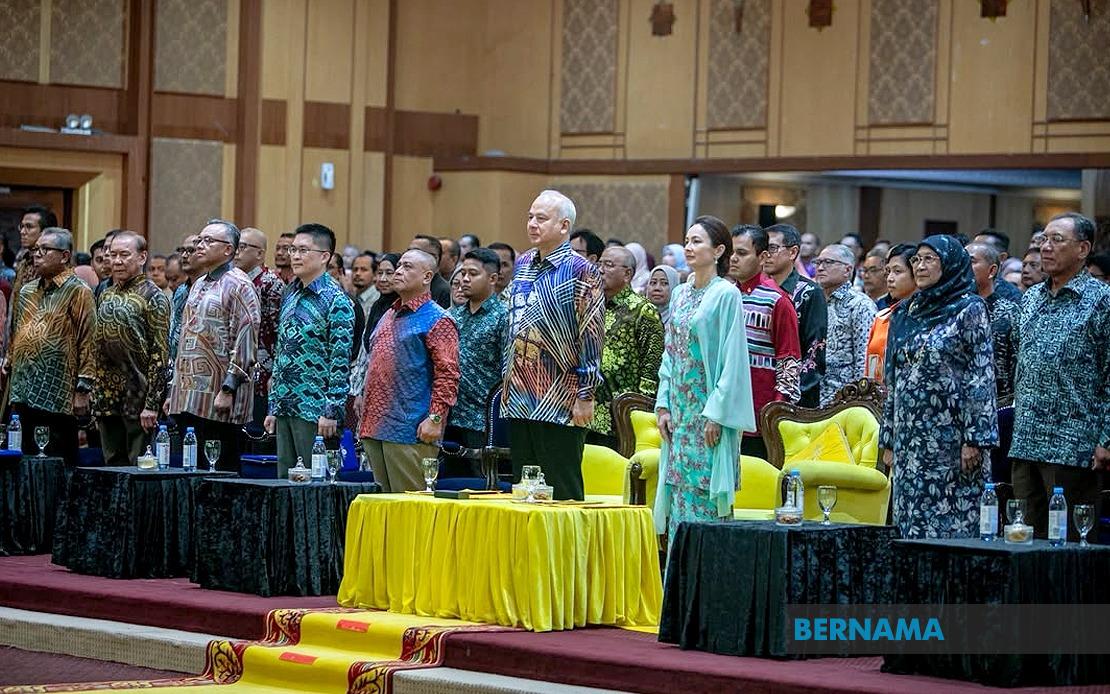
Sultan Nazrin Shah marked the beginning of Perak's 2026 Merdeka Month celebrations by presiding over a major gathering at Bangunan Perak Darul Ridzuan in Ipoh on Thursday evening. The occasion brought together state leadership including Raja Permaisuri Tuanku Zara Salim, Menteri Besar Datuk Seri Saarani Mohamad, and Deputy Education Minister Wong Kah Woh to recognise the state's students and their contributions to nation-building through cultural and academic pursuits.
The programme demonstrated remarkable enthusiasm among Perak's student population, with organizers recording 214,095 entries across the state's schools. This participation rate encompassed 83.6 per cent of primary and secondary school students in Perak, underscoring the event's reach and significance as a grassroots initiative. The scale of involvement signals how deeply the Merdeka theme resonates within educational circles, extending beyond traditional ceremonies to engage young learners in meaningful cultural expression and competitive excellence.
A notable achievement this year was the 15 per cent increase in participation compared with the previous year's figures. Perak Education Department director Zulkafli Mohamed Mokhtar highlighted this growth trajectory during his address, characterizing the programme as an increasingly important mechanism for identifying student talent while simultaneously building confidence and developing capabilities across diverse competitive categories. The sustained upward trend suggests the initiative has transcended a one-off observance to become an anticipated annual fixture within the state's educational calendar.
The programme's underlying philosophy extends beyond surface-level patriotic displays. Officials articulated a vision aligned with Malaysia Education Plan 2026-2035, emphasizing that the initiative cultivates not merely academic prowess but also moral development, critical thinking faculties, and historical consciousness among young Malaysians. By positioning Merdeka Month activities within this broader educational framework, state authorities have invested the competitions with deeper pedagogical purpose—transforming them into vehicles for shaping responsible citizens capable of future leadership roles.
Sultan Nazrin's direct involvement in presenting awards and recognizing achievements lent ceremonial weight to the occasion while demonstrating royal endorsement of educational initiatives at the state level. The Kinta Utara District Education Office received the special award for Best Achievement, accompanied by a RM20,000 cash prize that acknowledges exemplary organizational performance and potentially supports further student development programmes within that jurisdiction.
Competitive elements spanned both linguistic and creative domains, reflecting a holistic approach to student engagement. Upper secondary students competed in Malay language public speaking, with Ifwat Arrafi Mohd Amin of Sekolah Menengah Kebangsaan Tun Abd Razak in Bagan Datuk emerging victorious. The English public speaking competition, where E Johnnes Abysia from SMK Sungai Pari claimed the championship, underscores the bilingual emphasis embedded within Malaysia's education system and the dual priority assigned to both national and international languages.
Beyond oratorical competitions, the event encompassed artistic and performative categories that provided alternative pathways for student expression. Choral speaking, choral recitation, and choir competitions allowed students to participate collectively while developing ensemble coordination and public presentation skills. Caricature drawing competitions offered opportunities for visual artists to gain recognition, while essay writing, poetry composition, and poster design competitions engaged students across multiple literacy and creative formats. This diversification ensured that participants with varying talents and aptitudes could find suitable outlets within the programme structure.
The geographical representation across Perak's school system, evidenced by entries from districts including Kinta Utara and Bagan Datuk, indicates that the Merdeka Month initiative has achieved genuine state-wide penetration. Rather than concentrating benefits within urban centers, the programme's reach extends to schools across the state's varied communities, democratizing access to competitive opportunities and recognition. For students in rural and semi-urban areas, such inclusive programming provides exposure and platforms that might otherwise be unavailable.
From a broader Southeast Asian perspective, Malaysia's deliberate emphasis on instilling patriotic values and national consciousness through educational programming reflects a wider regional pattern. As Southeast Asian nations navigate globalization and demographic change, state-sponsored youth initiatives serve to reinforce national identity, collective memory, and civic virtues. Perak's 2026 Merdeka Month programme exemplifies how traditional observances can be adapted into modern educational tools that engage contemporary students while preserving historical consciousness.
The presence of both Sultan Nazrin and Tuanku Zara in distributing prizes across the various categories demonstrated the royal family's direct stake in student achievement and educational advancement. Such visible participation strengthens the ceremonial dimension of recognition, making awards carry enhanced significance that students will likely remember throughout their educational journeys and beyond. The symbolic messages conveyed—that excellence is valued at the highest levels of state leadership, that cultural pursuits merit royal attention—shape student attitudes toward achievement and national service.
Looking forward, the programme's demonstrated growth trajectory suggests sustained expansion in coming years. Education administrators in Perak and potentially other states may view these metrics as validation for increased investment in similar initiatives. The model of integrating competitive academic and cultural elements within a nationally-themed observance could potentially be adapted or replicated, offering a template for other states seeking to strengthen the connection between schooling and patriotic formation. As Malaysia develops its human capital and pursues educational excellence, programmes anchored in both academic rigor and national values will likely remain central to policy priorities.

