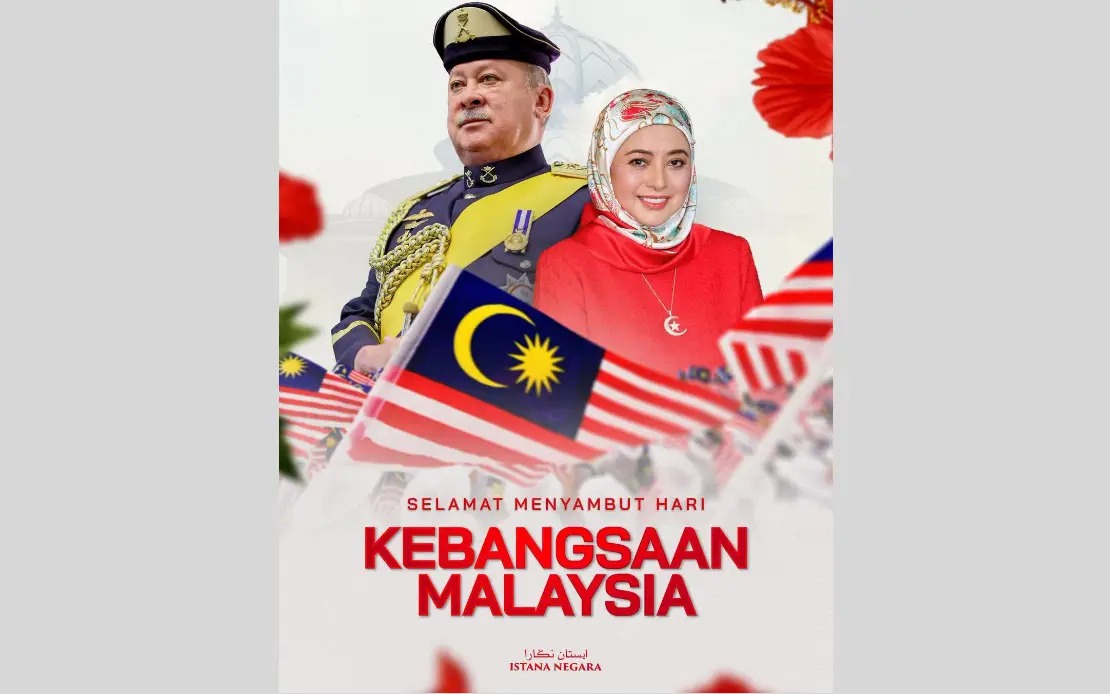
Their Majesties Sultan Ibrahim Sultan Iskandar and Raja Zarith Sofiah took centre stage on Saturday to lead Malaysia's 69th National Day commemoration, delivering greetings to the nation through an official statement shared on the King's Facebook page. The royal couple arrived at the Putrajaya venue at 8 am, setting the tone for what would become a day-long celebration of national pride and unity. They were warmly received by Prime Minister Datuk Seri Anwar Ibrahim alongside his wife, Datuk Seri Dr. Wan Azizah Wan Ismail, underscoring the ceremonial significance of the occasion and the collaborative spirit between the monarchy and government.
The 2024 National Day celebration carried profound symbolic weight through its chosen theme, "Malaysia MADANI: Kesejahteraan Dinikmati", which translates to emphasising shared prosperity and wellbeing as cornerstones of national development. This thematic framework reflects the government's broader policy direction toward inclusive growth and people-centred governance, resonating with Malaysia's commitment to balancing economic development with social welfare. The selection of Putrajaya as the venue—the purpose-built federal administrative capital—underscores the government's intention to showcase institutional strength and national organisation during this milestone celebration.
The ceremonial proceedings commenced with a solemn military ceremony, establishing the gravitas befitting the occasion before transitioning into more vibrant cultural expressions. The carefully curated programme then moved into stage performances and a visually striking parade, both designed to communicate Malaysia's foundational values of diversity and multiculturalism. This sequencing from formal military observance to celebratory cultural displays reflects a deliberate narrative structure, moving from respect for national institutions and defence forces to broader expressions of societal identity and shared values.
The scale of the National Day event demonstrated remarkable logistical coordination and national participation. The parade and march-past involved an impressive 10,819 participants distributed across 76 contingents, indicating broad representation from government agencies, civil society, and community organisations. The presence of 22 brass bands provided musical accompaniment, while 11 specially decorated vehicles added visual spectacle. The organisers mobilised 328 land, sea, and air assets—a figure encompassing military equipment, transport vehicles, and aerial displays—showcasing Malaysia's defence and security capabilities on the national stage.
Beyond traditional military and governmental participation, the celebration integrated service animals and incorporated 22 electric vehicles into the procession, signalling Malaysia's gradual shift toward environmental consciousness and sustainable practices in public events. This inclusion of electric vehicles alongside conventional transport reflects evolving national priorities regarding climate action and green technology adoption, messages that resonate strongly with younger Malaysians increasingly concerned about environmental sustainability.
A particularly striking element of the festivities was the human graphic display arrangement on the terraces, comprising 26 distinct formations that collectively wove together Malaysia's multicultural fabric. This innovative presentation technique transformed spectators into active participants in the visual narrative, creating a human mosaic that physically embodied national diversity. Such displays serve multiple purposes beyond mere entertainment—they reinforce collective national identity, demonstrate organisational capability, and create memorable imagery for media dissemination and public memory.
The comprehensive scale and detailed planning evident in the 69th National Day celebration reflect the Malaysian government's commitment to marking this milestone with particular grandeur and significance. The involvement of Communications Minister Datuk Seri Fahmi Fadzil, who serves as chairman of the National Day and Malaysia Day (HKHM) 2026 Main Committee, indicates that these celebrations function as templates and rehearsals for even larger future commemorations. Malaysia's 70th National Day in 2025 will inevitably build upon the infrastructure, themes, and organisational frameworks established this year.
For regional observers and Malaysian expatriates, such national celebrations carry heightened significance in an era of increasing transnational migration and diaspora engagement. The visual demonstration of national unity, institutional competence, and cultural pride through coordinated public ceremonies reinforces Malaysia's position within Southeast Asia and projects an image of stable, organised governance. In a region where national identity and institutional trust remain contested political terrain, Malaysia's ability to organise large-scale, ethnically inclusive celebrations sends important diplomatic signals.
The royal presence and active participation of Sultan Ibrahim and Raja Zarith Sofiah throughout the festivities reinforced the constitutional monarchy's role as unifying national institution. Their attendance at ceremonial proceedings, reception of government officials, and public engagement with the celebration demonstrates the monarchy's continued centrality to Malaysian political culture and national identity formation. This ceremonial function—while formal and ceremonial in nature—carries substantial political weight in Malaysia's constitutional framework, where the monarchy serves as arbiter of national values and symbol of continuity.
The 69th National Day celebration ultimately communicated multiple layers of meaning simultaneously: respect for national institutions and defence forces through military pageantry; commitment to multicultural coexistence through cultural performances and diverse participation; emphasis on shared prosperity through the Malaysia MADANI thematic framework; and environmental consciousness through incorporation of sustainable transport methods. This multivalent messaging strategy reflects the complexity of contemporary Malaysian nation-building, where governments must simultaneously address economic development, social cohesion, environmental sustainability, and cultural preservation.

