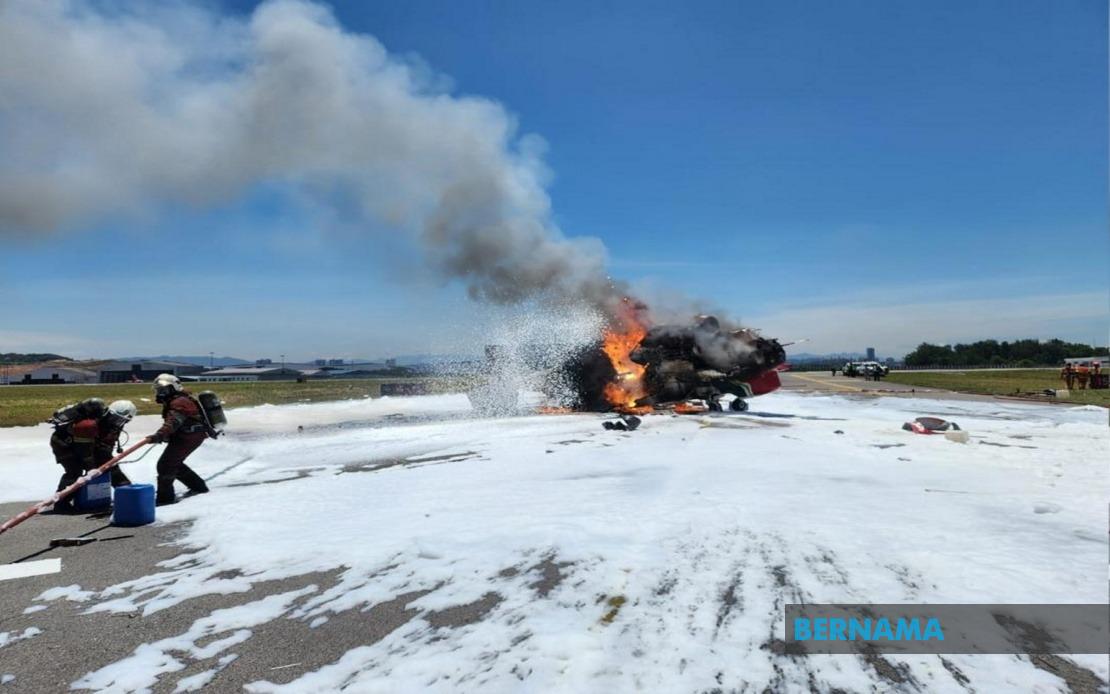
Sultan Abdul Aziz Shah Airport in Subang resumed runway operations on August 15 after an incident involving a helicopter fire disrupted air traffic earlier in the day. The Malaysian Civil Aviation Authority (CAAM) confirmed that normal operations recommenced at 2.57 pm, roughly two and a half hours after the airfield was initially closed to manage the emergency response and ensure passenger safety.
The explosive incident occurred at approximately 12.28 pm at Taxiway Victor when a Kamov KaV-32S helicopter registered to a Ukrainian company ignited while undergoing routine engine maintenance. Four Ukrainian personnel—the pilot, co-pilot, and two additional crew members—were conducting ground-based engine run-up tests, a standard procedure designed to verify aircraft systems before flight operations. One crew member sustained minor injuries from debris ejected during the explosion, but the incident did not result in fatalities or more severe casualties.
CAAM's chief executive officer Capt Datuk Norazman Mahmud provided updates to media contacts, explaining that the temporary airfield closure was necessary to secure the area and prevent additional safety risks. During the runway suspension period, air traffic management protocols diverted eight incoming flights to alternative Malaysian airports, protecting passenger safety while minimising disruption to the broader aviation network. Three flights scheduled for departure from Subang experienced delays as departure slots remained unavailable during the closure window.
The immediate operational disruption underscores the vulnerability of airport infrastructure to unexpected mechanical failures and emergencies. Sultan Abdul Aziz Shah Airport, serving the Klang Valley region and functioning as a secondary facility to Kuala Lumpur International Airport, handled the situation through established emergency procedures that segregated affected airspace and restored normal operations with measured efficiency. The rapid runway reopening within hours of the incident reflected coordination between CAAM, airport authorities, and emergency services.
Passengers whose flights were affected received limited real-time information during the incident, highlighting ongoing challenges in communicating with travellers during unexpected disruptions. CAAM and the affected airlines subsequently advised passengers to contact their respective carriers for updated schedule information, though some confusion typically accompanies sudden changes to flight plans. Flight information displays throughout the terminal building were updated with revised departure and arrival times for affected services throughout the afternoon.
The incident raises broader questions about the maintenance protocols and safety oversight for helicopter operations at civilian airports across Malaysia. Helicopter maintenance activities, while necessary for aircraft serviceability, introduce operational risks that must be carefully managed through proper procedures, personnel training, and equipment safeguards. The presence of international aircraft operators conducting maintenance at Malaysian facilities reflects regional aviation networks and the movement of air assets across borders for servicing and deployment.
The Ukrainian-registered helicopter's presence at Subang likely relates to regional aviation activities, potentially including cargo operations, emergency services, or charter missions common to Southeast Asian aviation ecosystems. The aircraft's involvement in a significant incident during routine maintenance serves as a reminder that even ground-based technical procedures require rigorous safety protocols and continuous oversight. Investigations into the explosion's root causes would typically examine maintenance documentation, equipment condition, operational procedures, and crew actions preceding the incident.
For Malaysian aviation authorities, the incident reinforces the importance of maintaining emergency response capabilities and clear communication protocols across airport operators and civil aviation regulators. CAAM's swift decision to close and subsequently reopen the runway demonstrated operational discipline, though the diversion of eight flights represents tangible costs to airlines and inconvenience to passengers. The temporary disruption also illustrated how incidents at secondary facilities like Sultan Abdul Aziz Shah can cascade across Malaysia's aviation infrastructure and affect regional connectivity.
Looking forward, the helicopter explosion incident may prompt regulatory reviews of maintenance procedures, particularly for non-standard aircraft or international operators using Malaysian airport facilities. Enhanced ground safety protocols, including clearer separation between maintenance areas and active taxiways, could help prevent similar occurrences. The incident also demonstrates the operational complexity of managing diverse aviation activities at regional airports where commercial flights, maintenance activities, and emergency services frequently share limited space and infrastructure.
The swift restoration of normal operations at Sultan Abdul Aziz Shah Airport reflected Malaysia's established emergency management frameworks, though the incident highlighted the potential for cascading disruptions when critical infrastructure experiences unexpected incidents. As aviation activity across Southeast Asia continues expanding, maintaining robust safety standards and emergency response capabilities remains essential for protecting passengers and ensuring the reliability of regional air transport networks.

