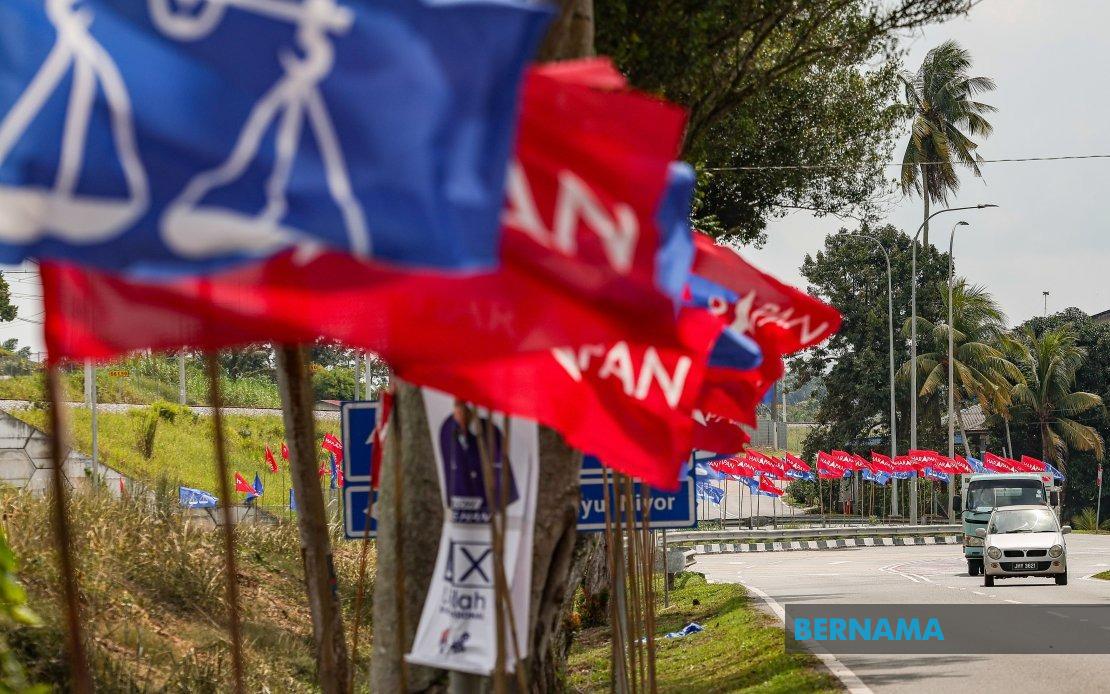
Larkin could return to Pakatan Harapan's grip if voter participation reaches the levels demonstrated during the last federal election, according to the coalition's candidate Suhaizan Kaiat. Speaking in Johor Bahru ahead of the 16th Johor state election, the Pulai Member of Parliament expressed measured optimism about wrestling the seat from incumbent Barisan Nasional representative Mohd Hairi Mad Shah, citing historical voting patterns as evidence that the constituency is winnable for PH.
Suhaizan's confidence rests on a simple premise: the 2018 general election revealed Larkin voters were willing to abandon BN when sufficient numbers turned out to cast their ballots. That election delivered the seat to Datuk Mohd Izhar Ahmad, who stood as a Pakatan Harapan candidate under the Bersatu banner, establishing a template for opposition success in what has traditionally been regarded as competitive terrain. The candidate argues this precedent matters more than recent performance in state-level contests, where different dynamics and voter behaviour patterns often emerge.
The 2022 Johor state election result, which saw Mohd Hairi secure a 6,178-vote majority, should not be viewed as an immutable indicator of Larkin's true political leanings, Suhaizan contends. That contest took place under extraordinarily constrained circumstances, with turnout languishing at just 51 per cent due to pandemic-related restrictions that dampened voter enthusiasm and prevented conventional campaigning. Such depressed participation typically distorts outcomes and inflates the apparent strength of incumbent candidates who benefit from reduced electoral competition. When interpreted through this lens, the 2022 result becomes less predictive of what might occur when normal political participation resumes.
For Suhaizan's strategic calculus to pay dividends, the Johor electorate must demonstrate significantly higher enthusiasm this time around. A return to turnout levels approaching those seen in general elections would, in his assessment, fundamentally alter the competitive landscape in Larkin. This represents a high-stakes wager that the state's voters have regained their appetite for active political participation following the disruption of recent years. Should turnout indeed improve materially, Suhaizan believes PH's organisational machinery and grassroots messaging will translate that increased participation into actual votes.
Beyond the turnout question, Suhaizan identifies a secondary opportunity stemming from recent political upheaval affecting Bersatu. The party that once competed alongside PH in the 2018 coalition has since experienced deterioration in its relationship with PAS, the Islamist party with which it has been aligned. This fracturing creates a potential opening for PH to rehabilitate its standing among Bersatu supporters who may harbour lingering goodwill from the earlier alliance or harbour doubts about current political alignments. Such voters represent a swing constituency that could prove decisive in a narrowly-contested seat.
Crucially, Bersatu is not fielding its own candidate in Larkin this election cycle, a circumstance that either reflects strategic weakness in the constituency or a deliberate decision to avoid fragmenting the anti-PH vote. This absence matters substantially. Bersatu voters who might otherwise have voted for a party candidate now face a binary choice between PH and BN, or they may abstain altogether. Suhaizan's suggestion that his party can peel away some of this group gains plausibility precisely because Bersatu has abandoned the field, leaving its erstwhile supporters without a natural outlet for their political allegiance.
The contest itself is shaping up as a three-way race, though the absence of a Bersatu candidate means the dynamic differs from typical multi-cornered fights. Suhaizan faces competition from the incumbent Mohd Hairi representing BN and Norsinah Abu standing for Bersama, a smaller party that adds a wrinkle to the electoral mathematics. The presence of a Bersama candidate could either splinter the anti-PH coalition or draw votes that might otherwise accrue to Suhaizan, depending on the party's local organisational strength and messaging resonance.
The Larkin seat's competitive character reflects broader patterns in Johor politics, where the state has emerged as a genuinely contested battleground rather than a BN stronghold. The 16th Johor state election encompasses 172 candidates vying for 56 seats, a ratio indicating healthy electoral competition across the board. This competitive environment has partly been driven by UMNO and BN's declining performance in peninsular Malaysia generally, combined with the strong organisational presence PH and aligned parties have built in urban constituencies like Larkin.
For Malaysian political observers, the Johor election carries implications extending well beyond the state itself. Johor functions as a political barometer, its electoral movements often foreshadowing wider shifts in federal politics. A strong PH performance in the state would signal the coalition's recovery from previous setbacks and suggest momentum ahead of any future general election. Conversely, a convincing BN or coalition victory could indicate that opposition gains remain geographically concentrated or vulnerable to reversal.
The election is scheduled for July 11, with early voting set for July 7, giving candidates roughly a fortnight to mobilise supporters. For Suhaizan, this compressed timeframe demands focused effort on turnout operations. His strategy implicitly acknowledges that PH victories in Larkin flow from operational excellence in getting voters to polling stations rather than from any insurmountable demographic or structural advantage. This dependence on execution rather than inevitability reflects the seat's fundamentally marginal character in Malaysian electoral geography.
Suhaizan's confidence, while measured, reflects rational analysis of available evidence rather than mere wishful thinking. The Larkin electorate has demonstrated capacity to vote against BN within living memory. The mechanisms that produced that earlier result—higher turnout, Bersatu support, urban voter mobilisation—remain theoretically available to PH. Whether these conditions will crystallise in July remains the unanswered question upon which Suhaizan's political fortunes depend.

