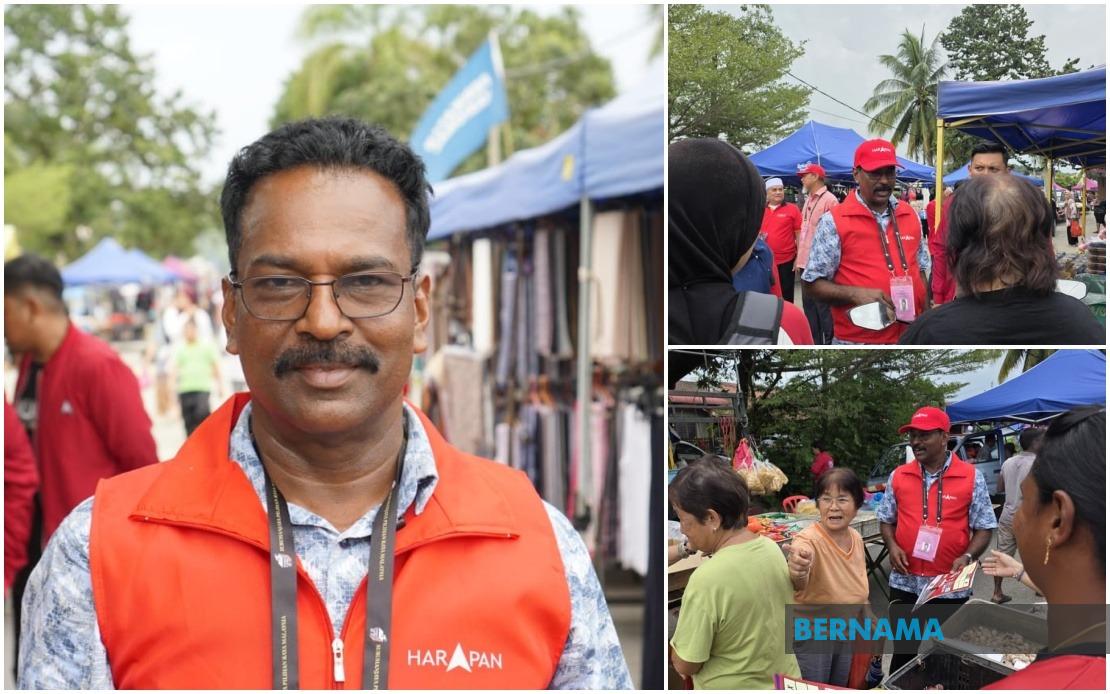
C. Subramani is making a determined push for victory in the Bukit Kepong state assembly seat, banking on what he characterises as a groundswell of demand from constituents hungry for tangible improvements to their immediate surroundings. The Pakatan Harapan candidate has framed his candidacy as a referendum on whether the political establishment has adequately served the community, positioning himself as an alternative capable of delivering the change voters are seeking in the 16th Johor state election.
Subramani's optimism stems from direct engagement with voters throughout the campaign trail. His assessment of public sentiment suggests receptiveness to his message, though he operates in a competitive three-way fight against Barisan Nasional and Perikatan Nasional contenders vying for the same seat. This triangular contest complicates the political arithmetic, potentially fragmenting votes and creating opportunities for candidates who can mobilise their base effectively. The Pagoh native's confidence reflects his reading of the political mood, though the presence of three serious challengers means margins could be tight.
Central to Subramani's platform is the argument that seamless coordination between state and federal governments accelerates local development. He contends that when both administrations function in alignment, issues requiring federal agency involvement or ministerial attention can be resolved more expeditiously. This framing implicitly critiques the previous arrangement and suggests that electing a PH representative would unlock administrative efficiencies currently constrained by political fragmentation at different levels of government. Such coordination gains particular salience in constituencies with complex infrastructure demands.
Subramani's ground work has revealed specific infrastructure gaps that he believes require urgent attention. His visits to Orang Asli settlements across the constituency have provided him direct exposure to socioeconomic challenges affecting these marginalised communities. These encounters have allowed him to catalogue concrete grievances, from inadequate facilities to limited economic opportunities, establishing a foundation for targeted advocacy. This granular understanding of constituent needs differs from generic campaign rhetoric and provides specificity to his development promises.
Education remains among his key priorities, a focus reflecting broader Malaysian concerns about educational equity and access in rural areas. Irrigation and drainage issues feature prominently in his agenda, suggesting that agricultural productivity and flood mitigation are salient concerns for the farming populations within the constituency. By highlighting these sectoral challenges, Subramani positions himself as attuned to the economic foundations of his community's wellbeing rather than merely offering symbolic gestures.
Among his distinctive proposals is transforming the Bukit Kepong Gallery into a historical tourism hub, a move designed to stimulate local economic activity by leveraging existing cultural infrastructure. This initiative reflects recognition that rural constituencies require endogenous economic drivers rather than relying solely on external investment. Tourism development, if executed thoughtfully, can generate employment and business opportunities for local residents while preserving cultural heritage. However, the viability of such projects depends on adequate marketing, infrastructure connectivity, and visitor accessibility.
Subramani also identifies basic quality-of-life issues that resonate with constituents: poor street lighting, narrow bridges, and housing affordability for the B40 income group. These matters may appear mundane compared to grand development schemes, yet they directly affect daily experience and safety. Street lighting influences evening mobility and security; bridge infrastructure affects agricultural product transport and school access; affordable housing addresses fundamental dignity and economic stability. By elevating these practical concerns, Subramani signals attention to lived experience beyond electoral cycles.
His prior political engagement provides another dimension to his candidacy. Having contested the Buloh Kasap seat during the 2022 Johor state election and serving as Pagoh PKR chief, Subramani brings institutional experience and local organisational networks. This background suggests he is not a novice parachuted into the constituency but rather someone with accumulated political capital and relationships within the party apparatus. Such experience can translate into greater effectiveness in navigating bureaucratic processes and advocating for constituency interests within legislative frameworks.
The electoral context adds urgency to the campaign. A total of 172 candidates are contending for 56 state assembly seats across Johor, with approximately 2.7 million registered voters participating in the election. This saturated candidacy pool reflects the competitive intensity of Johor politics and suggests that seat-by-seat contests may determine overall state control. For Subramani, his locallevel campaign effectiveness becomes magnified in importance—energising his base and persuading swing voters could tip the balance in his favour, particularly if his opponents split the non-PH vote.
The incumbent, Datuk Dr Sahruddin Jamal, retained the seat in 2022 with a slender 710-vote majority under the Perikatan Nasional-Bersatu banner. This narrow winning margin indicates the seat's competitive nature and suggests that determined campaigning can alter outcomes. Subramani's assessment that voters are receptive to alternatives gains plausibility against the backdrop of such thin margins, indicating the constituency is genuinely persuadable rather than a settled stronghold for any particular coalition.
For Malaysian voters tracking regional electoral dynamics, Subramani's campaign embodies the broader political competition shaping Johor's future. The state remains strategically crucial to national politics, and shifts in Johor's assembly composition ripple across federal calculations. A PH advance in seats like Bukit Kepong would accumulate toward altered state-level configurations, potentially influencing ministerial portfolios and state government orientation. Conversely, a setback would reinforce rival coalitions' hold over the state.
Subramani's stated confidence rests ultimately on whether his ground organisation, message discipline, and constituent feedback translate into actual votes. The three-way contest introduces unpredictability, as vote-splitting among candidates can produce outcomes contradicting conventional polling and expectation. His campaign strategy appears designed to consolidate PH supporters while peeling persuadable swing voters away from entrenched incumbents, a formula that has occasionally produced surprise victories in Malaysian politics when executed with precision and credible messaging.
As Johor prepares for the 16th state election, Bukit Kepong will be watched as a microcosm of broader voter sentiment regarding political change and administrative performance. Subramani's pursuit of an upset victory, grounded in specific policy commitments and grassroots engagement, exemplifies how local candidates frame their appeals to constituents increasingly demanding concrete returns on their electoral choices.

