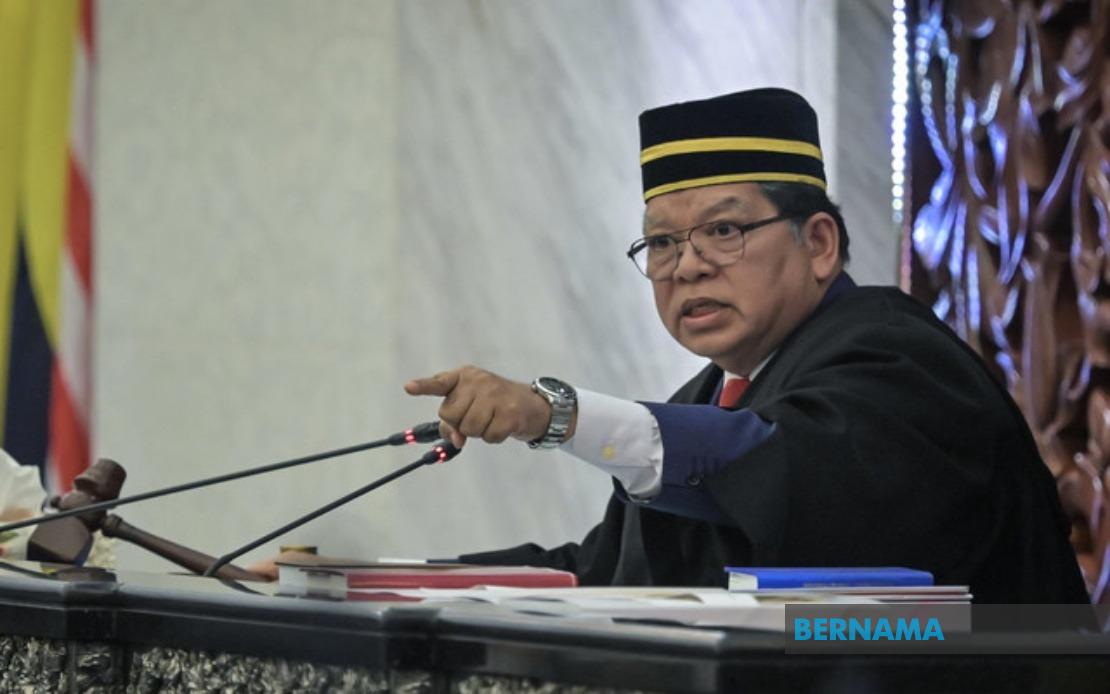
The Speaker of the Dewan Rakyat, Tan Sri Dr Johari Abdul, has formally acknowledged receipt of Wong Chen's resignation as Member of Parliament for Subang, bringing to a close the latter's tenure representing the constituency. The development was confirmed during a Special Sitting of the Dewan Rakyat held in Kuala Lumpur on Monday, with the Speaker noting that the resignation notice had been submitted to him on Sunday. Wong Chen, who has represented the Klang Valley seat since 2013 and is known for his advocacy on governance and anti-corruption matters, voluntarily relinquished his parliamentary membership through the official channels.
In his public announcement made via social media the previous day, Wong Chen made clear that his decision to step down was entirely voluntary, ending his decade-long presence in the chamber. He disclosed that a formal notice of resignation, dated August 5, had been submitted to the Speaker, though it took effect from the following day. The timing of his departure, coming amidst Malaysia's ongoing political realignments, has drawn attention to the changing composition of the Dewan Rakyat and the shifting dynamics within opposition circles.
Following constitutional procedure, Tan Sri Dr Johari announced that he had immediately notified the Election Commission of the parliamentary vacancy in Subang, in accordance with Article 54(1) of the Federal Constitution. This formal notification sets in motion the machinery required to hold a by-election in the constituency, a process that typically unfolds over several months. The Election Commission, as the body responsible for managing Malaysian electoral affairs, will now prepare the necessary administrative and logistical arrangements to facilitate the by-election.
The Subang constituency, located in the heart of the Klang Valley's urban landscape, has been a closely watched battleground in Malaysian politics. It is an area characterised by a diverse, educated electorate with strong interest in governance issues, making it strategically significant for any political party seeking to strengthen its presence in the capital region. Wong Chen's departure leaves the seat vacant at a time when political parties are already preparing their machinery for forthcoming electoral contests.
Wong Chen's resignation marks another shift in the composition of the current parliament, where the balance of forces has been in flux since the last general election in November 2022. His departure from the Dewan Rakyat represents a notable loss for the opposition grouping with which he has been aligned, particularly given his visible parliamentary engagement on issues ranging from institutional accountability to transparency in government spending. As an independent-minded legislator who has not shied away from raising uncomfortable questions, his exit will likely influence the dynamics of parliamentary debate.
The by-election process, once formally triggered by the Election Commission, typically involves a campaign period of several weeks during which political parties and independent candidates can register their participation. The Subang constituency, with its substantial voter population drawn largely from the middle and professional classes, tends to record competitive multi-cornered contests that reflect the broader political preferences of the nation's urban voters. Political observers will closely watch which parties field candidates and the messaging they deploy in this upcoming contest.
Politically, the timing of Wong Chen's exit may have wider ramifications for opposition coordination in the Klang Valley, a region that has witnessed significant electoral volatility in recent years. The loss of a high-profile opposition-aligned MP could alter the strategic calculations of various political formations as they contemplate their representation in the area. Moreover, the by-election outcome will serve as an important barometer of voter sentiment in an economically vital region that punches above its weight in terms of political significance.
Wong Chen's decade-long parliamentary career has been marked by his consistent focus on transparency mechanisms and institutional reforms, positioning him as a voice advocating for stronger checks on executive power. His voluntary departure suggests a personal decision rather than any external pressure, though his reasons for stepping down have not been elaborated beyond his public announcement. The decision by a legislator of his profile to voluntarily relinquish his seat remains relatively uncommon in Malaysian politics, where seats are typically held until the next general election unless circumstances compel otherwise.
The Election Commission will now establish the schedule for the Subang by-election, setting nomination dates, campaign periods, and polling day in consultation with relevant authorities. This process, although routine administratively, carries political weight given the strategic importance of the constituency. The by-election will provide an opportunity for the electorate to renew their choice of representation and for political parties to test their organisational capabilities and messaging appeal in a competitive electoral environment.
As the machinery for the by-election process commences, political observers and analysts will seek to understand the underlying factors that prompted Wong Chen's decision to resign mid-term, a choice that stands in contrast to the typical behaviour of legislators across the political spectrum. His departure underscores the fluid nature of Malaysian parliamentary politics, where unexpected shifts in composition continue to shape the institutional landscape and the broader political narrative as the nation navigates multiple concurrent electoral cycles and political transitions.

