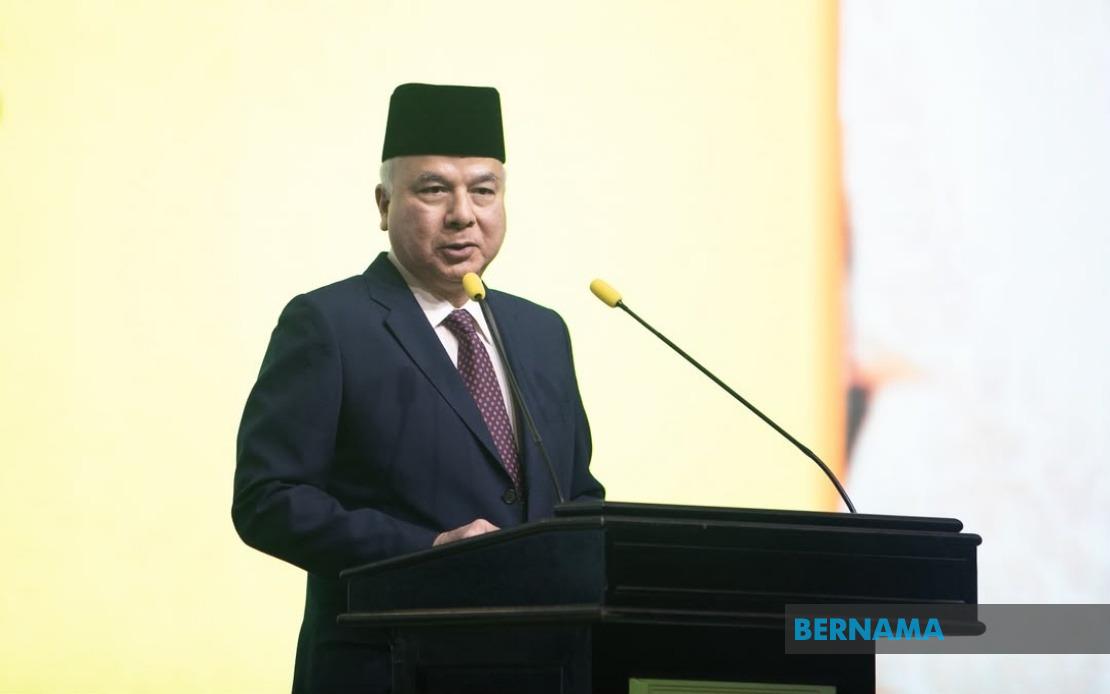
A nation brimming with natural wealth, skilled citizens and cultural richness can still disappoint its people when institutional foundations crumble, leaders shirk responsibility, or politics becomes a vehicle for personal gain rather than collective welfare. This observation came from Sultan Nazrin Shah, the Sultan of Perak, in remarks that cut to the heart of governance challenges facing developing economies across Southeast Asia and beyond.
Speaking at the 8th World Conference on Islamic Thought and Civilisation in Ipoh on July 21, the Sultan articulated a vision of effective governance that extends far beyond technocratic competence. Practical good governance, he explained, requires the successful orchestration of complementary institutional elements—systems robust enough to function independently of whoever holds power at any given moment. This institutional resilience represents perhaps the most difficult achievement for many nations, where governance structures often reflect the personality and whims of individual leaders rather than embedded democratic processes.
The Sultan elaborated on three foundational pillars of sound governance. First comes transparency in how governments mobilise and deploy public finances, ensuring that taxpayer contributions genuinely serve collective interests rather than enriching connected elites. Second is the consistent, impartial application of legal principles, where accountability applies equally to the mighty and the powerless alike—no individual transcends the rule of law, and no citizen remains outside its protection. Third is a political environment where disagreement unfolds civilly, where opposition parties function as legitimate counterweights rather than existential threats, and where power transitions peacefully when voters decide.
Contrary to the assumption that political stability requires the suppression of debate, Sultan Nazrin noted that many of the world's most stable democracies are paradoxically among the most contentious. Citizens openly contest ideas and policies, yet these nations remain stable because disagreements flow through established institutional channels—courts, parliaments, electoral processes—rather than spilling into streets or culminating in violence. The distinction proves critical for policymakers. Instability does not stem from disagreement itself, but from the breakdown of shared frameworks for resolving disputes. When electoral processes lose credibility, courts appear compromised, or public office becomes a commodity for sale, the social contract unravels, and the most marginalised segments invariably suffer disproportionately.
The Sultan articulated a powerful moral dimension to fiscal policy, characterising government budgets as documents that reveal not merely financial allocations but political priorities and ethical commitments. A budget exposes which citizens a government truly values, which communities merit investment, and whose interests the state considers expendable. This framing challenges the widespread tendency to treat budgeting as purely technical economics divorced from questions of justice and distribution. For Malaysia, where regional disparities and communal concerns regularly feature in political discourse, this perspective carries particular resonance.
Emphasising institutional integrity, Sultan Nazrin highlighted the civil service's potential to embody state unity in tangible form when personnel discharge duties impartially regardless of citizens' backgrounds or political preferences. Leadership that combines competence with humility—that listens before legislating and recognises power as borrowed rather than owned—generates far deeper popular commitment than slogans or propaganda campaigns ever achieve. This observation speaks directly to Malaysia's ongoing challenge of rebuilding institutional credibility following periods of politicisation and perceived abuse of state apparatus.
The Sultan's discussion of development underscored its necessarily interconnected character. No nation, irrespective of talents or resources, achieves sustainable prosperity through isolation. Modern economic advancement flows through cross-border currents of trade, investment flows, technological exchange and knowledge transfer. Consequently, cooperation between states, public-private collaboration, and engagement between government and organised civil society represent prerequisites rather than optional extras for sustained growth. Economies that embrace international commerce while simultaneously nurturing diversified domestic industries demonstrably outperform those retreating into protectionism or depending excessively on single sectors.
Yet the Sultan introduced a crucial caveat regarding international engagement. Cooperation must not become synonym for dependency, nor should openness undermine national agency. Wisdom lies in calibrated balance—welcoming foreign capital and expertise while deliberately strengthening domestic capacity and skills. This formulation appeals particularly to Malaysian policymakers navigating pressures from globalisation while managing domestic anxieties about economic sovereignty and community welfare.
The Sultan reserved substantial attention for Islamic finance, identifying it as vastly underexploited despite enormous potential. Malaysia has constructed itself deliberately as a global centre for Islamic financial instruments—from sukuk bonds to takaful insurance to Syariah-compliant fund management—yet, he argued, the field remains largely compliance-focused rather than transformative. The true power of Islamic finance extends beyond prohibitions on interest to embody distinctive philosophy emphasising risk-sharing, asset-backing and equitable participation in economic returns. Properly leveraged, Islamic finance could catalyse infrastructure investment across Organisation of Islamic Cooperation member states, support small-medium enterprise expansion, and mobilise patient capital for development challenges spanning water security to renewable energy transitions. This perspective positions Malaysia's financial sector leadership as potentially instrumental in addressing pressing regional development priorities while remaining true to Islamic principles.
The Sultan's address wove together institutional governance, economic development, and Islamic financing into a coherent framework addressing how nations might advance equitably and sustainably. For Southeast Asia, where institutional capacity varies considerably across the region and governance challenges frequently intersect with questions of inclusivity and development equity, these themes warrant serious engagement from both policymakers and informed publics.

