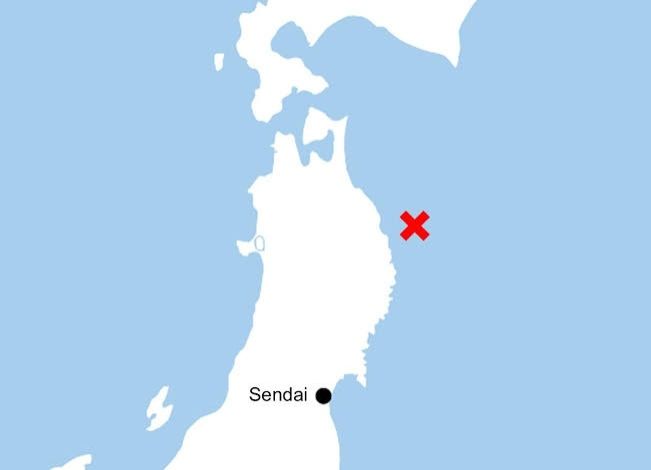
A substantial earthquake measuring 7.2 magnitude shook northern Japan on Thursday morning, rattling households and businesses across a wide region but leaving behind minimal structural damage and no reported fatalities. The tremor, which struck at 7:30 am local time in the waters off Iwate prefecture on the main island of Honshu, radiated across hundreds of kilometres to reach Tokyo. The Japan Meteorological Agency initially reported the magnitude as 6.9 before revising it upward to 7.2, with the epicentre located at a depth of 44 kilometres beneath the seabed. Though the jolt was substantial enough to trigger immediate alerts and cause widespread public concern, the overall impact remained contained, reflecting both Japan's stringent building codes and the fortunate characteristics of the quake's depth and location.
Eyewitness accounts paint a picture of sudden disruption rather than catastrophe. Mutsumi Shimohata, a 61-year-old food processing employee based in Hashikami in neighbouring Aomori prefecture, described the experience as an extended tremor that caught her by surprise. Her smartphone's early warning system activated almost instantaneously, providing precious seconds of notice before the strong shaking commenced. While her own residence sustained only minor damage—a picture frame dislodged from its mounting—her workplace experienced more severe disruptions, with the building's automatic entrance doors becoming inoperable and sections of the ceiling collapsing, prompting her company to order staff to remain home on standby for the remainder of the day. Television footage captured the characteristic chaos of such events: kitchen cupboards disgorging their contents across floors, merchandise tumbling from shelves in retail establishments, and the scattered debris of unsecured household items.
Transportation networks experienced temporary disruptions that underscored the earthquake's significance. Several shinkansen bullet train services were suspended during and immediately after the event, a precautionary measure reflecting Japan's commitment to ensuring passenger safety during seismic activity. Emergency services in the Hashikami and Hachinohe area received at least four emergency calls reporting various incidents, including at least one instance of people becoming trapped inside a lift. Reports also circulated of stuck doors throughout affected buildings and a tanker truck that had overturned, though none of these incidents escalated into mass casualties or widespread infrastructure failure. A primary school in Hashikami was temporarily shuttered as a precautionary measure, with authorities prioritizing student safety pending post-quake facility assessments.
The intensity of ground shaking, measured on Japan's seven-level Shindo scale, reached the upper sixth level in Aomori prefecture, a classification at which unsecured furniture typically topples, windows are prone to shattering, and people may struggle to maintain their footing without support. Despite this significant shaking intensity, government officials reported no confirmed human casualties. Minoru Kihara, the chief government spokesman, characterized the situation as manageable, emphasizing the absence of reported injuries while acknowledging that comprehensive damage assessment remained ongoing. The measured official response reflected confidence in Japan's earthquake preparedness infrastructure, though authorities remained vigilant for potential aftershocks of comparable intensity.
Critical infrastructure proved resilient throughout the event. The Nuclear Regulation Authority confirmed that no abnormalities materialized at nuclear power stations across the affected region, a reassurance particularly important given Japan's heightened sensitivity to nuclear safety following the 2011 Fukushima disaster. Television broadcasts from Hachinohe city depicted normal traffic flows and functioning traffic signals, suggesting that essential urban systems weathered the tremor without major disruption. Prime Minister Sanae Takaichi responded swiftly by instructing all ministries and government agencies to coordinate closely with local authorities, while urging residents in heavily affected areas to remain vigilant for potential aftershocks of similar magnitude.
Japan's vulnerability to seismic activity stems from its precarious position along one of Earth's most tectonically volatile zones. The archipelago sits atop four major tectonic plates intersecting at the western boundary of the Pacific Ring of Fire, a circumstance that makes it among the world's most earthquake-prone nations. The nation's 125 million residents endure hundreds of minor tremors annually, with Japan accounting for approximately 18 percent of all global earthquake occurrences. Most seismic events prove mild, though their destructive potential varies considerably based on epicentre location, depth, magnitude, and urban infrastructure resilience at the affected sites.
Historical memory weighs heavily on Japanese consciousness regarding seismic risk. The devastating 9.0-magnitude undersea earthquake of March 2011 remains etched in national consciousness, having triggered a catastrophic tsunami that killed or left missing approximately 18,500 people and precipitated the Fukushima nuclear catastrophe that reshaped the nation's energy policy. More recently, on April 20 this year, a 7.7-magnitude tremor struck northern Japan, injuring at least 10 people and shaking high-rise buildings across Tokyo with sufficient force to prompt authorities to issue a special advisory warning of elevated earthquake risk with magnitudes potentially exceeding 8.0. That advisory remained in effect for one week before authorities lifted it, reflecting the complex calculus Japanese officials employ when assessing post-quake risk trajectories.
The Thursday earthquake's relatively benign outcome masks the profound infrastructure challenges Japan faces in managing chronic seismic activity. Engineering advances in earthquake-resistant construction have demonstrably reduced casualties from seismic events, as evidenced by the absence of deaths from Thursday's substantial 7.2-magnitude tremor. Japanese building codes, refined through decades of experience with devastating earthquakes, mandate sophisticated structural systems capable of withstanding powerful ground motion. Early warning systems, now ubiquitous throughout Japanese society, provide critical seconds of notice that allow people to move away from hazards and brace for impact. These layered safety systems have transformed what might have been a tragedy into a manageable disruption.
For regional observers including Malaysia and other Southeast Asian nations, Japan's earthquake management provides both reassurance and cautionary lessons. While Southeast Asia faces different seismic profiles than Japan's high-frequency environment, increasing urbanization and building density across the region underscore the importance of earthquake preparedness infrastructure. Japan's experience demonstrates that even frequent seismic activity can be managed through rigorous building standards, public education, early warning systems, and coordinated emergency response protocols. The minimal damage from Thursday's substantial earthquake reflects institutional resilience developed through centuries of seismic experience and decades of modern engineering advancement.

