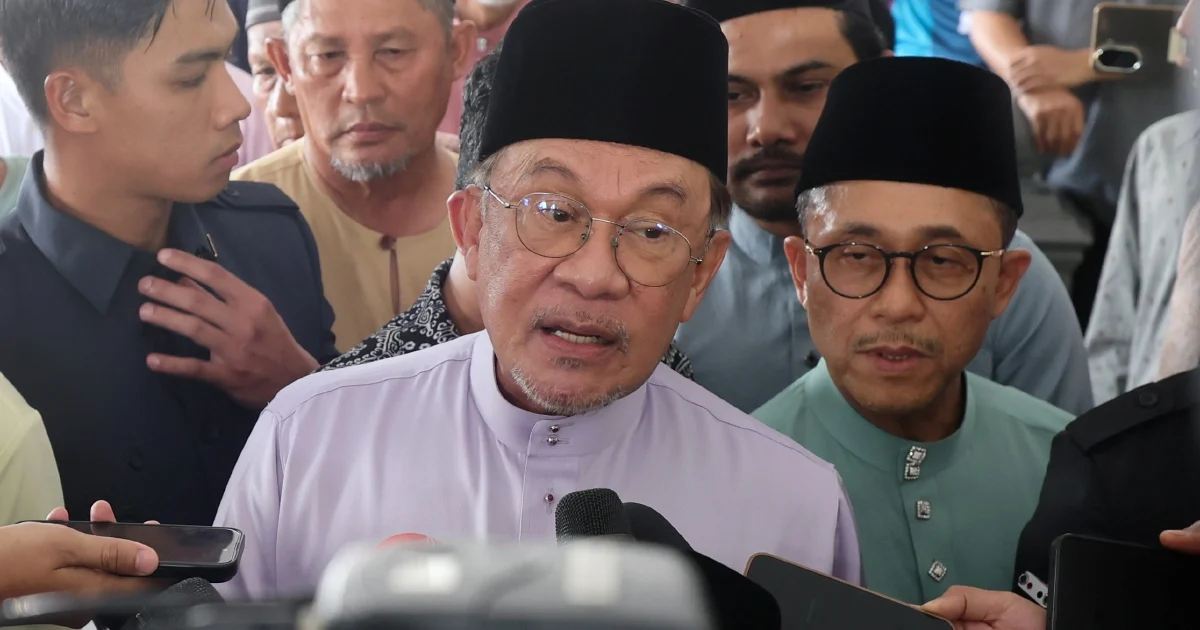
Prime Minister Datuk Seri Anwar Ibrahim has moved to defuse mounting concerns about proposed institutional reforms, assuring Malaysians that strengthening the Syariah court system will not erode the religious freedoms guaranteed to non-Muslim citizens under the federal constitution. The statement comes amid an ongoing national conversation about the role and scope of Islamic judicial structures in Malaysia's plural society.
The government's intentions to elevate the status and capacity of Syariah courts form part of a broader policy agenda to improve the administration of Islamic law across the country. Such measures typically encompass expanding the courts' jurisdictional reach, modernising their infrastructure and processes, and enhancing judicial training. These initiatives have drawn scrutiny from civil society groups and non-Muslim communities concerned about potential overreach into secular spheres that historically fall outside Islamic judicial purview.
Anwar's reassurance targets anxieties that have periodically surfaced in Malaysian public discourse whenever structural changes to Syariah institutions are proposed. Malaysia's constitutional architecture reserves certain matters—including criminal law, corporate governance, and civil contracts—for secular courts, while designating Islamic personal law issues to Syariah courts. This compartmentalisation has remained a cornerstone of the nation's legal pluralism since independence, though tensions occasionally emerge over jurisdictional boundaries and legislative amendments that shift competencies.
The non-Muslim population in Malaysia, comprising approximately 40 percent of the total citizenry, exercises constitutional protections under Article 11 of the Federal Constitution permitting freedom of religion and conscience. These protections extend to non-Muslims' rights to administer their own personal law matters—marriage, inheritance, and religious practice—through their respective religious and civil frameworks. Anxieties about Syariah court expansion thus reflect historical experience in other jurisdictions where religious judicial systems have incrementally absorbed wider legal authority at the expense of secular governance.
Malaysia's experience differs significantly from some regional neighbours. Unlike Indonesia, which has permitted Syariah courts to exercise criminal jurisdiction in certain provinces, Malaysia's constitutional settlement has maintained clear demarcation lines. Yet recent legislative developments, including state-level enhancements to Syariah court penalties and jurisdiction, have prompted renewed scrutiny about whether this boundary remains stable. The Prime Minister's statement appears designed to anchor stakeholder confidence in the government's commitment to preserving this constitutional balance.
The timing of Anwar's declaration reflects political pragmatism in a nation where religious sensitivities intersect with communal representation. Malaysia's coalition government depends partly on non-Malay, non-Muslim parties—notably the Democratic Action Party and other peninsular and East Malaysian representatives—whose constituencies harbour reservations about expanding Islamic institutional authority. Maintaining explicit reassurances about constitutional safeguards helps sustain this political coalition while pursuing policy objectives desired by constituencies advocating for stronger Syariah institutions.
From an administrative perspective, the genuine case for Syariah court modernisation rests on operational efficiency and access to justice for Muslim citizens. Many Syariah courts operate with limited resources, lengthy case backlogs, and outdated infrastructure. Upgrading physical facilities, adopting digital systems, and improving staff training could measurably enhance service delivery for Muslims navigating family law, inheritance, and Islamic endowment matters. These operational improvements need not fundamentally alter the courts' jurisdictional scope or impact non-Muslims' legal standing.
Nevertheless, the distinction between institutional strengthening and jurisdictional expansion remains crucial to this conversation. Non-Muslim anxiety often stems less from enhanced Syariah court capabilities in their designated domains and more from legislative attempts to broaden those domains. For instance, proposals to introduce Syariah criminal law provisions for Muslims, or to clarify apostasy statutes in ways affecting non-Muslim converts, generate concern disproportionate to the original institutional upgrade plan. Anwar's statement, therefore, carries weight only insofar as legislative practice reinforces the verbal assurance.
Regional observers also watch Malaysia's approach closely. Throughout Southeast Asia, questions about religious law's relationship with secular governance remain live issues. Thailand's struggles with integrating Islamic jurisprudence in southern provinces, Singapore's calibrated approach to Muslim personal law within a secular state framework, and Brunei's comprehensive Islamic law integration all offer alternative models. Malaysia's middle path—maintaining distinct courts without ceding secular governance—reflects distinctive historical compromises that international law scholars often cite as a workable pluralist approach.
The opposition and civil society bodies have signalled they will scrutinise any legislative changes accompanying institutional reforms. The Malaysian Bar Association, Christian Federation, and other religious minority representatives maintain active roles in constitutional discourse, ensuring that executive pronouncements translate into protective legislative language. Non-governmental organisations frequently refer to prior instances—such as shariah criminal law amendments in specific states—when assessing government credibility on such pledges.
For Malaysian policymakers, balancing institutional modernisation with constitutional protection represents an enduring challenge. Anwar's statement reaffirms that the government seeks to strengthen Islamic judicial administration without encroaching on the protected sphere of non-Muslim citizens. Whether this commitment persists through concrete legislative action and sustained budget allocation will ultimately determine whether the reassurance reflects genuine policy direction or rhetorical management of competing political pressures.
The coming months and years will test whether accompanying legal reforms and resource allocations genuinely reflect this stated commitment or gradually shift the balance. The credibility of Malaysia's multireligious social contract depends substantially on maintaining this careful institutional and constitutional equilibrium.

